
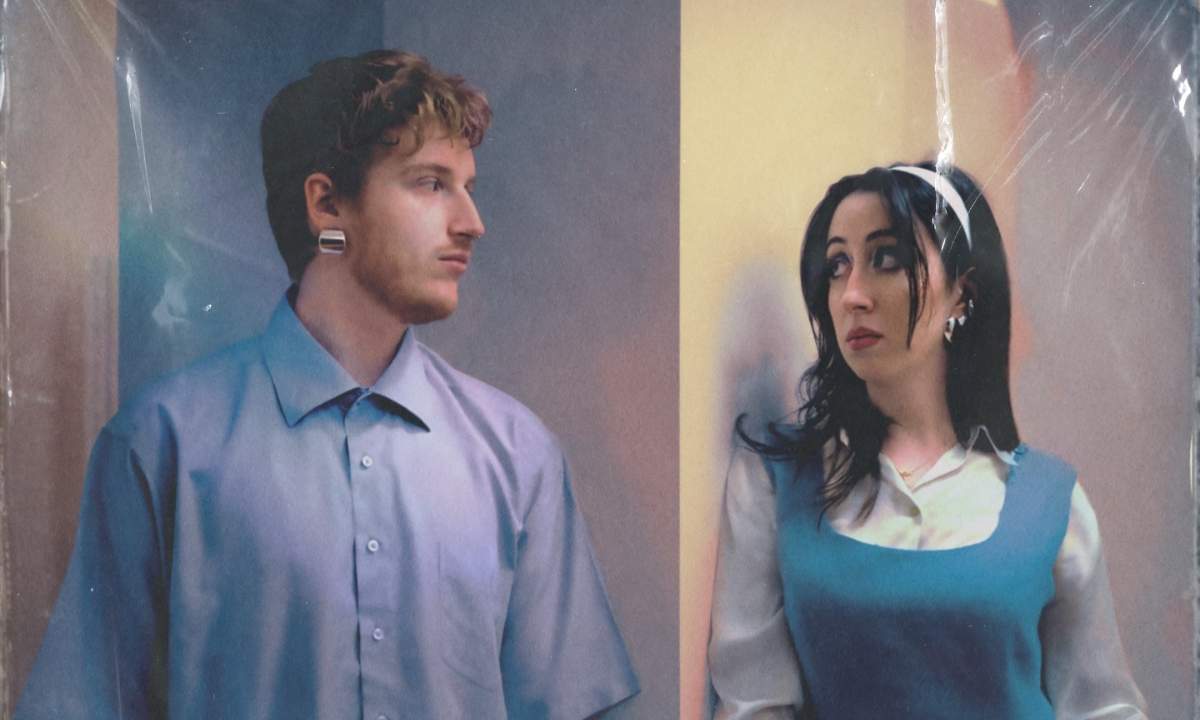
Twenty-five years ago, in the night between 21 and 22 July 2001the police raided the school Diaz-Pertini of Genoa, where the G8 demonstrators slept. That night is today the only episode in republican history for which Italy has been condemned twice by the European Court of Human Rights for torture. On the anniversary day the video clip of Let's dancethe new song by Nearticaa duo that couldn't remember that night: in 2001 neither of them had been born.
What happened to Diaz and what the judges ruled
The school had been made available by the Municipality as a dormitory and press center for those taking part in the demonstrations against the summit. The raid ended with dozens injured and 93 arrested, later cancelled. The weapons that would have justified the raid, two Molotov cocktails, were found to have been brought from outside.
In 2012 the Court of Cassation he defined that violence as “unjustified” and of “punitive, vindictive” purpose, carried out against unarmed people, sleeping or with their hands raised. The same sentence noted that the facts could be classified as torture, but that the crime did not exist in the Italian penal code: they were prosecuted as injuries, and were statute-barred.
She spoke on this twice Strasbourg. In 2015, with the ruling on the appeal of Arnaldo Cestarowho at Diaz was 62 years old and suffered several fractures, the European Court condemned Italy for violation of Article 3 of the Convention, the prohibition of torture, defining the problem as “structural”. In 2017 the sentence was repeated for 29 other appellants. The crime of torture entered Italian law only in July 2017, sixteen years after Genoa.
Let's dance, the song by Neartica
He moves on this matter Let's dancefourth single from Nearticaa project born from the meeting between Giordana Sanfilippo (voice and piano) e Francesco Pio De Filippis (voice and production), who sign the text together. The video clip comes out today on YouTube, the song arrives on digital platforms on July 31st.
The rhythmic construction is the most successful part: the percussions follow the sound of riot shields, and the dance of the title works in reverse, as a figure of violence closed in a dead-end space. The duo says it explicitly, the song talks about the raid in a place where people had retreated to sleep.
The most interesting passage, however, is in the declaration with which the two accompany the exit, because it focuses on the position from which they look at a fact that they have not experienced:
“Our generation, growing up, has learned the irrelevance of its own voice. Publicly and physically demonstrating our discomfort has always repaid us with violence. Although distant from us in age, the G8 in Genoa condenses a plot that we have learned to know and recognise, the abuse of the state and the forces of order as a response to taking to the streets. The demonstrators gathered in Genoa were people who asked nothing for themselves. They believed that a better world, where globalization did not have to coincide with the exploitation of people and natural resources, if possible. What happened at Diaz and Bolzaneto was the only response of the institutions. After 25 years, the same mechanisms continue to reproduce themselves, in a society that is forced to negotiate its freedom with security. We believe that Genoa 2001 is a historical finding that is talked about too little, its dynamics are an important lens for our present.”
It's worth noting what this choice entails for an emerging project: Neartica have three singles behind them and a still small audience, and they use the fourth release for a song on Genova 2001 rather than for something more immediate.
Genoa 2001 and Italian music
The G8 left a long trace. THE Modena City Ramblers they got there with The right lawin Radio Rebelde from 2002, which opens with the real voice of an inspector recorded during the clashes. THE 99 Posse they wrote Never again will I be wise, Francesco Guccini Alimonda Squarei Subsonic Silent sun. In 2002 the Piazza Carlo Giuliani Committee collected dozens of songs on the album Piazza Carlo Giuliani boy. Further on they arrived Willie Peyote with 1312 And Moder with Carlo Giulianitogether with Tormento and Dutch Nazari.
For years the memory of those days passed above all through songs and cinema rather than public discourse. What changes now is who tells it: no longer who was there, but who inherits it.
Let's dance it comes from there, and that's why it deserves a listen beyond the numbers of the project that signs it.