
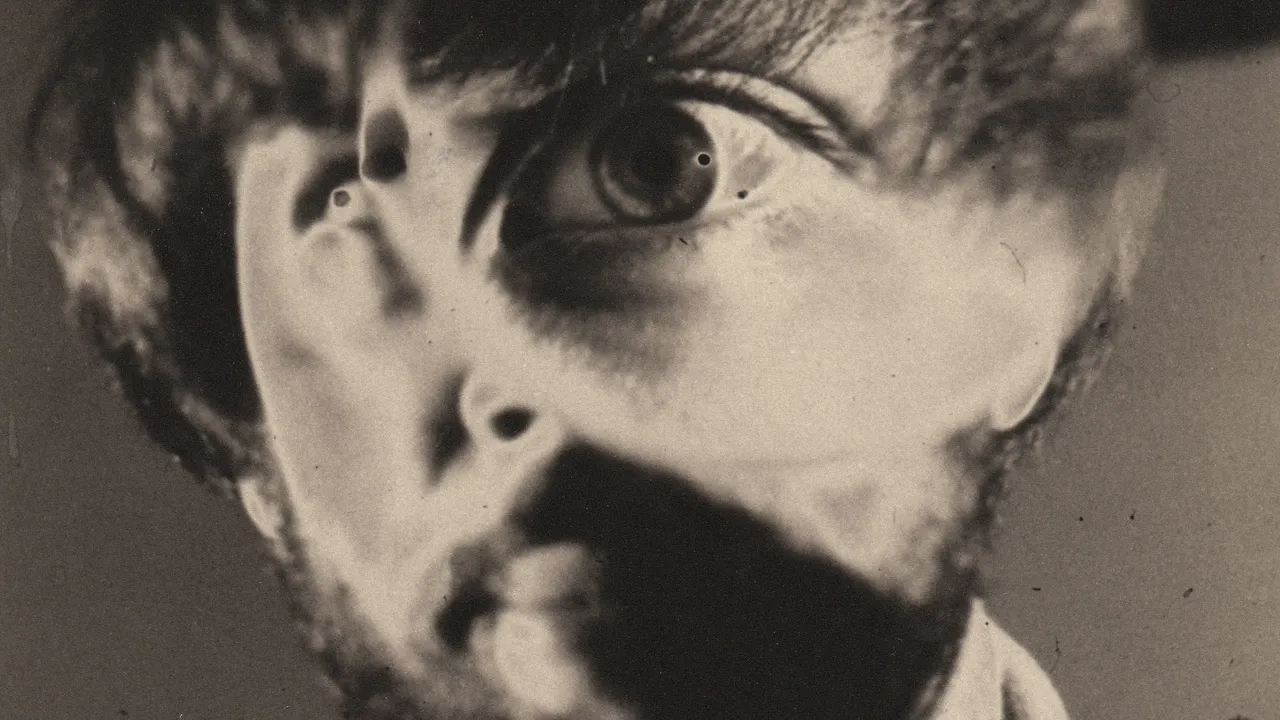
Ted Lucas made a masterpiece. At the start of the ’70s, after jettisoning a string of promising rock bands and sustaining himself as an “exotic instrumentalist” for Motown, the songwriter and guitarist decided to give commercial success another go. He cut a six-song acoustic demo in his Detroit attic at the behest of Warner Bros, submitting it in early 1972. He believed so strongly he’d be signed that he convinced the great psychedelic visualizer Stanley Mouse to give him cover art once intended for the late Jimi Hendrix. But that deal never happened, so Lucas—three years later, in September 1975—self-released his self-titled solo debut, back when putting out your own stuff often meant the music was stillborn.
During the last half-century, though, those nine songs have slowly inspired a second life, prompting OM, as it is typically called, to be reissued multiple times. The definitive edition arrived last year via Third Man, steadfast champions of deserving Detroit obscurities. If you were to ask me for one recommendation in the crowded field of so-called “private-press folk,” where the esoteric and enigmatic is often as good as cash, I would almost always suggest OM, an immediately accessible but deeply uncanny record of stoner hymns, existential lullabies, and white-hot acoustic guitar playing. It feels to me like lighting a fire on a snowy day, balancing strong coffee with sticks-and-stems weed, and letting your mind wander to your most pleasant memories.
No score yet, be the first to add.
But unless you committed to deep Discogs investments or grainy YouTube transfers, OM seemed like the beginning and end for Lucas, a blessed offering devoid of context. He had made this album and vanished, like some bearded angel moving too fast to see. That mystery is over now: Images of Life gathers 32 songs made in the 15-year period around OM, combining those rarities floating around on stray 7”s with a partial excavation of the vast archive Lucas left when he died in 1992. Alongside Mike Dutkewych’s smart and sensitive liner notes, the music portrays Lucas as a preternaturally gifted tunesmith hamstrung by his ability to commit to a single sound or path.
Perhaps too good for his own good, Lucas moves among jangling psychedelia, heartsick pastorals, and radio-ready rock, as if forever searching for a way out of his attic studio or his parents’ spare bedroom. There are songs here that not only rival the best of OM but also rank as lost Nuggets or even missed hits from some Time-Life compilation. If OM captured Lucas as one of the sweetest singers ever trapped in the folk-rock dustbin, Images of Life reveals him as a complicated artist who could make most any hook sound effortless.
Images of Life divides Lucas’ career into three chronological and loose stylistic categories, each nabbing an LP of its own. The first, Strange Mysterious Sounds, finds him pinballing among three bands in a five-year span. Lucas launched his OM label to release the pleasant, fuzzy 1966 single “High Time,” from his psych quintet the Spike-Drivers, before he hijacked a deal with Atlantic in favor of a slot on Reprise. The Spike-Drivers cut tracks at Chess in Chicago and with Tom Dowd in New York—institutions of the era that reinforce how much potential they had. When they split, Lucas launched a duo, the Misty Wizards, with fellow former Driver, Richard Keelan; their troika of acoustic tracks here, all captured during a 1968 soundcheck in Michigan, are a revelation. They sing a little like Simon & Garfunkel or Crosby, Stills, & Nash, their arrangements grounded in blue-collar reality but dosed with acid.