
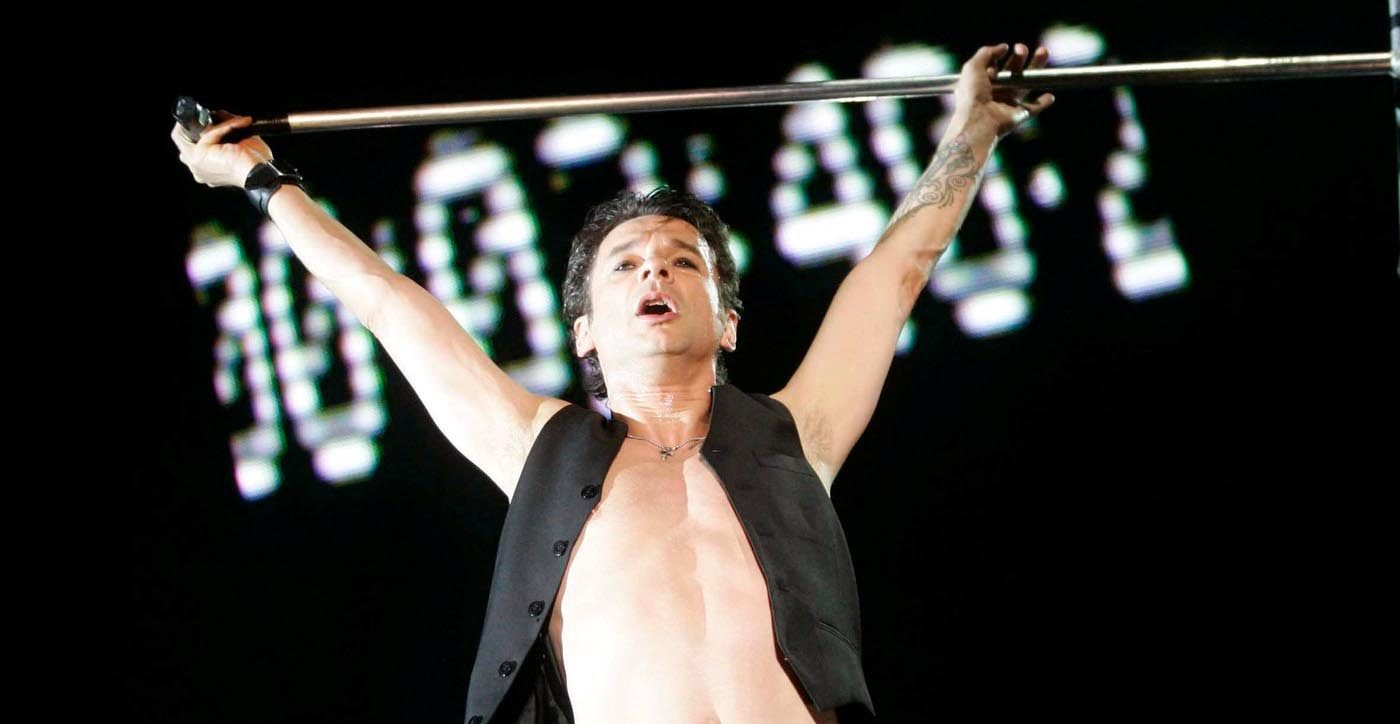
Depeche Mode have become, perhaps despite themselves, the veterans of the synth-pop scene of the 80s. Yet, their long history has risked breaking up several times. Even in a tragic way, as happened in 1996, during a grueling and troubled tour in the United States.
Return from the underworld
It was a miracle, a true return from beyond the grave. On May 28, 1996, the band's singer and frontman, Dave Gahan, at the time heavily addicted to drugs, was declared “clinically dead” for about two minutes after aoverdose Of speedballthe deadly mixture of heroin and cocaine, taken at the Sunset Marquis Hotel in Los Angeles. His heart stopped beating and, when the paramedics arrived on site, there was practically no hope. Against all odds, however, they managed to revive him.
When he regained consciousness, still disoriented, Gahan asked one of the emergency workers if he had had another overdose. The answer would mark him forever: “No, David. You're dead.” Years later, recounting the episode to the Chicago Tribune, he remembered those words as the moment he truly understood how close he had come to the end. A friend later confided to him that he had to be resuscitated three times that night.
The years of self-destruction
At the time Dave Gahan was just 34 years old, but he was already living trapped in a spiral of addiction that seemed to have no way out. The Los Angeles paramedics had even given him the nickname “The Cat”, the cat with nine lives, for his constant escapes from death. The overdose of May 1996 in fact represented only the last chapter of a dramatic period. In 1993, during the American tour of “Songs Of Faith And Devotion”, he had already suffered a heart attack caused by heroin while he was on tour. In the same year he also attempted suicide. For a long time it seemed impossible to imagine a future for him and the band.
The other Depeche Modes were also going through one of the most difficult moments in their history. The very long “Devotional Tour”, which then continued with the “Exotic Tour”, had left the group completely exhausted. Martin Gore sought refuge in alcohol, Andrew Fletcher was fighting a depression so serious that it forced him to temporarily abandon the tour, replaced by Daryl Bamonte, while Alan Wilder almost single-handedly supported the artistic and organizational weight of the band. Precisely that enormous pressure would push him, shortly afterwards, to definitively leave Depeche Mode after thirteen years.
The experience of those two minutes of clinical death radically changed Gahan's perspective. He said several times that he had had a true out-of-body experience. “The first thing I realized in the hospital was that my soul was outside my body,” he recalled years later. “It was like I was floating in the room and watching the nurses as they desperately tried to save me.” Of those moments, Gahan only remembers the darkness. “At first I only saw and felt complete darkness. I have never been in a blacker place than that. I remember thinking that whatever I was doing was profoundly wrong.” Shortly afterwards he was seen lying on the floor of the hotel bathroom, while doctors and paramedics tried to revive him. “In some ways it was even liberating. Then I woke up to find a policeman handcuffing me. It's certainly not a place I want to go back to.”
Even in 2007 he reiterated that he had not seen any light, but only an absolute void. “A voice inside me said, 'This is wrong'. As if it wasn't up to me to decide when it would all end. It was that feeling that terrified me.”
The arrest and the rebirth
After being released from the hospital, Gahan was arrested for drug possession. The court imposed a long course of rehabilitation, drug tests and psychological counseling on him. What initially seemed like just a judicial consequence instead turned into the definitive turning point in his life. The singer himself said that, after a few weeks spent sober working with the band in New York, he relapsed into addiction as soon as he returned to Los Angeles. “I only did it once. The drug dealer left and I turned green. Luckily there was someone who called 911,” he recalled to the Los Angeles Times. Since then Dave Gahan has remained sober, also becoming one of the most authoritative voices in describing the journey of recovery from addiction.
The survival record
The shadow of that near death passes through every moment of “Ultra”, released in April 1997. It is the first album recorded by the band without Alan Wilder and was born while the very future of Depeche Mode appears uncertain. “There were a couple of moments when it seemed very unlikely that we would get through,” Martin Gore admitted.
The dark and introspective atmospheres of the album inevitably reflect the period experienced by the group and, in particular, by its singer. According to a legend that has never been fully confirmed, upon waking up Gahan uttered the phrase “Do you mean this horny creep?” (“Do you mean that, you horny maniac?”), then used as incipit of “Barrel Of A Gun”, the first single from the album.
For the first time in their career, Depeche Mode also decided not to organize a real world tour in support of the album. Gahan wasn't yet ready to face the pressures of life on the road and the temptations that had nearly killed him.
Almost thirty years after those two minutes in which his heart stopped beating, Dave Gahan considers that episode the turning point of his existence. In 2005 he confessed to Rolling Stone: “I felt that whatever I did was wrong. All I saw was darkness. I was a finished man.” Yet that very night in May 1996, which seemed destined to definitively close the story of the singer and Depeche Mode, ended up giving a new one. The band survived the loss of Alan Wilder, addictions, internal fractures and even the clinical death of its frontman. From that rebirth a new phase of their career would begin, destined to bring them once again – and for many years – to the top of world music.
Daniel D`Amico for SANREMO.FM