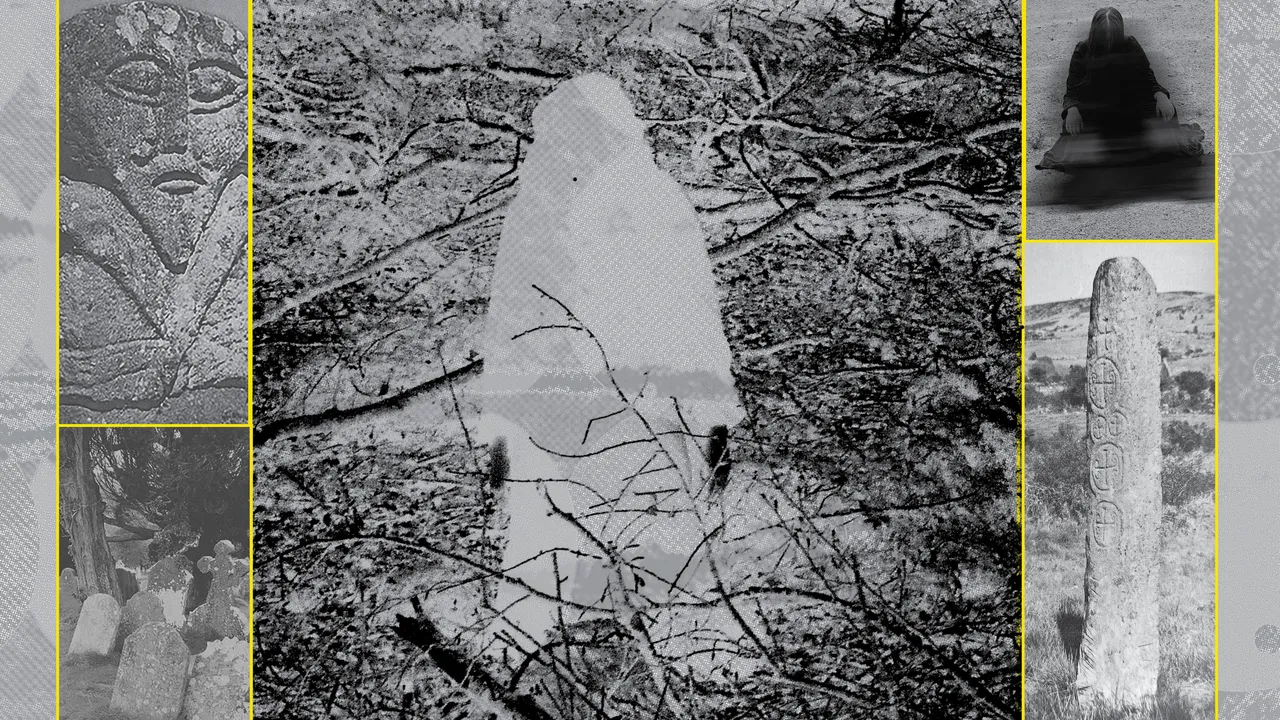
At Drumcliffe, in County Sligo, Ireland, W. B. Yeats’ headstone bears the final lines of his poem “Under Ben Bulben”: “Cast a cold eye/On life, on death./Horseman, pass by.” It is a magnificent piece of literary self-possession, the dead poet issuing one last command to the living to keep moving. But the rituals surrounding death in Ireland have historically proposed roughly the opposite. When someone you love dies, do not pass by. Stay, keep watch, gather the neighbors. Eat, drink, sing, and howl if you have to.
MO LÉAN, the extraordinary 2024 album by Fermanagh-born composer, vocalist, and multi-instrumentalist Rose Connolly, who records as RÓIS, remembers such an alternative. After winning Album of the Year at the Northern Ireland Music Prize and being shortlisted for the Choice Music Prize, MO LÉAN is now receiving its first worldwide release through Domino, a remastered edition that also includes one additional track. The album, Connolly’s second, extends her exploration of the communal mourning customs that Catholic authorities sought to suppress and whose survival was further undermined by British colonial rule in the 20th century. It is both an account of that history and a musical reclamation of those rites, imagining what an Irish wake might have sounded like before ecclesiastical restrictions and colonial disruption curtailed their communal expression.
No score yet, be the first to add.
Across the album, five songs are punctuated by the sounds of familiar features in Irish life. Three interludes feature the Angelus bells, which traditionally summon Catholics to prayer three times a day and remain a familiar fixture of Irish broadcasts; here, they are progressively distorted until their chime dissolves into drone. Toward the album’s end, “The Death Notices” draws on local radio announcements of deaths and funerals, a longstanding means by which communities learn of and gather around their dead. Together, they establish Connolly’s larger concern: recovering death, and the grief that follows, as a collective and expressive experience. Accordingly, the album’s mood shifts erratically between lament, reflection, dark humor, and occasional bouts of hysteria and ecstasy.
Daniel D`Amico for SANREMO.FM