
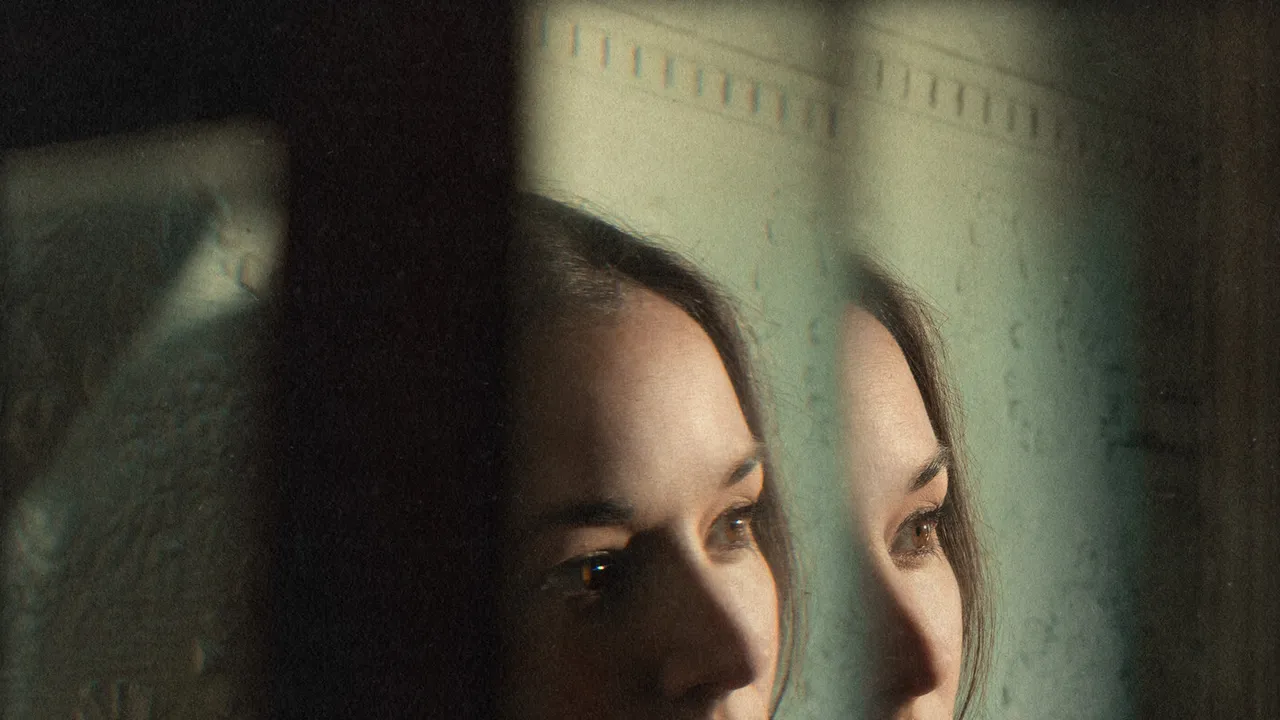
It’s easier to stay silent in the face of conflict. But while taking a clean break from the noise of social media, Margaret Glaspy started thinking critically about the complicity and complacency implicit in holding your tongue. On her latest album of raw, untamed folk, I Am Both, the New York singer-songwriter pushes back at passivity, whether political or personal, in carefully wrought storytelling. Her expressive voice sounding both ragged and controlled—a rare skill, on vivid display—breaks through the apathy and fear of her songs’ characters, urging confrontation and reminding us what inaction looks like: a broken relationship, neighbors abandoned to the streets, a tacit agreement with wrongdoing.
An implicit call to action threads through the album. On the self-indemnifying “Reminder,” Glaspy sketches her restlessness and introspection clearly: “Doing nothing is something I do too well,” she sings in an uncomfortable monotone, dripping syllables like drops of water. When clocks peal in the final chorus, they freshly impress the urgency of time, and her strumming grows more insistent. “I don’t have to do anything,” she sings, leaning into the cantering rhythm: “But I can do something/I can say no.”
No score yet, be the first to add.
Her most explicitly political song, the unabashedly earnest “Martin Luther King, Jr.,” is a classic folk narrative—unspooling place, person, and situation with line-by-line care—that depicts the struggles of an unhoused neighbor and the systems that failed her. Invoking King’s oft-quoted maxim, “Hate cannot drive out hate; only love can do that,” she lands on a line so simple that it verges on cliché: “Turns out freedom ain’t free.” Her songs about relationships are more specific and tactile. On “Petty,” she bemoans her own passive-aggression; palm-muted strums accent the driving anger beneath her snarling, raspy growl. Then, rage overtakes passivity, her voice now lilting and full: “I’m folding your laundry/And I’m making a meal of it,” she sings, lingering on the mouthiness of “meal.” She has a poet’s instinct for snipping or smoothing a syllable, depending on the song’s needs.
Drinking in a girl’s confidence, Glaspy adoringly talk-narrates the theatrical “I Thought She Was a Song” (which could’ve been pulled straight from Hermes in Anaïs Mitchell’s Hadestown). When Glaspy softly sings the titular line, grit stripped from her voice, it’s a heavenly interlude: Every instrument but the fingerpicked guitar—now higher and gentler—drops out. The “hellion” is painted as a goddess for all her complexities and her self-possession.
Closer “I Am Both” is a celebration of self-possession, too. Glaspy’s firm, full recitation of the affirmation—sometimes sung, sometimes spoken—hearkens to Leonard Cohen’s characteristic delivery. As she faces a former lover and dismisses him from her doorstep, she’s low-voiced, drawn-out, turning toward us not with wryness, but self-realization.
Though the threat of silence haunts the album’s conflicted characters, and her bittersweet acoustic guitar and skeletal arrangements might suggest more sedate strains of folk music, Glaspy shows no fear of speaking up. Her voice is a clarion call, cutting through I Am Both’s songs as she snaps and implores: Pay attention! Be loud!
