
In 2026, metalcore is experiencing two very different renaissances. While the rock mainstream is being polluted with some of the tamest, schlockiest breakdown-based music of all time, a far more artistically credible variant—mercilessly heavy, authentically hostile, tastefully stylized—has been permeating metalcore’s DIY underground. The genre, which originated as an outgrowth of hardcore before it was captured by the Hot Topic industrial complex, is now being reclaimed by the grassroots community that birthed it. In other words, metalcore is getting good again.
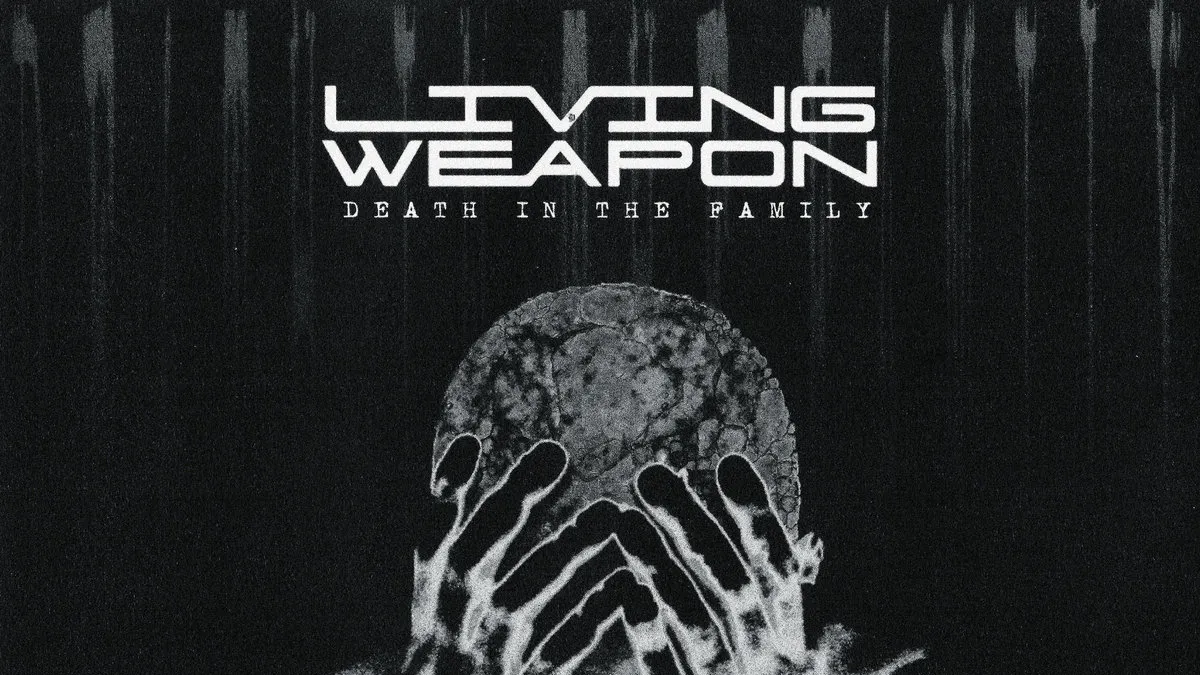
The return to metalcore’s sinister roots started in 2023 with a couple of bands, like Balmora and Azshara, referencing the gothic melodeath of Prayer for Cleansing and Undying; then came the early Underoath and Hopesfall worship (I Promised the World, Holder); now there’s a grip of trendy acts working within the pre-Jane Doe Converge paradigm (Killing Me Softly, Crowquill). Living Weapon might be the best band in that latter camp, and their pulverizing debut album, Death in the Family, sets a new high-water mark for metalcore’s burgeoning resistance to SiriusXM’s strain of mainstream complacency.
No score yet, be the first to add.
Living Weapon also have a leg up on their peers. Four of their five members played in the Boston metallic hardcore bruisers Vein.fm, and that same quartet also makes up the bulk of Fleshwater, the nu-gaze breakouts whose sudden popularity pulled their members’ attention away from hardcore. Vein.fm still haven’t caved to the growing chorus of fans baying for their return, but their members bring the same mixture of apoplectic fury and attention to detail to Living Weapon. Picking up where the 2021 Paradise EP left off, Death in the Family is unrelentingly violent in a way even the singularly intense Vein.fm never were.
A lot of that comes down to Living Weapon frontman Jon Lhaubouet: A bassist in his other bands, he growls in this group with a roar that sounds capable of shattering solid stone. His monstrously low screams are the perfect counterbalance to the band’s high-frequency guitar fracas and whiplash-inducing rhythms, ensuring that even when the songs wriggle free of their conventional structures (which is often), Lhaubouet is there to yank them back into place like a dungeon chain. That tension between brute strength and form-breaking creativity is what makes Death in the Family such a metalcore masterstroke.
Whether it’s the scalding feedback in “The First Element” or the pinched-nerve riffs in “Metastasis,” Living Weapon’s music is rife with friction and loaded with zonked-out ideas: digitally viscous bass tones, dank noise interstitials, passages where a seemingly stable verse suddenly crumbles under the band’s own destructive force. The album’s bionic production is actually more forward-thinking than it is conservatively retro, but even when exploring freshly hellish textures, Living Weapon avoid succumbing to the prog-rock pretension that plagues other “skronky” metalcore bands of their ilk.
Living Weapon’s deep ties to the hardcore underground are their secret sauce. Metalcore without mosh parts is of little interest to the generation of acrobatic spin-kickers driving the genre’s revival, and tracks like “The Leaving Process” and “Interspecies Quality Assessment” are heavy-duty pit-starters made for dancers, by dancers. Death in the Family proves that breakdown-based music can be progressive, technical, and diabolically scary to witness live, as all good metalcore should be.