
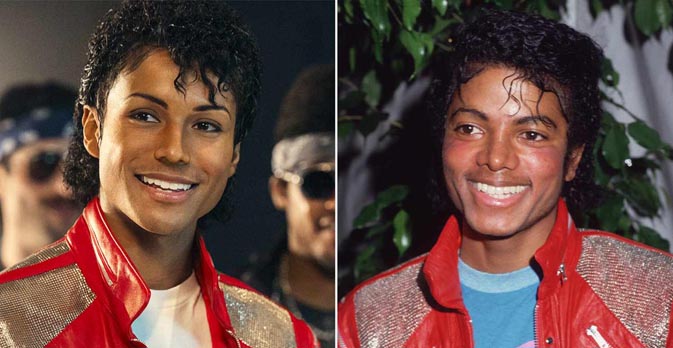
To talk about the biopic “Michael”, let's start immediately with two emblematic numbers: 38% and 97%. These are respectively the film's approval ratings from critics and audiences on Rotten Tomatoes, the most famous online aggregator of film and television reviews. Even on Metacritic, another site very frequented by cinephiles, the situation is similar, with an average of 39 points from critics and 79 from spectators. Given the obvious disparity in judgment, which of the two is right? We can affirm, Pilatesically, both, because the expectations from which they start are totally different. But before we get into the reviews, let's take a step back. The film “Michael” traces twenty-two years of history, from 1966 to 1988, in which Jackson goes from a child prodigy of a humble family in Gary to a global superstar living on a gigantic ranch in Santa Barbara County. Director Antoine Fuqua and screenwriter John Logan choose, as the underlying theme of the film, the Oedipal clash between the father-master Joseph and the son-victim Michael.
The beginning of the film sees the little singer forced to rehearse the songs and choreographies every day until late at night. Every time Michael made a mistake in a piece or a ballet, his father would whip him violently with the belt of his trousers. Joseph does not accept weaknesses, nor slowdowns in his plan of glory. “In this life you are either a winner or a loser,” he continues to repeat incessantly to his children. The Jackson 5 performed for months in dilapidated venues, until their lucky meeting with Suzanne De Passe of Motown, who was struck by the group's talent. The label's owner, Barry Gordy, takes the boys under his wing and turns them into stars, thanks to Michael's uncommon talent. From here on the film quickly shows the key events of the artist's career: the meeting with Quincy Jones, the memorable videos, the awards, the stadium tours. The biopic also shows the singer's loneliness, his love for animals, his charity towards children, the terrible accident that happened during the Pepsi commercial. “Michael” ends during the years of the “Bad” tour, when the King of Pop finally manages to free himself from his father's cumbersome presence and become fully autonomous. Originally, the biopic was supposed to end in 1993, showing the police investigation at Neverland and the first allegations of abuse raised by Jordan Chandler. The production was forced to cut this portion entirely and stop the narrative at the London leg of the 1988 Bad World Tour, due to a complex legal issue. During post-production, lawyers at Lionsgate (the company that produced the film) realized that the terms of the 1994 financial settlement agreement between Jackson's lawyers and the Chandler family prevented Jordan Chandler from being included or mentioned as a character in the film. As a result, the production had to discard all the material already filmed in 1993 to avoid serious legal repercussions. The director had to do 22 days of reshoots and heavy cuts to reshape the ending, stopping at the end of the 1980s.
Already from the credits, the phrase “His story continues” confirmed that the cut material and his difficult nineties will be addressed in a second film, thus optimizing the high production costs.
The critics are absolutely right about a screenplay that is not always up to par for a “larger than life” character like Michael Jackson. John Logan (three-time Oscar nominee) jumps with excessive ease from one period of Jackson's life to another, with two time gaps from 1970 to 1978 and from 1984 to 1988. We understand that it is impossible to tell Jackson's story in two hours, but these “jumps” do not allow us to understand some fundamental points of Jackson's personal and artistic life. The direction of Antoine Fuqua (specializing in action films such as “Training Day” and “The Equalizer”) has no particular flashes and does little in-depth exploration of a complex and multifaceted personality like that of the King of Pop.
Even the relationships with the brothers, almost like extras, are poorly delineated, not to mention the total absence (for legal reasons) of two key figures such as Diana Ross and Janet Jackson.
Yet despite the shortcomings of the script and direction, Michael works very well. For this reason, spectators return to see it several times at the cinema, so much so that the film has already exceeded 800 million dollars and has all it takes to surpass the record of “Bohemian Rhapsody”, the Queen biopic, which grossed 910 million dollars. Thanks above all to the monumental performance of Jaafar Jackson (Michael's nephew and Jermaine's son) who, with this exploit, has all it takes to compete for the Oscar as best leading actor in 2027. What is most surprising is that Jaafar is not an actor and that as a boy he wanted to be a professional golfer. In the end the lure of music was too strong and in 2019 he released his first single, “Got Me Singing”, becoming noticed for his vocal abilities and stage presence. In 2023 producer Graham King chose him for the role after a long casting process, although he was initially reluctant due to probable accusations of nepotism. During filming, Jaafar amazed everyone with his extraordinary dedication and talent in playing the beloved uncle, working for two years to prepare for the role. He studied acting with an acting coach and danced every day for hours, with two of Michael's choreographers, Rich + Tone Talauega, with him on the 1996 HIStory Tour.
What impresses most about Jaafar, besides the perfect dance choreography, are the looks, the expressions and the voice (by the way: go see “Michael” in English). In the film, he does not imitate Michael Jackson, as Rami Malek did with Freddie Mercury in “Bohemian Rhapsody”: he becomes Michael Jackson. There is a total adherence not only to the mimicry and movements, but to Jackson's spirit: his sweetness, his goodness of heart, his irony, his personal fragility which is juxtaposed with his artistic determination.
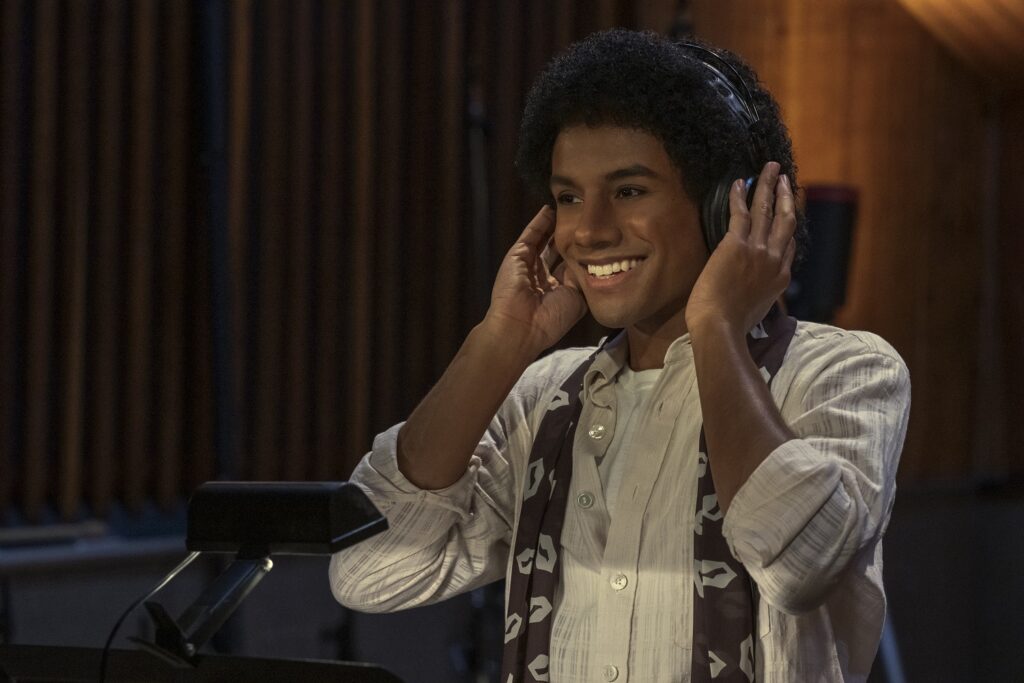
If Jaafar is extraordinary, the happy choice of casting in the roles of Joseph Jackson (Colman Domingo), Katherine Jackson (Nia Long), KeiLyn Durrel Jones (Bill Bray) and child Michael (Juliano Krue Valdi) should also be highlighted. If Fuqua doesn't delve too deeply into some psychological aspects of the singer, on the other hand he conveys Michael Jackson's musical and performative side very well. The performances of “Beat It,” “Thriller,” “Billie Jean” and “Human Nature” are a feast for the eyes and ears, especially when viewed in films in the iMax format. The sets, costumes, make-up and photography manage to give absolute credibility to the musical numbers, giving the impression of really being on a film set or at a Jackson concert.
Even the choice of songs, contained in the soundtrack of “Michael: Songs From the Motion Picture”, are one of the strengths of the biopic. From the splendid 1979 album “Off The Wall” were taken “Don't Stop 'Til You Get Enough” (which accompanies one of the most exhilarating scenes of the biopic) and “Workin' Day And Night”. The latter has a fundamental role in the economy of the film: the moment in which Michael, at the end of the Victory Tour, rebels against his father and looks him in the eyes, announcing his last concert together with his brothers. Five songs on the soundtrack are taken from the masterpiece “Thriller”: “Beat It”, “Thriller”, “Billie Jean”, “Wanna Be Startin' Somethin” and “Human Nature”. Only one song was chosen from “Bad”, the gritty one title trackmarking his full artistic freedom from his father Joseph and a new chapter in his life.
The film “Michael” has the indisputable merit of celebrating his art and at the same time shedding light (albeit briefly) on some aspects that have often been little understood. Among these, the vitiligo that lightened his skin, the chronic pain after the Pepsi accident, the dependence on painkillers following the very serious burns on his scalp stand out. In the film there is the essence of the artist Gary, his extraordinary three and a half octave voice, his incredible dance steps that defy gravity, his visionary nature in his video clips, the message of his songs. There is all his solitude, his humanity, his irony, his sweetness and his determination to free himself from an authoritarian father and find his way. The main merit of the biopic is that it brought a new generation of fans closer to Jackson's magic, who probably weren't even born in 2009 (the year of his death) and can now rediscover the numerous treasures he left us as a legacy via streaming. It is no coincidence that the King of Pop's listeners have gone from 70 to 110 million on Spotify in the last month, that “Billie Jean” was the most listened to song in the world in May according to the Billboard Global Chart and that “Michael” is the most watched film at the cinema in 2026. The film has rekindled “Michaelmania” all over the world, showing even the youngest the beauty and quality of auteur pop, sung, played and produced properly of art. Perhaps the biopic should not be judged for what it is only as a film, but for the effects it caused. Numerous images of Jackson's fans dancing and singing his songs during screenings of the film, of flashmobs in his honor all over the world, and of the many tributes and memories from those who loved MJ have gone around the web.
Curiously, the biopic was not appreciated by Paris Jackson, who, unlike the two brothers, did not take part in the production of the film, much less in the film premieres. Paris said on social media: “It's Hollywood. It's not meant to be completely accurate, but to entertain. It will appeal to fans who live in fantasy.” A statement with which one can agree or not, but which captures a fundamental point. “Michael” is not a documentary about Jackson's life, but a work of fiction, created with the aim of entertaining. From an entertainment point of view, the biopic works very well, because the film never has a dull moment in two hours and is even exhilarating in the musical and dance numbers. From a psychological point of view, despite not being particularly in-depth, “Michael” offers some interesting insights into his character, in which private fragility and public determination coexist. Probably no film, even with a more esteemed director, could summarize all the artistic greatness and multifaceted personality of Michael Jackson in two hours. If an imperfect film like “Michael” has the merit of introducing Generation Z to an extraordinary artist like the King of Pop and, at the same time, of rekindling a never-dormant love in his fans, then the biopic has largely done its duty.
Daniel D`Amico for SANREMO.FM
