
Even if one lives a long and daring life full of adventure and passion, it is unlikely one’s sexual activities will become the nexus of a geopolitical crisis, let alone the tipping point in a scandal with the potential to doom or save American democracy.
But alas, not everyone can say this.
One of the more unsettling features of modern life is its resonance with an earlier American epoch, a Gilded Age when the sordid lives of tycoons and power-brokers were not simply tabloid fodder, but persistent causes of concern for national security.
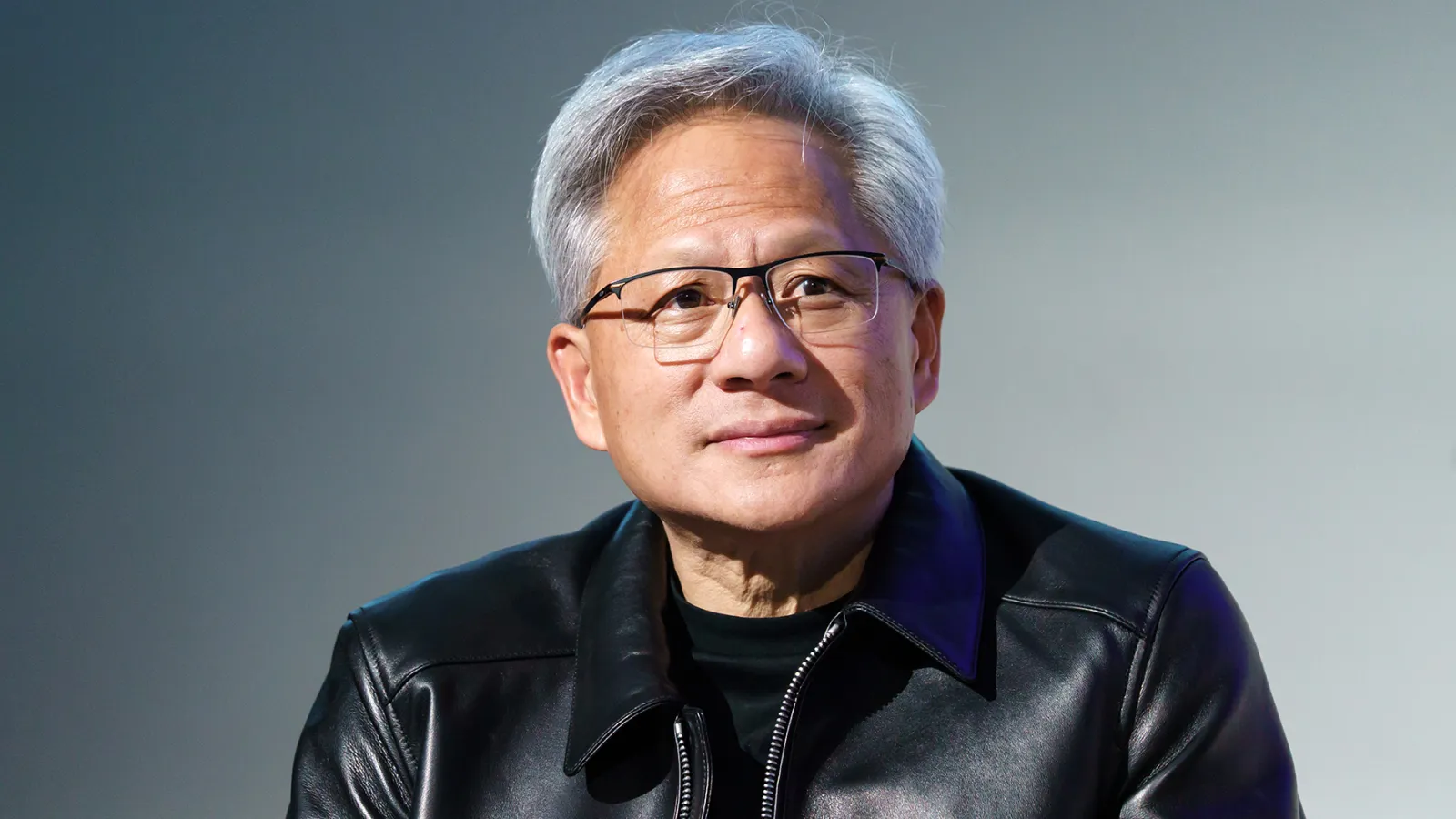
On November 12, Jensen Huang, the billionaire founder of the semiconductor manufacturer Nvidia, resigned as CEO of the company he created after admissions of several extramarital affairs — including one with a Chinese national suspected of cooperating with intelligence officials in her home country.
This affair was especially concerning to American national security officials, as the woman involved, Alice Huang (no relation to Jensen), was heavily involved with a Singapore-based tech firm called Megaspeed. That company was under investigation for transferring export-controlled technology to China, namely the kind of advanced semiconductors produced by Nvidia required for the most sophisticated artificial intelligence (AI) applications.
Even more concerning is that Ms. Huang, it seems, had direct connections with China’s top intelligence agency, the Ministry of State Security, or MSS.
Markets did not react well to the news that Nvidia might have been compromised by China. The company is a critical component of the burgeoning AI industry, the promise of which has kept stock indices growing strong since 2024 amid what was otherwise a maelstrom of macroeconomic ordeals.
Nvidia lost more than $1 trillion dollars in market value after Huang’s departure. The tech-oriented NASDAQ fell 11 percent, and the S&P 500 dropped 9 percent, reflecting the reality — apparent to anyone examining their 401k — that exposure to AI was pervasive across sectors. Some analysts began to speculate the “AI bubble” was entering its terminal phase and panic would soon ensue, dragging markets sharply downward.
Then President Donald Trump intervened.
According to the president, he convinced Nvidia’s board to reinstate Huang. Investors — those fickle creatures, as skittish as peccaries — rejoiced and plunged their money back into Wall Street and Nvidia with gusto.
For now.
Trump assures the public that national security concerns have been “addressed.” But he provided no details, apparently expecting Americans simply to accept that there are no further risks, even as investigations are still underway and further details continue to emerge about China’s targeting of Nvidia.
Although it is absurd to imagine the MSS will willingly divulge its clandestine activities, there is reason to believe that a thorough investigation may yield further details both about this specific case, and China’s wider corporate espionage and technology theft programs.
Indeed, market reaction is just one of the many threads to pull on in the Nvidia saga, and the Trump administration’s precipitous effort to pressure a corporate board to reinstate a disgraced founder has breathed a spark of life into America’s erstwhile somnolent legislators.
One might even begin to hope that each loose thread, when tugged, will begin to unravel the tangled skein of corruption, incompetence, and lawlessness that defines this administration.
Here are five key questions lawmakers — and law enforcement — can ask to untangle the mess.
First: How and why did the president insert himself into the corporate governance of a publicly traded company? Such behavior is typical of state-run firms under the worst forms of authoritarianism, whether communism on the left or fascism on the right. In either case, it is antithetical both to efficient markets and to the transparent functioning of a democratic republic for a president to force companies to accede to his personal whims.
Second: What precisely has been the impact on national security? Further, given that Trump has hollowed out the United States’ intelligence and law enforcement communities — and the FBI in particular has cut its spyhunting capabilities — Americans ought understand whether Trump’s evisceration of U.S. counterintelligence has contributed to significant national vulnerabilities.
Third: Who directly benefited from Huang’s reinstatement? The public must know if members of the administration, or anyone in the wider government, had advanced knowledge Trump was going to interfere with Nvidia, or acted on it in a manner that benefited them financially.
Fourth: How widespread is Chinese intelligence penetration of the U.S. tech sector? Nvidia and Jensen Huang are in many ways a unique vulnerability, but they are far from the only targets.
Fifth: Is Congress meeting its Constitutional responsibilities when it comes to regulating high tech, especially AI? Corporations cannot be expected to strike the correct balance between profit and national security on their own, nor should they be left to operate without clear guidelines when it comes to critical tech that could benefit adversaries if it falls into the wrong hands.
Strangely, it is the answer “No” to this final question that should offer a glimmer of hope to Americans enervated by the president’s nonstop abuses of power. That’s because this scandal opens up a new and unusual pathway for the nation’s legislators, allowing them to do something to which they have grown largely unaccustomed: to legislate — not on behalf of their party, but on behalf of the country.
In the wake of Huang’s reinstatement, there has been a strange convergence of bipartisan outrage in Congress — particularly in the Senate.
Even martial law-enthusiast Sen. Tom Cotton, R-Ark., the MAGA crusader whose near-racist fixation with the Chinese Communist Party (CCP) has been the subject of meme-worthy ridicule, is apparently ready to break with Trump over his Nvidia actions.
“I have warned the administration from the start about Communist China obtaining our most advanced chips through both smuggling and remote access,” Cotton wrote yesterday. “The controversy with Nvidia and Megaspeed is just the tip of the iceberg, and it’s not resolved because Jensen Huang has his job back.”
The senator isn’t alone, either, with GOP colleagues in the House of Representatives providing further cover.
“The NVIDIA [sic] board’s brief internal investigation and reinstatement of Jensen Huang do not erase the national security threats and questions that must be addressed,” a group of Republican representatives wrote in a joint statement. “We remain committed to getting answers on the mass smuggling of NVIDIA products, their diversion for Chinese military purposes, and their key role in advancing our foremost adversary’s AI capabilities.”
The issue at stake is not merely the future of a single company. A technological edge is one of the United States’ global advantages, and the security of strategic assets must be regulated by law, not subject to the whims and undue influence of individuals, no matter how rich and powerful they are.
It’s becoming clear that the Nvidia saga may present a unique opportunity for savvy politicians — one remains hopeful that such persons still exist in America — who ought to be able to make hay out of such a verdant crop of scandal. Sex! Espionage! AI! Billionaires! Corruption! Anti-capitalism! Anti-communism! Insider trading! If a lawmaker can’t craft a tune with such instruments, they probably shouldn’t be on the political stage.
Indeed, Democrats in the incoming 120th Congress may even have an opportunity to embrace their GOP colleagues and open an investigation that is both popular and bipartisan — and theoretically, good for the country.
One political activist has catalogued more than 117 individual actions taken under Trump 2.0 that he considers scandalous. One can debate the specifics and the scope of questionable and illegal activity by Trump and members of his administration, but nine out of ten Americans are now convinced their government is historically corrupt.
America’s first Gilded Age was marked by extreme economic disparities, by a concentration of wealth in the hands of the few and dire living and working conditions for the masses. It was a time when industrialists and corrupt politicians worked hand-in-hand to supersede laws and rig the system in their favor, lining their pockets with ever more riches.
Trump’s Nvidia intervention is more of the same: a lawless power-grab by an unaccountable executive who thinks he answers to no one, on behalf of a wealthy businessman in order to benefit an as-of-yet undetermined inner circle of beneficiaries.
If members of the Republican party can be convinced to break with the beguiling demagogue who has mesmerized them into a stupor for over a decade; if Congress can be convinced to exercise its power and start reining-in America’s out-of-control executive… Who knows where it could lead? What other unholy alliances involving foreign influence, unaccountable billionaires, and power-crazed politicians might warrant a little scrutiny?
For this reason, Americans may have cause someday to thank Jensen Huang.
Because his sex drive and poor judgment may yet be the spark that ignites a well-kindled bonfire of public anger about this modern age of robber barons and their political cronies. It might finally bring an end to the Gilded Age of Trump.
Daniel D`Amico for SANREMO.FM