
B
ack in the day, I was occasionally blamed for ushering in an era of “transgressive” comics. If I had, I was hardly alone — R. Crumb got there first — but chief among my early detractors was Charles M. Schulz. My boyhood idol dismissed the topical subject matter that interested me as “low-hanging fruit,” perishable and cheap. He once said that most of the comic strips young hopefuls sent him for advice in the Seventies were drawn in the style of Doonesbury, and he didn't mean it as a compliment. In his view, not only had I disrupted the comics pages with my ephemeral snark (so unlike his timeless, universal truths), I'd also made the neighborhood safe for bad art.
On this latter point, I had to agree. Years before Cathy or Dilbert or South Park, I'd invented not-ready-for-prime-time cartooning. My strip had been sprung on an unprepared public in larval form, overwritten and poorly drawn. No one had ever seen anything quite like it, so my syndicate pitched the crude drawings the only way they could — by framing them as urgent, authentic dispatches from someone on the front lines of the youth movement (I was 22). Doonesbury took flight on novelty, not virtuosity.
Fortunately, Schulz's poor opinion of my work professionally never led into our relationship. He was unfailingly cordial to me, and once invited me to spend a day with him in his studio for a magazine article I was working on. In time, he allowed that I'd created something novel, but I always reminded him that his body of work, far more radical for its time than mine, had cleared the way. Peanuts revolutionized the comics, and there is no cartoonist of any succeeding generation who fails to acknowledge their debt to the artist who upended decades of superficial comic-strip convention by plumbing the inner lives of his highly identified characters. Among them was his masterpiece — a puppy.
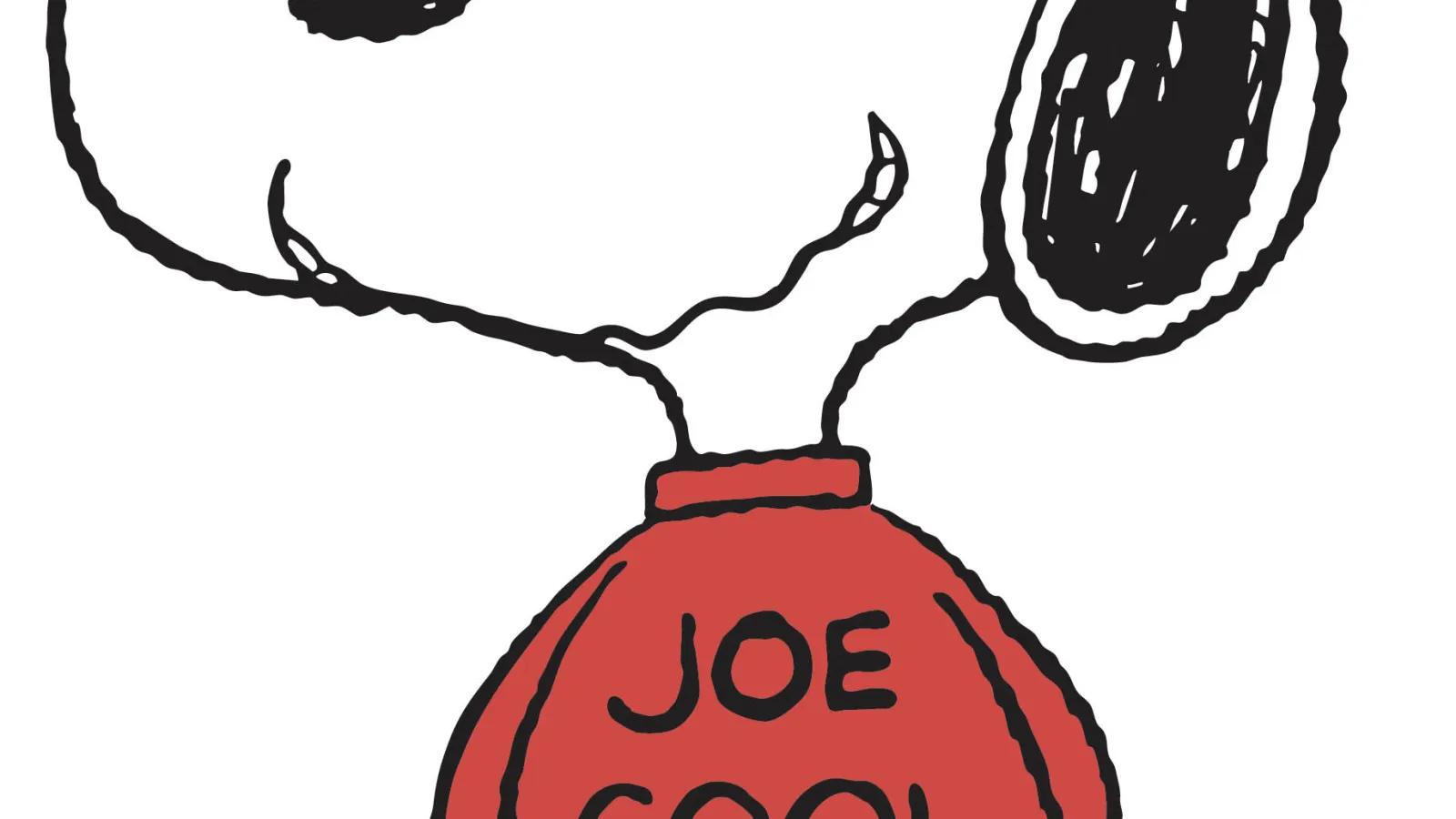
Surprisingly, Snoopy began life in Peanuts as a quite ordinary dog — ingratiating, loyal to his master, and, like most animals, prone to keeping his thoughts to himself. All that changed on May 27, 1952, when a passing Charlie Brown joked about his pet's ears, and Snoopy responded with his first thought balloon (“Why do I have to suffer such indignities?”). He trotted off on all fours, but a few years later, through anthropomorphic magic, he appeared as bipedal — running, dancing, skating — the charming canine who soon became the nation's most beloved fantasist.
Since no one could hear his thoughts, Snoopy was never at risk of being ridiculed as mercilessly as the rest of the Peanuts gang. He could pantomime his reveries to his heart's content, and when the kids noticed him at all, they judged his behavior bizarre but harmless. Not that he paid no internal price: The adventures of his alter egos were often as disastrous as those of the strip's humans. Schulz famously believed there was no humor to be found in winning. The World War I Flying Ace never won a dogfight with the Red Baron, the World-Famous Attorney lost every case, and the World-Famous Author founded in a sea of rejection slips. This last was a tragedy. Savor this brilliant excerpt from one of the Author's novels-in-progress:
“I can't tell you how much I love you,” he said.
“Try,” she said.
“I'm very fond of you,” he said.
“Nice try,” she said.
It was this haiku-perfect character humor that dazzled Schulz's peers. In Snoopy, he had created an American archetype — the persistent dreamer for whom nothing seems out of reach, even when it usually is. In the process, Snoopy took on far more agency than your typical, needy dog, becoming much more like, well, a cat. Aloof, autonomous, ever disdainful of an owner he called “that round-headed kid,” Snoopy would typically preannounce the arrival of a new persona — “Here's the world-famous …” — and then let his imagination take over, come what may. He represented, for me anyway, perfect freedom, and in my early work, I borrowed this device of self-narration. My characters often declared who they thought they were, no matter how at variance it was with whom they revealed themselves to be. The laughs lay in the contradictions.
While Schulz's sensibility was not forged in the counterculture, his neurotic kids contributed to the emotional permission structure that came to define that era. Not long after Doonesbury's launch, I went looking for my own avatar, and soon found him in The Electric Kool-Aid Acid Test, Tom Wolfe's legendary account of the antics of Ken Kesey and his Merry Pranksters. One of them went by the name of Zonker.
Perfect, I thought, and soon über-freak Zonker Harris took his place in my swelling troupe of characters. In a homage to Schulz, Zonker took a deep dive into his imagination and surfaced as a German U-boat commander navigating Walden Puddle, but he soon moved on to smoother waters. His naivete was intentional, fearing, as we all do, turning 30, and he became more Peter Pan than Snoopy. To this day, he's the only character in the strip who hasn't aged.
Snoopy is now a global superstar, the lead player in a plethora of Peanuts productions across multiple platforms. Such is the brilliance of his conception that he remains relatable even in the absence of a voice. Snoopy expresses himself entirely through body language and the handful of yelps and sighs bequeathed to him by animator Bill Melendez in A Charlie Brown Christmas.
As icons go, Snoopy seems imperishable, one for the ages. Why? Because we will always love the indomitable. “Be yourself,” he once thought. “No one can say you're doing it wrong.”