
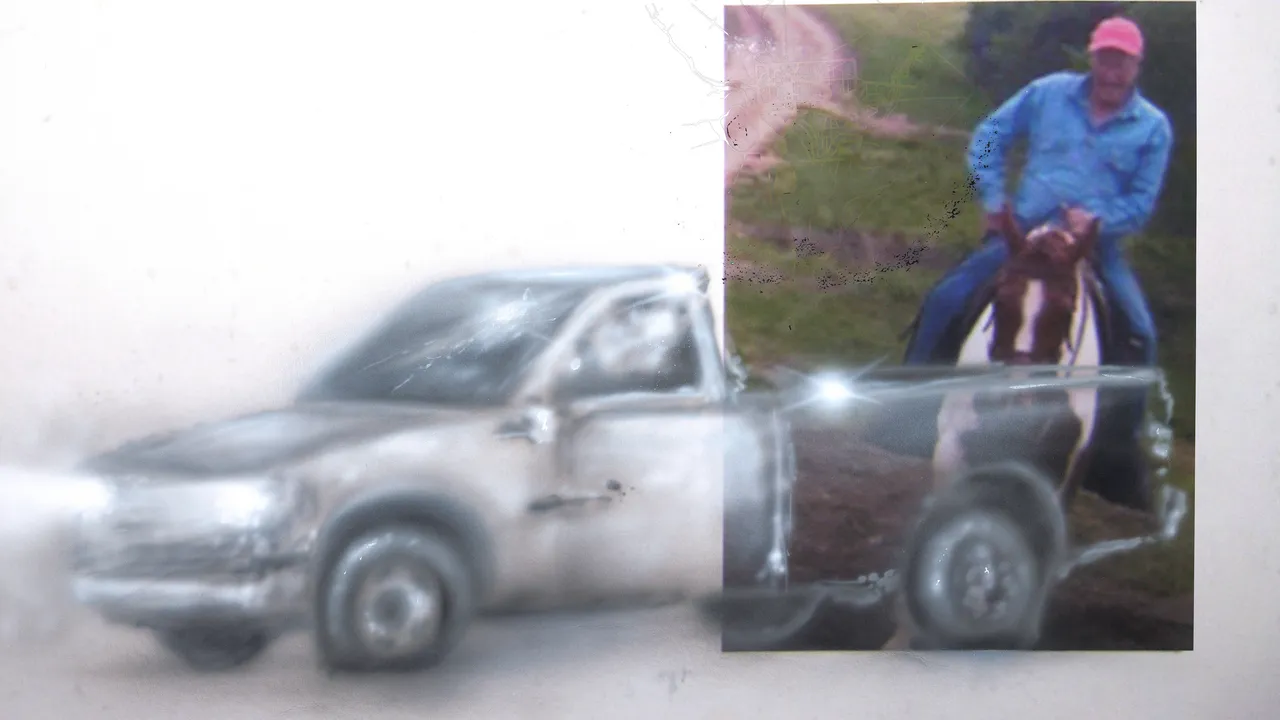
On their debut album, 2024’s Strange Burden, Font didn’t seem too preoccupied with being fully understood. The Texan post-punk outfit invoked the Pharisees, wrote a song inspired by Cormac McCarthy’s meditations on German chemist August Kekulé, and even taught me the meaning of the word “grawlix.” They conjured up a danceable, proggy sound with a Model/Actriz loucheness—as if David Byrne had shed the big suit for a catsuit—and lyrics that felt more percussive than explanatory. But on their follow-up album, American Bully XL, they take a sharp turn toward the vulnerable. Here, their songs ache for recognition to a self-conscious degree, invoking both the heartbreak of classic country songs and a more introspective, self-effacing woundedness through impressionistic lyrics and squalls of industrial distortion.
The core of Font comprises Thom Waddill on vocals and guitar, Roman Parnell on bass, Anthony Laurence on guitar and synths, and Jack Owens on drums, though they also bring on a bevy of additional elements to add density to American Bully XL: analog synths, a noise box, an Electronic Wind Instrument, occasional sax, additional vocals, and profuse sampling. These layers of texture often put Waddill’s keening vocals under the harshest of spotlights: the industrial blare of opener “Punish Task” ratchets up the tension of Waddill’s ragged shout with discordant synths and an increasingly frenzied drumline. Even the deceptively synth-poppy twinkle of “Night Sight” thickens menacingly under Waddill’s ragged voice. Other times, the instrumentation and production obscures his vocals in near-oppressive fashion, as if it’s trying to push them underwater. On “You,” Waddill’s howls of “I don’t wanna die in this body” become hauntingly unintelligible beneath the crush of clattering drums and opaque synth chords.
No score yet, be the first to add.
The album’s warped approach to its country influences allows it to reveal tenderness not in spite of distortion, but through it. The quavering synth of “Bang Bang” and tinny, syncopated almost-waltz rhythm of “Atom” add tinges of insecure unsteadiness to tracks that could otherwise read impenetrable in their harshness. The plaintive fingerpicking, warbling keyboard lines, and offbeat samples of opener “Bad Faith” feel like a glitching memory of a country ballad. And on the dreamy “Texas,” layers of synths veer seamlessly between sounding acoustic and inorganic, aping lap steel one moment then a dial tone the next. All the while, Waddill’s pleas toward an ex-lover fade into the distance; his musings on heartbreak feel more desperate from their digitally-enforced distance.