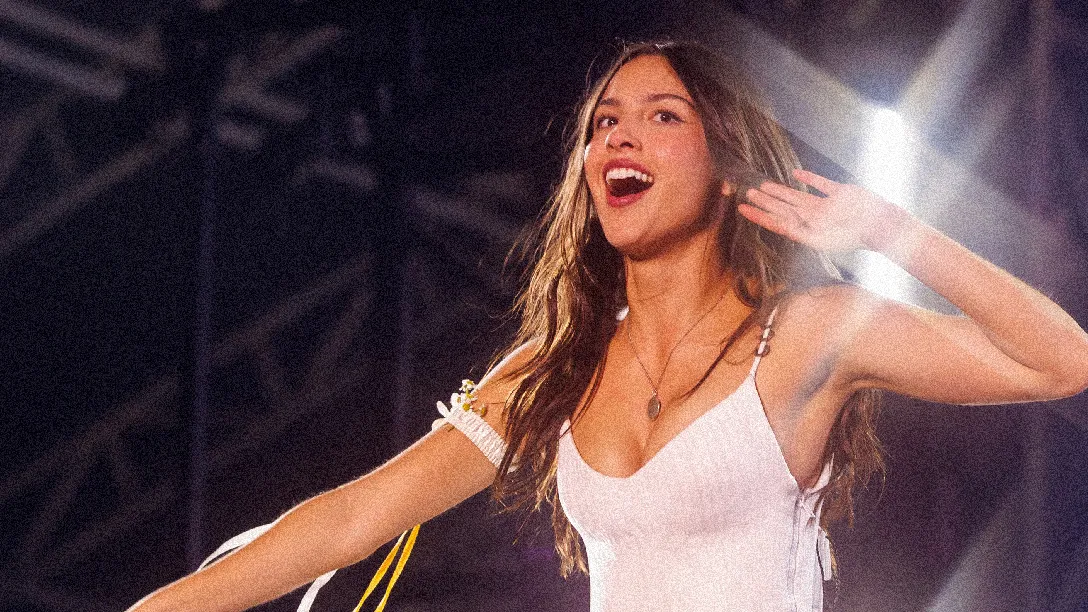
Those that Rodrigo welcomed to the stage were her heroes and the women that have shaped her, and throughout the day, I was moved by the festival’s commitment to intergenerational womanhood, artistry, and connection. There are the performers, of course, like Bikini Kill and Garbage, who carried themselves as the quasi-elders of the festival (“I just turned 60, so I’m very old and I know exactly what I’m talking about,” Garbage frontwoman Shirley Manson jokes at one point.) These women dispensed advice on artmaking, growing up, and standing up for what you believe in between songs: Hanna advised young girls to never throw away their teenage diaries, nodding towards the songs of hers pilfered straight from her 16-year-old experiences (“Your journals … that’s your fucking art! Your stories are gonna save other people!”); Manson encouraged her crowd to just “enjoy your fucking weird self tonight.”
Even beyond the performers, I found this ethos reflected through the attendees: all day long, I saw families attend shows together. During Garbage’s performance of “Only Happy When It Rains,” I watched a mother and her child dance on a picnic blanket, hugging each other, gently swaying in mutual embrace. And, somehow, I found myself in what is the de facto dad corner during Chappell Roan’s set, flanked on all sides by dads toting their kids on their shoulders as they shriek along to “Pink Pony Club.”
This environment—a little woo-woo (lovingly), a little hippie, a little DIY, a little familial—fostered surprising moments of connection. While I was jamming out to “Francis Forever” during Mitski’s set, a young girl comes up to give me a handmade Mitski pin: “I just noticed you singing along so I wanted you to have this button.” I thank her and want to ask more—like, has she been doing this all day? Did she just decide on a whim before the festival that she was going to be its designated button fairy?—but before I can get another word in, she disappears into the crowd like an apparition.