
When Taylor Swift decided to launch the campaign to re-record her albums to free them from the control of the owners of the original masters, the famous Taylor's Versiontransformed a contractual issue into both a cultural and productive case. She drew attention to a mechanism of the recording industry that many artists before her had dealt with without achieving great success and at the same time she indicated a way to “take back” the songs: not by recording updated versions, but by remaking them as faithfully as possible, recalling producers and musicians of the time if possible. John Fogerty waged a similar battle to reclaim Creedence Clearwater Revival's repertoire and last year rerecorded his hits on an album titled Legacy.
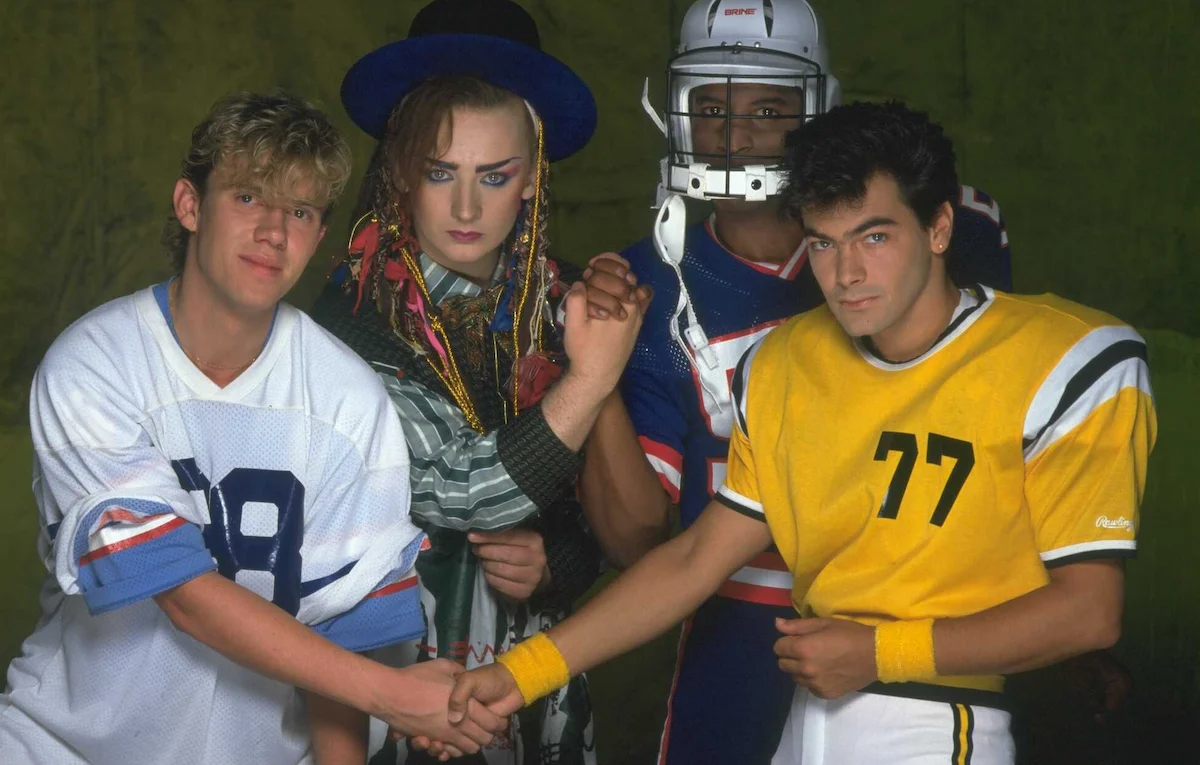
Singers and groups who do not have the masters of their old creations can, within certain conditions, try to recreate them faithfully. What they can't do is get back the youthful timbre of the vocals they recorded many years earlier. At least until today. Boy George and Culture Club didn't just re-record an old song: they used artificial intelligence to bring back to life the voice the singer had in 1983. The result is the new version of Karma Chameleon released yesterday which inaugurates the activities of Artist Included, a company founded by Paul Kemsley, who is Boy George's manager, with the lawyer and producer Jeremy Rosen. The Culture Club singer is the creative director.
At the center of the operation is the desire to control one's own work. Very often, or at least this has traditionally been the case, the original recordings remain in the hands of the record companies. The authors of the songs continue to receive editorial fees linked to the composition, but the revenues deriving from the exploitation of the recording follow a different path. And that's where projects like these come in. By creating a new recording, the artist generates a new master and can control its licensing and commercial uses. In the case of Culture Clubs, artificial intelligence added a further element: the possibility of recovering the vocal timbre. Is it a further step: towards fidelity to the original or towards the cancellation of the distinction between what is original and what is not?
The new version titled Karma Chameleon (Artist Included) where there is a strange sound shift after Boy George sings “I'm a man…” at around 0:23 and other small differences compared to the original which sounds more natural in some points, for example in the special (“Everyday is like survival…”), and in a slightly different way in the drum sound:
The original version taken from Color by Numbers from 1983:
The episode that inspired Boy George to remake Karma Chameleon was the request to use the song in an advertising campaign for Virgin Voyages. Richard Branson, who launched the Virgin record label for which the band recorded, reportedly paid four million dollars to secure it. Half of the sum would go to the owners of the original master. Boy George, who does not own those rights, received only compensation for his participation. “When we wrote it,” he tells Rolling Stone US«we certainly didn't think about what would happen after 40 years, we didn't imagine that it would become part of so many people's lives».
If you don't listen carefully, the “new” Karma Chameleon it is so faithful that it almost seems like a remastering. The musical base was recorded from scratch by Roy Hay, Mikey Craig and other musicians and the vocal one was worked on by training the AI with the demos that producer Steve Levine has in his archive. The group's former drummer Jon Moss, who as is known to have been at the center of a dramatic separation from Culture Club, was not present at the sessions. Being one of the authors, Moss will still receive compensation deriving from publishing revenues.
The only element assisted by artificial intelligence is therefore the voice. «I listened again to the way I pronounced the sentences and where I positioned my voice, whether in the nose, in the throat or in the chest. What you do instinctively at 22 you no longer do at 40 or 65. There was a dry and incisive way of singing it that I had forgotten after doing it live so many times”, Boy George told Rolling. «The original version is very European and very youthful. Over the years I've made it a little bluesier, making the notes longer. It's a question of nuances. The songs change when you sing them for forty years. It was interesting to go back to the original recording and get that feeling.”
Now Artist Included plans to use the artificial intelligence developed over 18 months to re-record Culture Club's entire catalog starting from another hit, Do You Really Want to Hurt Me. Not only that: Artist Included, whose initials are curiously AI, is discussing similar projects with other 80s and 90s artists. “Artificial intelligence is not going away,” says Boy George. «We might as well understand how to use it and try to get there before the others».
