
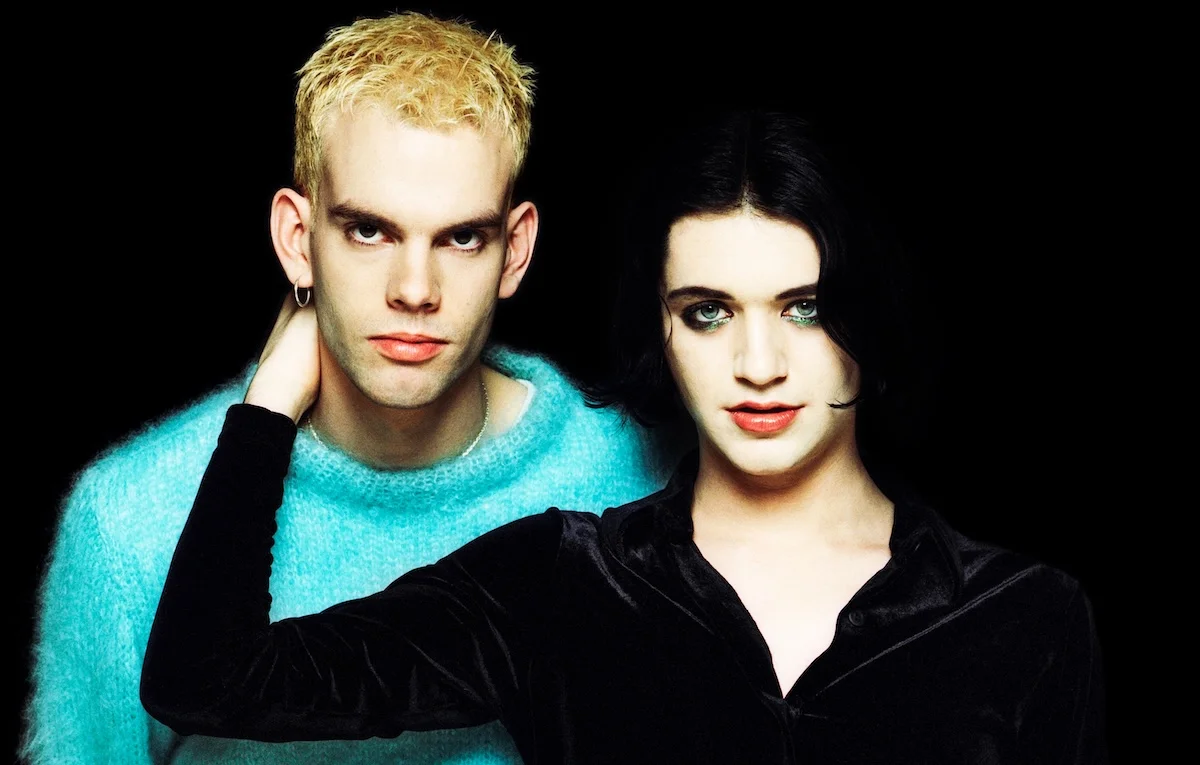
“I'm sorry I can't talk about it,” Brian Molko tells me at the end of our chat. He is referring to the ongoing lawsuit for the insults (“fascist and racist”) aimed at Prime Minister Giorgia Meloni from the stage of the Sonic Park in Turin in 2023, for which the Placebo frontman is facing criminal proceedings initiated for the official crime of contempt of the institutions of the Republic. He risks a financial penalty and is currently being sent to trial. At this moment therefore, the group communicates, “we cannot answer any questions on the subject, as it is a legal proceeding still ongoing”.
The reason I'm here talking to him is the release of the new version of Placebothe band's first album released thirty years ago. A way to reclaim a historical period that no longer exists and ensure that urgency can be revived with new technology, a new awareness and a new desire to question ourselves. I then ask him where the idea came from. Molko tells me it's Tricky's “fault”. «At the end of 2024 I read an interview in which he said he wanted to redo his first album, Maxinquayebecause at the time he didn't have the studio experience nor the access to the technology necessary to transform what he had in his head into sound, and to carry with him an unresolved relationship with that record ever since. Reading these words I realized that they were describing my situation exactly.”
«When we first went into the studio all we knew how to do was record the songs as we played them live. Which is fine for a first album, but that inexperience has continued to haunt me over the years.” Then came Placebo's thirtieth anniversary and from there the spark came. «I thought: what a fantastic idea Tricky had. I have to steal it from him! Then I would have had a chance to repair my relationship with this record and these songs.”
After looking for and finding in Rob Kirwa a producer who was “direct and brutal” in telling him what worked and what didn't, Molko found himself faced with a task he had put off for too long. Listen to the record again. «You won't believe it but I had never put it on again since we recorded it. Around the third or fourth song I realized that the discomfort I was carrying was all in my head. Twenty-five years ago I had a feeling, I decided that feeling was the truth, and then I carried it around for twenty-five years as if I were punishing myself. It's quite strange, psychologically, to realize that.” He laughs at himself: «I thought: what a fool I was! Because maybe it's a naive record, maybe it's too minimal, but there's nothing wrong with those songs.”
On an artistic level, the goal was to find a meeting point between the way those songs are played live today, after thirty years of concerts, and the way they sounded in 1996. «For us it was essential to preserve the integrity of the original. We didn't take anything off the record. Except, perhaps, a didgeridoo in one song.” And here comes the line that best describes the spirit of the operation: «It is said that the Beatles were so good that they let anyone who came by the studio play. Here you are. That day in the studio we were so done that we let Robert Schultzberg (drummer of the band from 1993 to 1996, ed) played his damn didgeridoo.” And what did you do with it? «I replaced it with a synthesizer». Yes, ok there is. And then? «Lots of overdubs. Guitars, keyboard patterns and Stefan's backing vocals.” There is also the hall of mirrors of duetting with the self of 30 years ago. “It was interesting to discover the similarities and differences between the singer I am today and who I was then.”
However, he returns to one point several times, almost as if he wants to make sure it arrives loud and clear. This disc is not intended to replace the original. «It is designed as a travel companion, not as a substitute. We're not eliminating anything: the original version will remain available, and it's up to fans to choose which one to listen to. If anyone fears losing access to the original, they can rest assured. It won't happen.”
The conversation then moves on to the 90s which for English music means Brit pop and Cool Britannia. Two concepts that Placebo crossed like a foreign body. In a decade dominated by a very masculine attitude, Placebo (along with Suede) represented something different. I ask him what it was like, in those years, to make that type of music in England and to oppose that culture. «It's easy to look at the 90s as something romantic and that's partly true. Maybe we had more freedom, more physical connection with others. But I also remember a lot of hostility. A lot of homophobia, a lot of misogyny. Trans people weren't even part of the conversation back then.”
Machismo, he says, was everywhere. He recounts a specific episode: «I remember going to a Paul Weller concert, thinking it was a safe place. I went to the bar and had to leave because a group of people were ready to beat me just because of the way I was dressed.” And it wasn't just a question of the band: «Even before Placebo, when I went out, I didn't dress excessively. Just a little makeup, some painted nails, long hair. And despite this, I continually encountered hostility from people I didn't even know.” That's where, he says, it comes from Nancy Boy: «I wanted to provoke homophobes, but also take back those insults, make them mine, take away power from those people».
The photograph that emerges is ambivalent: «It was a more homophobic and more misogynistic era, but at the same time, paradoxically, we had more social freedom». And the thing he misses most, he says, are the concerts from back then. «It was before cell phones. I'm old enough to have seen The Prodigy in 1993: 15,000 people going crazy together, with no phones in their hands. It felt like a transcendental, almost religious experience. The concerts had more value because they were completely ephemeral, unrepeatable.” It's that feeling, of being transported for a moment into another universe, that Molko says he still wants to recreate at Placebo concerts. «It's more difficult today, because people want to use their phones during live shows, and I understand why, it makes sense. But it makes it harder to create that collective euphoria. That's what I'm still trying to recreate.”
Even with all the contradictions he talked about, in the 90s there was a sense of possibility, a hope for progress, whereas today we live in a different time. We all know the themes, but is there a way to resist, even in music, in this era of hyper individualism and the return of various fascisms? Molko starts from afar. “In the 1980s, even though we lived under the threat of nuclear annihilation because of the Cold War, there was always a sense that we would make it.” Today, he says, that hope is no longer there, and it is a profoundly destructive thing. “So what do I choose to do? I bring it into my writing. I try to tell what it means to be human today, to tell the socio-political situation through what people hear in the songs.”
There is a thought that worries him in particular, linked to the new generations: «In many ways, we are already dying for a future that we think is inevitable, and perhaps it is the first time it has happened in this way. I think that even for Generation Z and Generation Alpha the social pact is broken.” He does not spare a broader, and darker, reference to the European political situation: «With the risk of a fascist drift in Europe too, it is difficult not to feel that we are going backwards, from a socio-political point of view. I continue to be surprised by the support certain parties receive across Europe. It seems absurd to me: not that much time has passed since the end of the Second World War, or even since the end of Francoism in Spain.” And he adds, speaking of the environmental climate: «It worries me today. It's inspiring as a writer, but as a human being, when you start thinking about the future and realize that we'll never have that environmental tipping point that we thought we had, it's hard to exist. It's a confusing time, and it's hard to stay hopeful.”
Yet, even here, Molko does not end on pessimism. «I think it's important not to lose hope, and not feel helpless. Those who want to exploit us really want us to feel helpless, so we must not fall into that trap. Only we can build a better world, but we must persevere, and not forget not to forget hope.”