
If you purchase an independently reviewed product or service through a link on our website, Rolling Stone may receive an affiliate commission.
Noise-canceling headphones are a must-have for frequent flyers, and the right pair can make long-haul flights more than just bearable. Our always-on-the-go writers are constantly testing audio gear, meaning we have some thoughts on the best headphones for travel.
For starters, travel headphones should be able to block out a variety of noises, particularly the roar of a jet engine, but also the bustle of an airport terminal, crowded trains, and everyday hubbub. The best noise-canceling headphones should also have transparency modes that let you stay aware when needed. And while noise-canceling is arguably the top factor, it’s not the only one.
At a Glance: Best Travel Headphones
In addition to noise-canceling, key factors when buying travel headphones include battery life, case design, and comfort. Headphones should have a long battery life to keep up with hours spent in the air, particularly because features like noise-canceling can quickly drain battery life.
Case design is a top factor as well, particularly for anyone who likes to pack light; a case that is too large or unprotective can make you hesitant to actually take your headphones with you. That’s why we prioritized cases that are compact yet protective, with bonus points if they have additional storage for items like charging cables and audio cords (that means that some of our favorite noise-canceling headphones, like the AirPods Max, didn’t make the cut due to the lack of a protective case and so-so battery life).
Comfort is key, particularly if you’re going to be wearing the headphones for hours at a time, which is why we looked for options with comfortable earcups and headbands. And of course, sound quality is one of the most important factors.
The Best Headphones for Travel
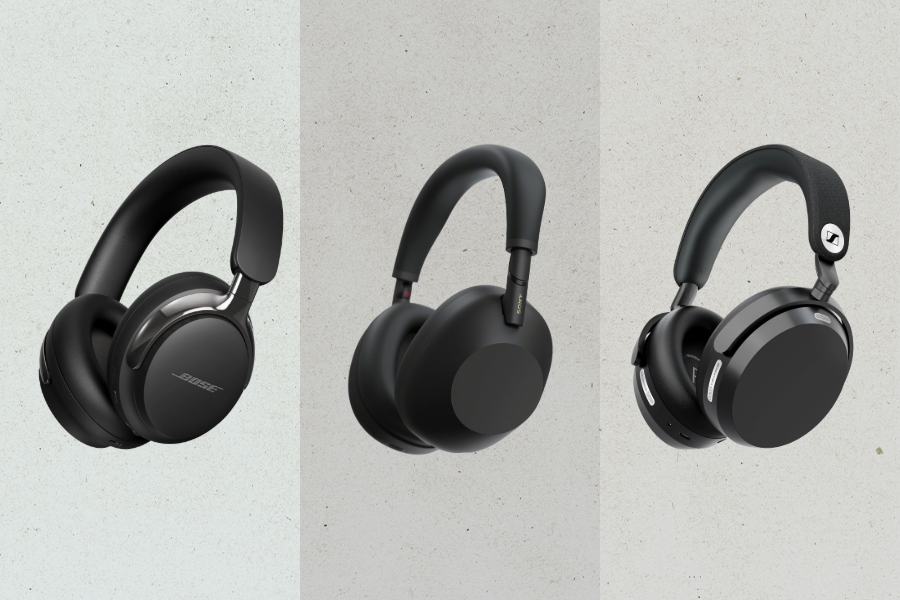
The best headphones for travel include picks from some of our go-to audio brands, including Sennheiser, Sony, and Bose. For this list, we stuck with over-ear headphones, but you can also check out our roundup of the best noise-canceling earbuds and best earbuds for workouts.

Jonathan Zavaleta/Rolling Stone
Best Overall
Sennheiser Momentum 5 Wireless
Quick Summary: With impressive battery life, great ANC, and a slimmed-down carrying case, the Momentum 5 headphones are an excellent companion for long travel days.
Pros: Comfortable fit, good ANC and excellent sound quality
Cons: Plain look, may be somewhat bulky for some
Sennheiser’s Momentum 5 headphones are, on paper, a small upgrade over the Momentum 4 model. But the significant improvement in noise-canceling performance, combined with convenient changes like a new, slimmer carrying case, makes these one of the best headphones for travel.
They’re among the most comfortable headphones I’ve tested, a key factor if you’re going to wear them for hours at a time. The plush earcups that are comfortable without my ears getting hot, and the headband is sufficiently padded. That said, they may feel somewhat bulky for those with smaller heads.
Noise canceling is one area where Sennheiser has seriously stepped up its game. These headphones are now competitive with some of the best ANC headphones on the market, capably reducing background noises ranging from loud HVAC systems to conversations.
The stated battery life is up to 57 hours, which is more than enough for the most grueling travel days. I haven’t specifically tested the battery life claims, but I have been able to use the headphones for several weeks before having to recharge them. I’m also a fan of the redesigned carrying case, which is slim and should easily fit into most personal item-sized bags.
Review: Sennheiser Makes a Compelling Case for the Best Everyday Headphones With the Momentum 5
Jonathan Zavaleta/Rolling Stone
Runner up
Bose QuietComfort Ultra (Second Gen)
Quick Summary: With class-leading noise-canceling and great comfort, the QuietComfort headphones live up to their name.
Pros: Customizable ANC modes, clever auto-wake function
Cons: Pricey, earcups wear out somewhat quickly
The upgrades in the latest iteration of Bose’s QuietComfort Ultra headphones make them one of the most convenient headphones for everyday use, including for travel. Bose stepped up the battery life compared to the first generation, and the noise-canceling performance is still class-leading, making them ideal for long hours spent on a flight.
One unique feature is the auto-wake function. Put the headphones on, and they automatically turn on and connect to your phone; lay them flat, and they disconnect and enter a low-power mode. It’s easy to forget to turn your headphones off on a long travel day, and it’s a pain to reach for them only to find you accidentally let the battery die. The QuietComfort Ultra headphones all but solve the problem.
As for battery life, you get up to 30 hours, which is an upgrade over the 24 hour-battery life of the previous model. The noise-canceling cuts out the roar of jet engines, but the customizable ANC modes make it easy to stay aware of your surroundings, too.
The headphones also have a 3.5mm jack, which is handy for plugging into an entertainment system (and a feature that some other brands have done away with).
Review: Bose QuietComfort Ultra Headphones (2nd Gen) Review: A Sequel Worth Paying Attention to
Jonathan Zavaleta/Rolling Stone
most features
Sony WH-1000XM6
Quick Summary: Sony’s latest flagship headphones have class-leading ANC, solid battery life, and redesigned rotating earcups that make them more travel-friendly. Crucially, they sound great.
Pros: Plenty of features, great sound quality, intuitive controls
Cons: Pricey, padding on earcups is somewhat thin
Sony’s XM6 headphones strike the right balance when it comes to comfort, sound quality, and noise canceling. There are 12 microphones, compared to the previous generation’s eight, giving these headphones more advanced noise canceling. Plus, four beamforming mics make for clear calls if you’re traveling for work.
While the XM6 headphones look a lot like their predecessor, one of the biggest changes was the redesigned hinge. The earcups now rotate, which means Sony was able to shrink the case substantially. They also swapped the zipper for a magnetic clasp, making the headphones easier to grab in a pinch.
Battery life is also a standout. While 30 hours isn’t record-setting, it’s more than sufficient for all but the longest long-haul flights. There are also nice-to-have features, like speak-to-chat, which pauses the music when you start talking and switches to transparency mode, or you can also cover the right earcup to switch to transparency mode. They’re handy features if the flight attendant comes by or you need to listen for a gate change.
The ANC is excellent, as is the audio quality, which is pleasingly neutral with plenty of detail. You also get customizable EQ in the app.
Review: The WH-1000XM6 Noise-Canceling Headphones Are Yet Another Hit From Sony
Jonathan Zavaleta/Rolling Stone
best basic
Bose QuietComfort Headphones
Quick Summary: These lack some features of the higher-priced QC Ultras, but the easy controls, great fit, and the ability to use them passively make them a worthy alternative.
Stated Battery Life: Up to 24 hours
Carrying Case: Zippered hard case
Bose’s QuietComfort headphones have several key advantages that make them great for travel — and perhaps even better than their pricier Ultra counterpart. For starters, they can be used passively, meaning that even if the battery is drained or the headphones are turned off, you can listen to music by plugging them into a 3.5mm jack.
Like the QC Ultra headphones, these feature adjustable ANC, with two preset modes (Quiet and Aware) and up to two custom modes with 10 levels of noise-canceling. They’re impressively lightweight and comfortable, with a widely adjustable headband to suit different wearers. The QuietComforts are also highly portable; they fold in and rotate for easy storage, and the carrying case is compact yet protective.
The headphones have intuitive physical controls, with separate volume controls, a playback button, and a multifunction button to switch between ANC modes. The audio quality is solid, although Sony’s XM6 headphones have the edge, and the headphones lack certain features like wear detection, so they won’t pause when you take them off.
The design isn’t the most refined, compared to pricier options, but they’re a great, convenient pick for travel.
Review: Bose QuietComfort vs. QuietComfort Ultra Headphones: We Put Both to the Test
most compact
Beats Studio Pro
Quick Summary: The long battery life, compact carrying case, and solid ANC and audio quality make these a top contender for traveling, although they’re not as comfortable as some others.
Stated Battery Life: Up to 40 hours
Carrying Case: Soft zippered case
Beats Studio Pro headphones offer up to 40 hours of battery life, and a quick 10-minute charge provides up to 4 hours of playback, making them a great option for long travel days. The headphones have impressive audio quality and noise canceling, too, including a transparency mode for awareness.
For light packers, the Studio Pro headphones have among the most compact cases. The soft zippered pouch, akin to a toiletry bag, is easy to take on the go, while still offering sufficient protection for the headphones.
The Studio Pro headphones can also be used with a 3.5mm cable or wired USB-C connection for a lossless listening experience. The physical controls are intuitive, although the multifunction/power button is somewhat small.
The headphones are durable, although they feel somewhat plasticky, lacking the high-end refinement of some of our other picks, and they’re not as comfortable as some other options. Still, they’re an appealing option, particularly on sale.
Related: Beats Studio Pro vs. Apple AirPods Max: We Put Apple’s Flagship Headphones to the Test
Also Consider
best accessory
TwelveSouth AirFly Pro 2
Having tested this adapter on multiple flights, it’s become one of my favorite travel accessories. It plugs into any 3.5mm headphone jack, transmitting high-res audio for a cable-free connection to an in-flight entertainment system. It’s pricier than other options, but it lets you pair two headphones at once and works as both a transmitter and receiver.
also consider
Airplane Headphone Adapter
Many airplanes still feature a two-pronged headphone jack, so it’s worth packing a headphone adapter if you want to use your personal headphones for the in-flight entertainment system. This basic option should do the trick.