

vote
5.5
- Bands:
BALMORA - Duration: 00:45:00
- Available from: 05/29/2026
- Label:
-
Daze Style
Streaming not yet available.
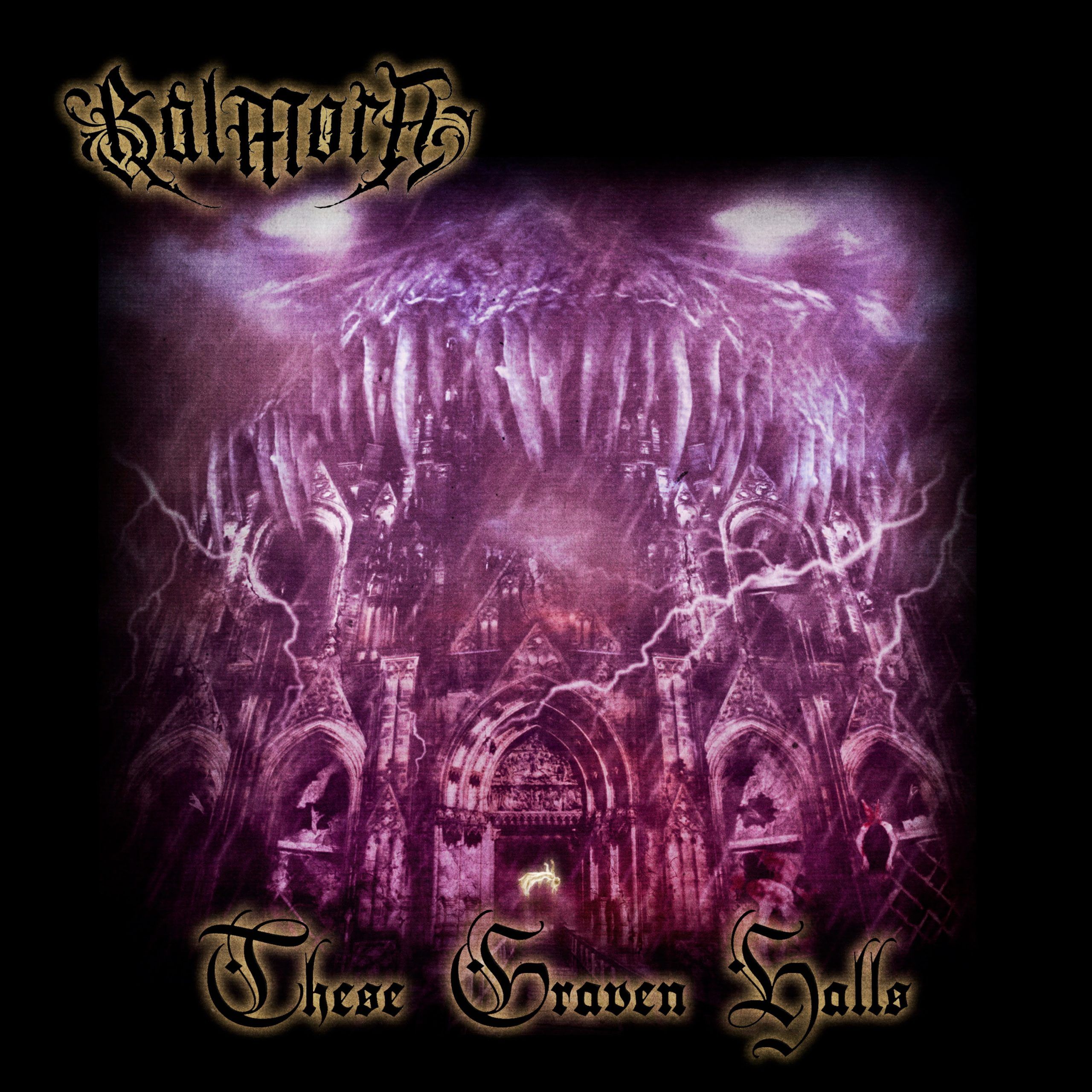
With “These Graven Halls”, Balmora make the leap towards their long-distance debut after a few years spent building a reputation in the American underground between tours, festivals, splits and EPs. And, in fact, the Connecticut quintet sounds exactly like a band that grew up devouring records and stages in industrial quantities: hungry, full of ideas, technically prepared and totally incapable of stopping for a second to understand when it's time to take a breath.
The heart of the proposal is planted in the midst of the early 2000s metalcore revival, which took Swedish melodic death metal and often turned it into a breakdown machine. Inside there are clearly echoes of Prayer For Cleansing, Bleeding Through, As Blood Runs Black and Winds Of Plague – at times even the Avenged Sevenfold of the debut “Sounding the Seventh Trumpet” – that is, that whole season between the late nineties and the so-called MySpace era, in which American metalcore had begun to transform into something more popular, melodic and exasperated. When Balmora stay within these boundaries, the album also runs reasonably well: the riffs have a certain bite, some breakdowns enter with malice and the melodic openings work without too many problems (for example, the arpeggiated break of “Ophelia” is beautiful). It's a shame that the group seems to live in fear of being 'simple', so each piece is filled to the brim with any available intuition: keyboards, almost orchestral openings, electronics, continuous mood changes, hip hop subtracks complete with scratching and structures that instead of developing in a linear way seem to wander aimlessly. The band basically throws as many ideas as possible onto the table, then hoping to have success in the assembly. Also note how Balmora, during the presentation, also mention black metal influences such as Abigor, Godkiller and Emperor, even if frankly they are suggestions that remain more in the intentions than in the actual music. And maybe it's for the best, because the disk is already a traffic jam without needing to add more traffic.
The point, in short, is that “These Graven Halls” proceeds like a continuous stream of consciousness: every time a riff, a melody or a breakdown starts to work, the band suddenly veers towards something else, or prolongs the aforementioned breakdowns in an empty and obsessive way, in the wake of certain deathcore realities in vogue in this period. The desire to develop an idea or give it breathing space almost never emerges; all that matters is accumulating sections, passages, sudden turns. From here comes that constant feeling of disorientation whereby, once the album is finished, one remembers perhaps individual successful moments but hardly an entire song. Maybe someone will bring up the term 'progressive' to justify this continuous changing of the shape of the songs, but progression has little to do with it here. More than anything, Balmora seem to be victims of a compositional bulimia that leads them to insert any intuition into already packed pieces, without ever asking themselves if there really is a common thread capable of holding everything together. And it's a shame, because beneath the confusion you can glimpse a band that has energy and also a certain ability to build atmosphere. Except that each good idea is immediately suffocated by the next, in a continuous pursuit of the surprise effect which ends up anesthetizing the listener instead of dragging him into the songs.
In the long run, “These Graven Halls” leaves the impression of a record incapable of choosing what it really wants to be: a nostalgic homage to the American metalcore of the early 2000s, a hyperkinetic collage of disparate influences or an attempt at 'ambitious' writing outside the box. The feeling is that Balmora still need to learn the value of subtraction, repetition and narrative continuity, fundamental elements for transforming a barrage of ideas into more or less memorable songs. For now, it remains a work that combines some effective passages with various frankly dispersive moments, more interesting for the quantity of ideas put on the table than for their actual success.
Daniel D`Amico for SANREMO.FM