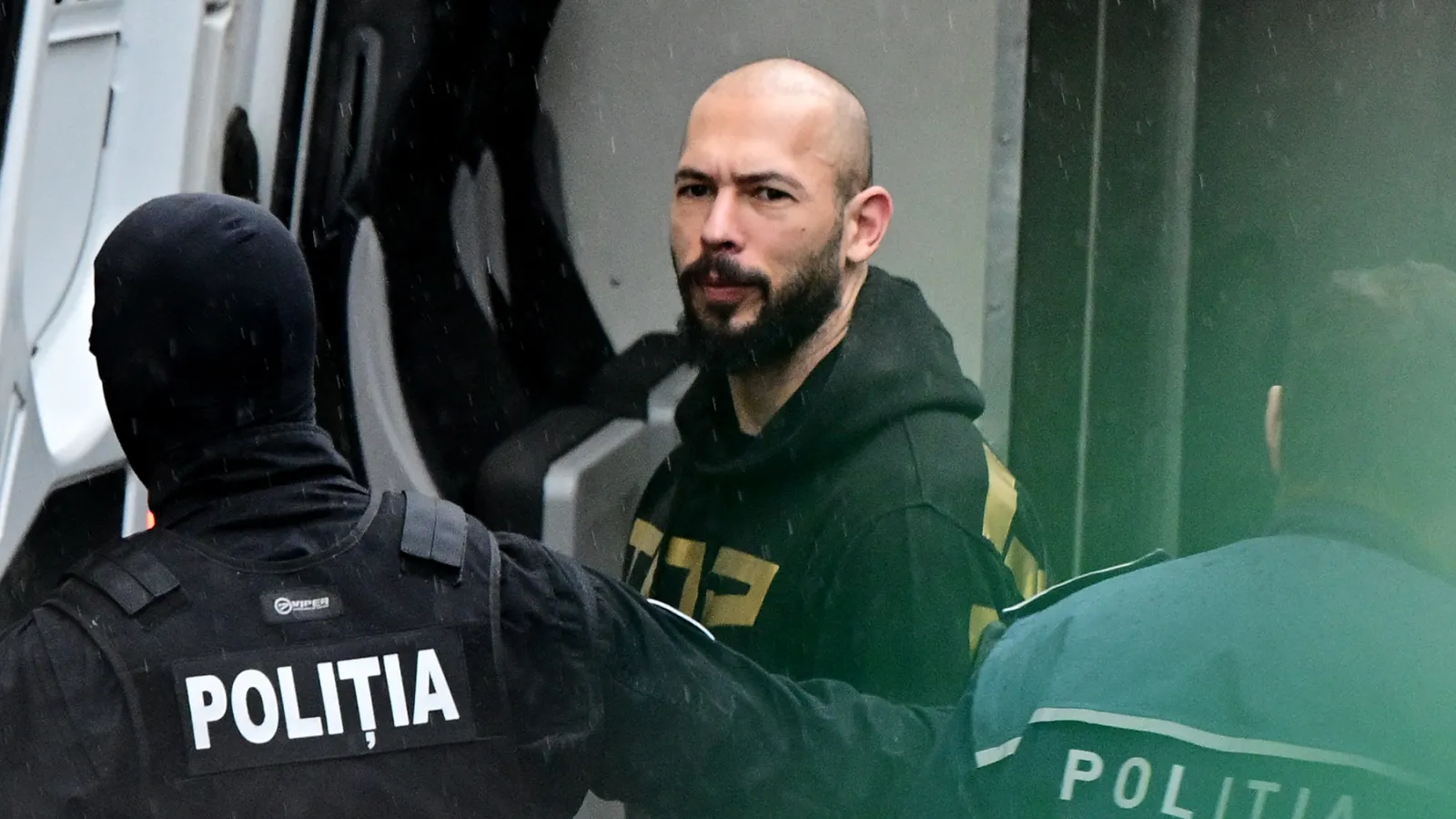
British-American brothers Andrew and Tristan Tate are currently awaiting extradition to the U.K., where they face dozens of charges including rape and trafficking for the purpose of sexual exploitation. The photos they posted on social media as they rose to fame — of men in tight pants, gripping thick cigars in their teeth, leaning against luxury sports cars next to big-breasted women in bikinis — helped to establish the manosphere, and have become tropes in their own right. Their exploits — running a cam-girl empire out of Romania, which allegedly engaged in human trafficking — have been widely documented, as have their denials that they engaged in any kind of illegal activity.
But how did they really make that money, and who are the survivors they’ve left in their wake? The new documentary, Andrew Tate: Toxic Empire, attempts to answer those questions, using interviews with former members of their exclusive networking group, the War Room; with women who allege they were sexually assaulted by the brothers, including the former anti-feminist provocateur Lauren Southern; and those who knew them in their younger days, including Andrew’s fellow Big Brother castmember, who was there during his brief run on the British reality show back in 2016. (Like everything else, the brothers deny the allegations of sexual assault.)
Though many have tried to make sense of their story, Toxic Empire lays it out in stark relief: their childhood in the council flats of Luton, England, far away from their chess-master father back in the states; their short-lived stints as kickboxers; their entry into the cam-girl management business, long before OnlyFans made online sex work mainstream; and their brotherly dynamic, with Andrew, 39, taking the front seat, while his younger brother, 38, played support.
The first two parts of the four-part docuseries premieres on Nov. 25 at 9 p.m. on ID; the next two episodes will come out over the following two weeks, and all of them will be available on HBO Max after they air. Here’s three things we learned from the first two episodes.
1. A documentarian started making a film about him in 2015 — but it never came out
More than a decade ago, filmmaker Roberto Reid started work on a documentary about the Tates. Though that film was never made, Toxic Empire features interviews with Reid, as well as footage that he shot as far back as 2015. “Even back then, I could see the potential trajectory of Andrew Tate and where he was heading,” Reid says in the doc.
In the footage, it’s clear that the Tates had already established the talking points that would help establish them as leaders of the manosphere. “Humans are nomadic people,” Andrew says in another shot. “Since we were cavemen, we’ve been wandering the planet, fighting, kicking the shit out of each other, fucking. All I’ve done is built myself a life without constraint, so I can go where I want and do what I want.” Reid calls this the “genesis of the Andrew Tate mindset. He was all about freedom.”
Reid notes that at that point, Tate was already living in fancy apartments and driving sportscars — a lifestyle much more lavish than the average kickboxer. Reid tried to get answers from Andrew in one piece of footage, filmed as Andrew is driving. “I can take bitches from ghetto streets to hotel suites. That’s what I do,” he says. “I make money. I’ve got a PhD — pimpin’ hoes degree.” In 2018, Andrew would go on to launch an online “school” offering just that.
2. Andrew’s personality mirrors his father, Emory Tate Jr.
Though Andrew goes by his middle name, he was born Emory Andrew Tate III, and according to those who knew his father,who died in 2015, his personality bears a striking resemblance. Tate Jr., an American, had come up in the Air Force; after he was discharged, he became a professional chess player. “I was raised by the OG,” Andrew said on the Fresh and Fit podcast, which is shown in the doc. “Big, Black chessmaster; drinking, gambling, pimpin’ — he’s just out here.”
Toxic Empire features an interview with chess grandmaster Jesse Kraaki, who knew Emory from chess tournaments. “In the Nineties and early 2000s, Emory was just this very strong man. He would exude a kind of ‘don’t fuck with me’ persona, bully and intimidate the people around him, call the queen a ‘bitch.’ No one was going to mess with the guy.”
Kraaki describes how Emory saw himself as larger than other players, and projected that for his fans. “Emory was all about himself and how amazing he was,” he says. “He had a cult of chess players who loved talking about how Emory Tate was the greatest player on Earth. Kind of reveling in that spirit of godliness. Oh my god he’s a genius, he can do no wrong. No one had ever seen anybody like Emory.” That is, until Andrew. “The false braggadocio, the ‘I can never be wrong.’ It’s spooky when you see a resemblance as close as between Emory and his kid.”
3. Lauren Southern didn’t want to report her alleged rape because she had grown to fame claiming ‘rape culture’ didn’t exist
In the early years of the online alt-right, Lauren Southern established herself as one of the most prominent female voices of the movement. She attended Slutwalk protests with signs that read things like “Rape Culture Doesn’t Exist in Western Culture,” and made videos where she attacked feminists for “hating men,” claiming it was antithetical to equality.
In the documentary, Lauren describes how she met Andrew though a fellow far-right figure, Tommy Robinson, the founder of an anti-Muslim group in Britain. Southern and Robinson wanted to start their own online publication, and Robinson said he was friends with a couple of guys out in Romania who had money and might be able to fund such a venture. So they flew to Bucharest, where Southern describes the brothers picking them up from the airport, each in their own supercars. Andrew directed the men to get into Tristan’s, inviting Southern into his. “He told me, I love your videos, you’re saving the West,” she remembers in the doc, noting that he asked her out to dinner. “Andrew was a friendly, charming guy,” she says. One night, they went out to a bar, where they discussed the potential project, but negotiations didn’t go well, she says, and she and Robinson left feeling “dejected,” she says.
The Tates called back, though, and said negotiations could continue if Southern came to their compound to talk. He took her to a club, where she says they drank champagne and did shots. After the shots, “I started to feel incredibly faint,” she says. “Never at two drinks am I finding myself feeling the way I was feeling in that club.” The next thing she remembers, she’s back at the hotel, getting carried into her room. She claims Andrew asked her to come cuddle in the bed, so she did. She says he started to undress her, and she told him to stop. “But he didn’t listen to that, and he began strangling me instead,” she says. “I remember having this moment of realization, where I’m like, ‘Woah. This is actually happening right now,’ and just begging him, ‘Please don’t do this.’ He didn’t listen.” (The documentary includes a statement from Andrew denying that he sexually assaulted Southern.)
The next morning, she says, he sat on the bed next to her and said, “Don’t tell the press I raped you.” She was shocked. “I just remember telling him, ‘I can’t. Listen, my whole public reputation is literally like the girl against feminism, do you think I can say that? Are you crazy? Of course not.’”