
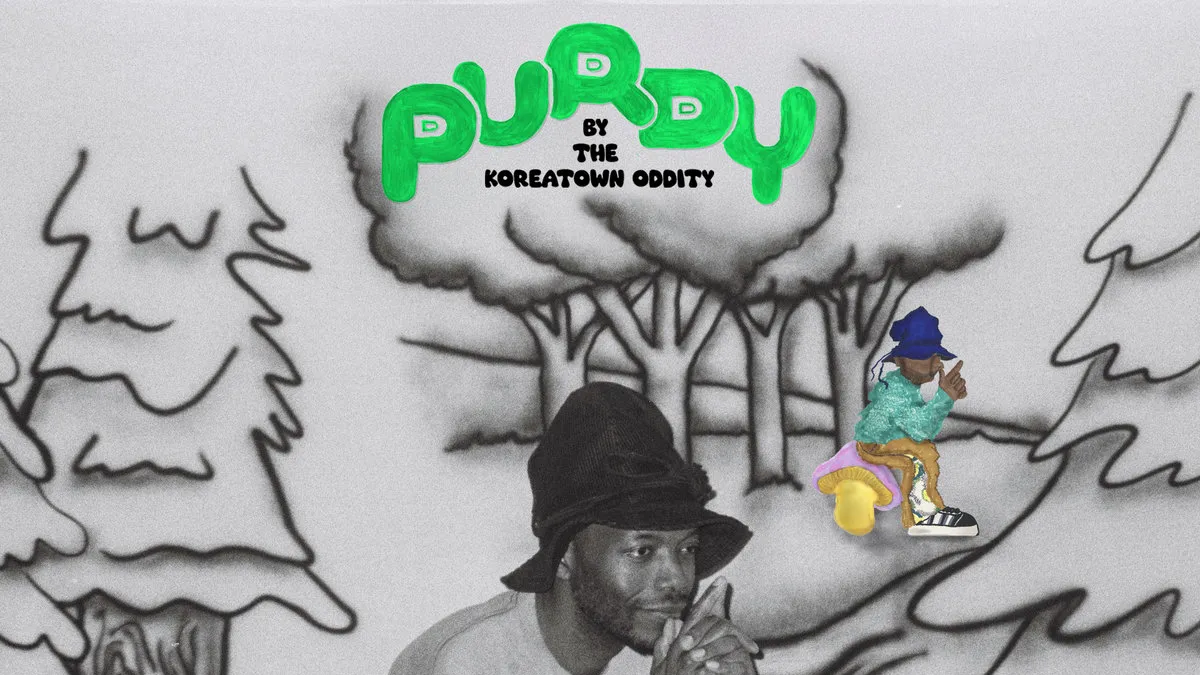
Fully dedicating yourself to an artistic practice could lead to a couple of different outcomes: You might experience the invigorating, soul-shaking moments that affirm your path, or you might completely ruin your life. On the one hand, there are the flow-state breakthroughs, the gratification of acclaim, the rush of connecting with an audience; on the other, the brutal sacrifices of time, money, and stability. You may become intimately familiar with wobbling punch-drunk between baring your soul and asking guests if they’d like soup or salad with that. The whiplash is a lot to process, and Dominique Purdy, who makes music as the Koreatown Oddity, constantly works to make sense of it. Purdy, the Los Angeles rapper, producer, and filmmaker’s latest album, is a stark look at the life of a working artist, a bolded question repeating: How do I know if this is all worth it?
KTO has long mined his own life to find deeper truths. His 2020 breakout record, Little Dominiques Nosebleed, examined place and heritage by tracing the ripples of two successive childhood car accidents; 2022’s ISTHISFORREAL? was a diaristic dissection of normalcy bias, with KTO navigating a particularly surreal moment in history and finding absurdity in both the cosmic and quotidian. The songs on Purdy also have the tone of journal entries, detailing haggard trips to the grocery store, daydreams about his young daughters’ glamorous adult lives, and observations about the banality of oppression. But there’s an immediate, baggy-eyed fatigue: It’s hard to ruminate on the grand mysteries of reality and existence when you’re drowning in debt.
No score yet, be the first to add.
Despite the stressed-out subject matter, Purdy stays surprisingly buoyant, achieving a delicate balance between goofy humor and teeth-grinding anxiety. In the no-ethical-consumption screed of “Ragu & Prego,” KTO nails his thesis with a simple, chortling couplet: “When Ragu was beefing with Prego on who had the best sauce/I was like, ‘Man, fuck both of y’all.’” On “Astro Turf,” KTO examines his compulsion to make music with a mix of embarrassment and excitement, but he laughs off the tension, comparing a critic reviewing an album to a gardener fertilizing a lawn with manure. He’s partial to a halting, robotic flow that reads as unsophisticated, perhaps novice at first blush, cleverly masking the depth and nuance of his writing. It makes Purdy a layered, rewarding listen, with a new double entendre, pop culture reference, and small profundity emerging on each revisit.