
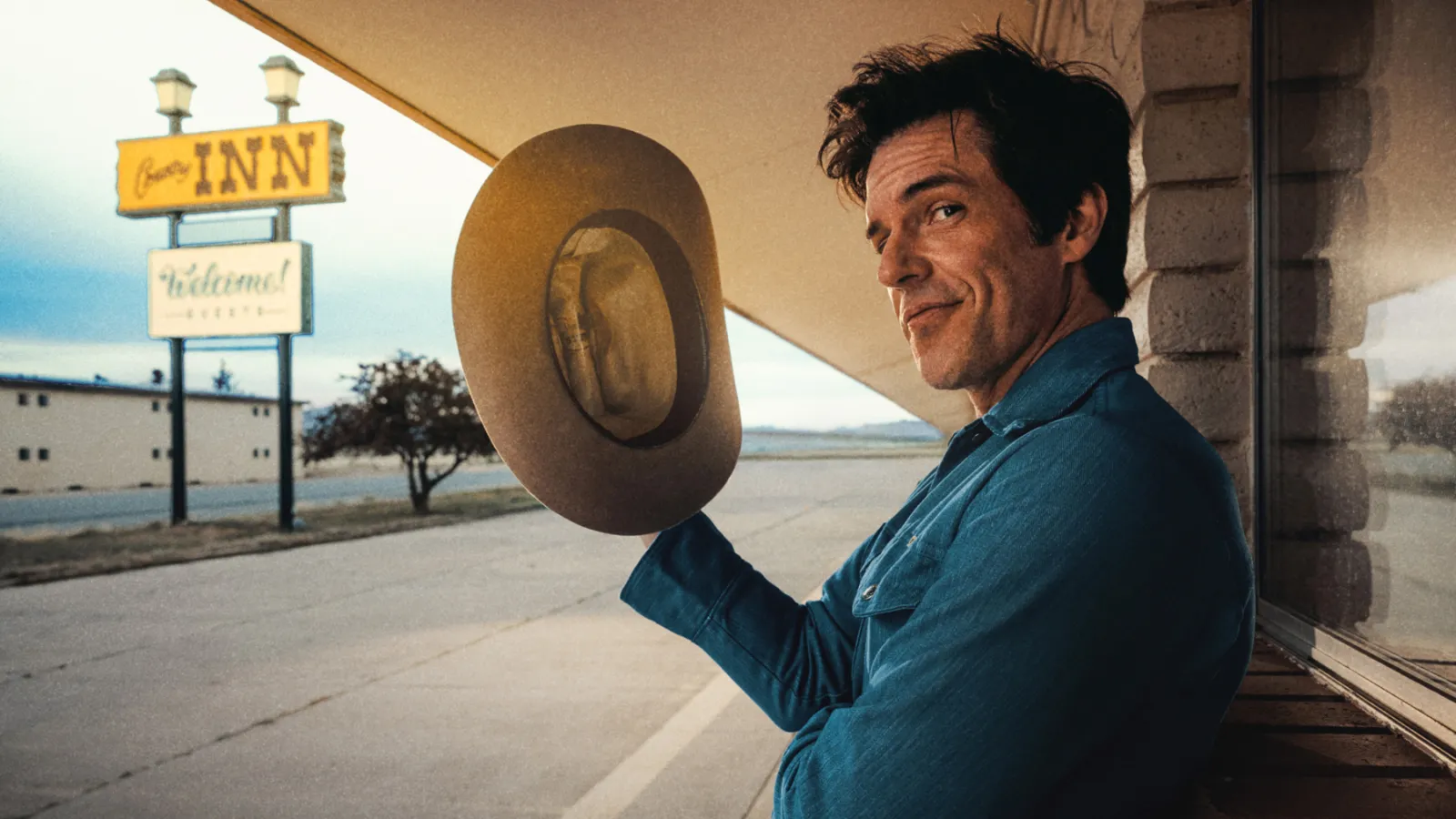
The Killers frontman does a solid job channeling his Nashville heroes on Thrasher, but the mystery train doesn’t always stay on track
Ever since Bob Dylan cut Nashville Skyline in 1969, rockers have been going to Music City to refresh their sounds, kick it with the world’s best session pros, and drink deep the rejuvenating well of local realness. For his third solo album, Killers frontman Brandon Flowers has gone all-in with a full-fledged country record. He says the music harkens back to his Utah youth listening to Waylon Jennings and Johnny Cash (music his dad called “country Western”), and he’s hired some A-list hands to help out, including guitarist David Rawlings — who’s made excellent records alongside Gillian Welch — and octogenarian harmonica great Charlie McCoy, who literally played on Nashville Skyline. As a neo-New Wave guy with a heartland jones and drama-king chops, Flowers isn’t bad cosplaying his heroes, even if his brawny rock-opera vocal approach is a bit short on the conversational warmth that makes for truly memorable country singing.
As with the Killers, he blasts away as over-the-top as ever, drunk on sweeping Americana imagery and marveling at the sound of his voice booming across those sweet Nashville studios. He tries his luck with some rollicking cosmic philosophizing on “Does It Ever Cross Your Mind” and “One of Us,” and it more or less works. Backed by strings, spacious twang, and mariachi horns, the sweet highlight “Red Ground” beautifully argues for a more traditionally economic notion of his historical reenactment. And he flips back into straight-up rock on “Tiger’s Blood,” a gentle vignette about life in a Podunk town that turns into a big, hungry-hearted Killers-style anthem.
But the mystery train starts veering off the rails as Flowers wanders away from enjoyable rhinestone reinvention and defaults to the heavy-handed Springsteenian realism that’s sometimes been both his Rosetta stone and his Achilles’ heel. On “Miss America” he plays a rural beauty aging into her harsh consignment in the methy underbelly of the American mythscape — “You used to call me Miss America/ Before you got hooked on speed.” On the wind-swept epic “Angel” we’re gifted wisdom along the lines of “Some fit the mold like a book on a shelf/Some are hard-wired for something else.” He officially loses the plot on the closer, “An American Dream,” wandering the lonely lost highway piling up clichéd rambling-man reckonings until he bumps into Elvis himself, driving a Tesla Model X for some reason. “He laughed when I asked him if it was all worth it/And he cried when he asked me about Lisa Marie.” And there’s the issue: These songs aren’t quite strong enough to be this epically melodramatic, but they’re not self-aware enough to be as funny as you hope they might be.