
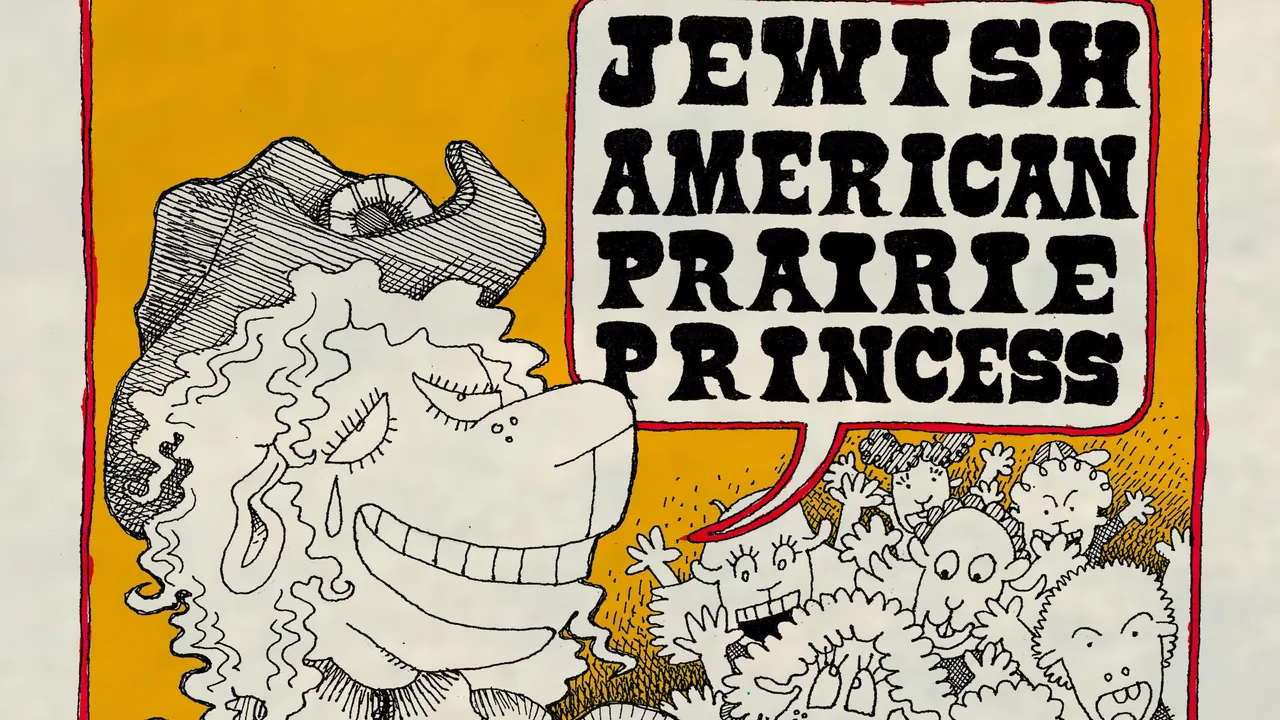
Between King Princess, Princess Nokia, and our reigning Midwest Princess, I wouldn’t blame the guards at Music Castle™ if they decreed: Enough! Next Princess swims the moat! Prithee, good sires—let down the drawbridge for one more?
Prairie Princess—the country-fried anti-folk-rock project of 23-year-old sound engineer and multi-instrumentalist Emerson Borakove—sits nearer to the kingdoms of Jeffrey Lewis, Kimya Dawson, Pigeon Pit, and Paul Baribeau. The group’s DIY debut, Jewish American Prairie Princess, is an often sweet, always smart collection of lo-fi love songs and rowdy, referential romps high on a strain of irreverent, outsider Americana known to R. Crumb fans. With the angst of a bildungsroman, the tragicomedic songwriting of Loudon Wainwright III, and the eccentric loveability of a cult classic, it’s a record sure to be cherished by teenagers, misfits, and anyone who looks at the world clearly, queerly, and semi-sincerely.
No score yet, be the first to add.
Hailing from Lincoln, Nebraska, Borakove has the trembling, lispy voice of a mousier Conor Oberst and a backstory that feels invented to prank the press—her dad is a gong salesman and ordained psychic minister who drives a Mystery Machine and once wrote for South Park. All true, though Borakove’s recent shenanigans give reason for suspicion: In June, she opened for Geese as a member of “Airy Foist,” an ad hoc troll band seemingly convened to protest the corporatization of rock music with a performance that included lyrics mocking deep-pocketed Cameron Winter fans (“Heavy Metal, Getting Killed/Gee, I’m sold! And I’m here to shill”), a fake-blood-soaked fistfight during a cover of John Lennon’s “Imagine,” and a boo-inducing F-slur dropped by frontwoman and Prairie Princess bassist Lex Walton. (Both Borakove and Walton are transgender, if that shifts your perspective.)
There’s another word for this: punk rock. Punk is in Prairie Princess’ blood, and JAPP throbs with freewheeling impropriety in the slamdance-ready “When I’m Feeling Bad,” the screams and shreds that turn “Jack Harlow Meal” into a third-act crashout, and the puckish lyrics that pull no punches (see “We’re having foursomes/To Cindy Lee songs” or “Got a Hinge date tomorrow/So I won’t kill myself tonight”). But Borakove’s frankness lands softer than the edgelord aggression of Airy Foist, and with more poignancy and intention than the Moldy Peaches’ goofy vulgarities. Rather than mocking or shocking, Borakove parses the world with a radical honesty that’s just as explicit—but far more thoughtful—than biting cynicism or deliberate provocation. “What if joy was really an act of resistance?” she asks in one song. Her conclusion is raunchy, logical, and somewhat sad: “I know it isn’t, all too well/’Cause sucking dick won’t undo any bomb that fell.”
But… what if? Is it futile to love as if love could change a miserable world? On JAPP, Borakove loves “like a fire hydrant, pouring water into thе street.” On “Lonely Eyes,” a “This Land Is Your Land”-style taxonomy of American characters, she oozes with saintlike affection for “strip-mall optometrists,” “it/fae systems,” “teen car washers,” “kids with fades,” and “everyone that’s covering this land.” “Rarely do I play a show where I don’t desire an interview with every person in the venue,” Borakove once wrote in a tour diary—listening to these humanist songs, which poke fun without resorting to snark, I’m inclined to believe her. In a recent interview with NYC showpaper Gunk, Borakove joked that “13 year olds should not be trusted with the internet because they might end up listening to only Andrew Jackson Jihad and ruin their brains.” She may disown the Phoenix folk-punk band, but Borakove has clearly taken one of its enduring lessons to heart: People are very, very special.
