
In 2022 and 2023, shortly before the portable drone changed armed conflict forever, the war in Ukraine was defined largely by a single, simple statistic: which side could shoot more artillery shells. The answer, for most of those first two years, was Russia. They had a massive stockpile of 152-millimeter shells, produced by a flourishing domestic industry and purchased strategically from third parties around the globe. This latter point was deliberate. Before the invasion of Ukraine had even begun, Russia was buying up stockpiles of shells from other former Soviet republics and colonies, re-taking control of the global supply of ammunition that it knew Ukraine would shortly be in dire need of.
The result, on the ground, was that if you were on Ukrainian soil, you got shot at a whole lot. I was there. It sucked. In the city of Kherson, Russian shells could strike at any time, anywhere, and while Ukrainian batteries outside the city shot back, they had to conserve their ammunition. Elsewhere in the country, in Bakhmut and Chasiv Yar and Severodonetsk, waves of Russian shells chewed through cities, relentlessly pushing the Ukrainian lines back.
Now the war is different, defined by the supply and development of fast, disposable drones that Ukraine, so far, is much better at making and deploying. But both of these eras in Ukraine have revealed a historic truth in war: that the power of a country’s military is often defined not by the high-tech wonders it can field, but by the sheer numbers of one specific type of weapon it can produce and use in a short amount of time. Every war, sooner or later, comes down to attrition.
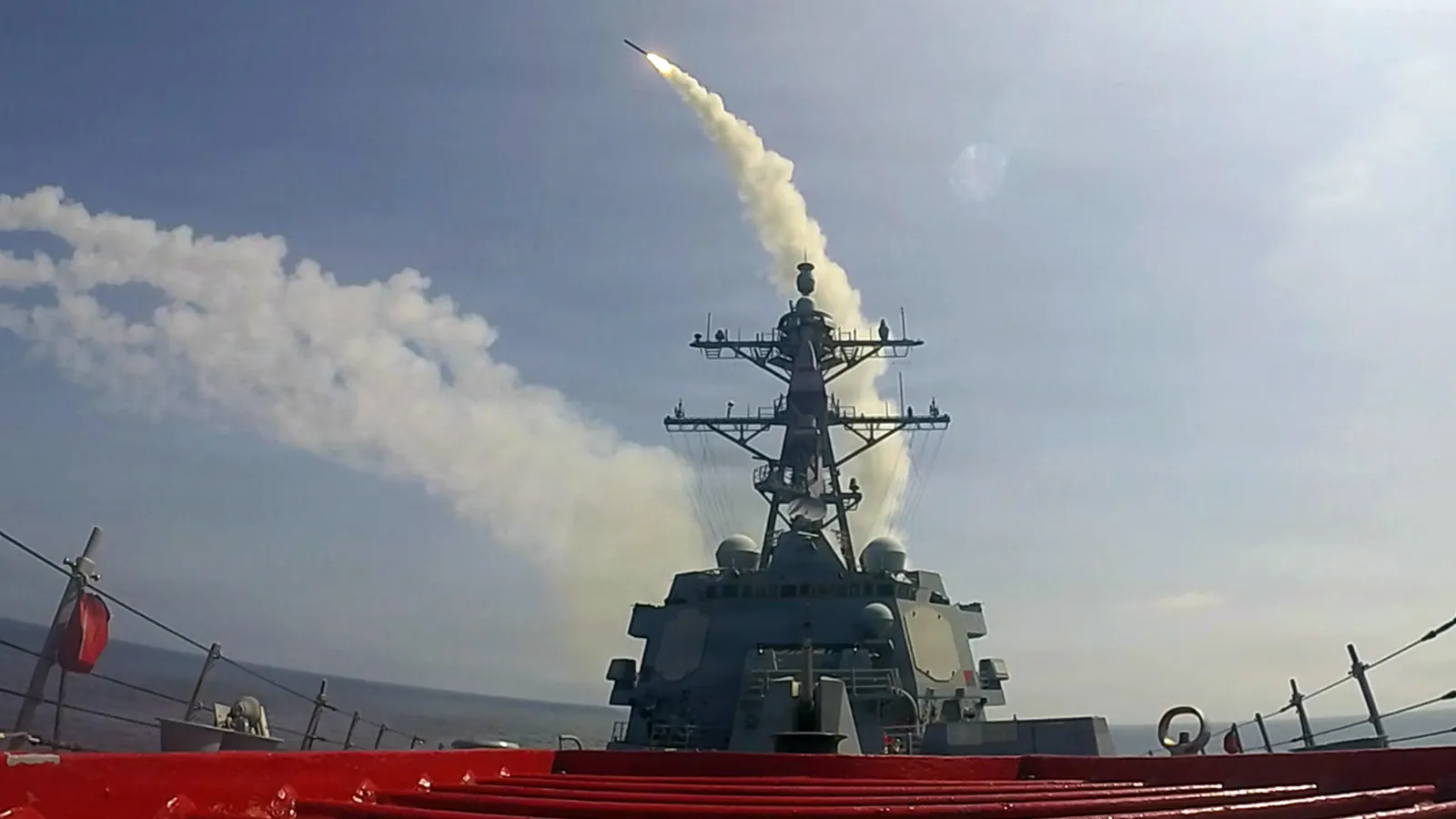
Which brings us to the United States’ current crisis. On Tuesday, Reuters reported that the U.S. has used up “virtually all” of its long range precision missile systems in the war on Iran. That term generally refers to two systems, the Army Tactical Missile Systems (ATACMS) and Precision Strike Missiles (PrSM), both of which are surface-to-surface, long-range missiles that cost over $1 million each. In the war on Iran, they’ve been the bread and butter of U.S. power, as they allow our military to strike targets far inside of Iran without committing human-powered aircraft to bombing runs or moving ships or other platforms closer to the country’s defenses.
Reuters also reports that the U.S. has burned through close to half of its supply of Tomahawk missiles, which have been a reliable weapon in many of the same use-cases for decades. Our defensive capabilities are shot too. CNN reports that the military has used up almost 80 percent of its THAAD missile interceptors and almost half of its Patriot interceptors. In short, the weapons the U.S. desperately needs to fight its brand of modern warfare are almost gone.
The U.S. has a modernized, technocratic military that has tried to dominate every sector of war for years. But the parameters of war are always changing. In Iran, a flood of cheaply produced drones and conventional missiles have allowed Iran to project force over the Strait of Hormuz and deter a U.S. land invasion. When the long-range precision missiles the U.S. has been using run out, Trump will be forced to send more human pilots into harm’s way to deliver the bombs he thinks he needs to beat Iran. The war there is already a seemingly never-ending quagmire, but it only gets worse when the missiles run out. The Pentagon is already asking for “creative” solutions on how to keep fighting.
The main tangible question is how quickly the U.S. can replenish its supplies. The answer is a bit unclear. Lockheed, Raytheon, and the other defense contractors who make the ATACMs, Tomahawks, and other systems are staying mum. Trump claims it won’t be a problem — but then again, he’s about the least reliable source on Iran involved.
Trump told Reuters that the U.S. had “far more munitions than anyone in the world … far more than we need,” adding that “our defense companies are, at this moment, making more munitions than they have ever made before, in addition to expanding their plants and equipment at record levels.”
No doubt they are. But the fact that the U.S. has committed this much to Iran could also shake up the balance of power around the world. Ukraine has been asking for ATACMs for years, hoping to directly strike targets within Russia and disrupt Russian command structures far beyond the front lines. America’s stockpiles of surface-to-surface missiles are also a core part of its military umbrella around Taiwan, which China has been eyeing ever since Russia’s invasion of Ukraine. How low do the U.S. stockpiles have to get before one of those conflicts breaks in a brand new way? What happens if another war breaks out, and the U.S. isn’t equipped with the munitions it needs to fight it?
The U.S. military is often thought of as a limitless well of force, able to project violence anywhere in the world at a moment’s notice. The morality of that is neither here nor there — that’s just the reality of how the world has worked for the better part of 80 years. We have a bloated, globe-spanning force that is equipped to fight almost any kind of conflict, choked to the gills with tech supplied by a flourishing industry of defense contractors who are willing to sell the government anything it wants. That’s what a trillion-dollar budget buys you. But what Trump’s disastrous, petty war in Iran has exposed is a glaring weakness in this system: We can fight any battle known to man, but we can’t keep fighting any one battle indefinitely. Sooner or later, our stockpiles run out. War is about attrition, after all.
The last time I visited Ukraine, in early 2023, I spent time along the front line with groups of Ukrainian drone pilots, who at the time were a growing but still specialized force that was finding their role on the modern battlefield. In the air above us, longer-range Russian drones menaced roadways, but the true reality of the drone war had yet to set in. When it did, the Ukrainians found ways to win without the technological might of U.S. systems. But getting there took thousands of lives, entire units wiped out in artillery barrages, countless tanks and cars and vans wiped out by Russian assets. When a military overreaches, someone always pays in blood. In Iran, the U.S. military has reached way, way out. The question now is how much blood it will cost.
Daniel D`Amico for SANREMO.FM