
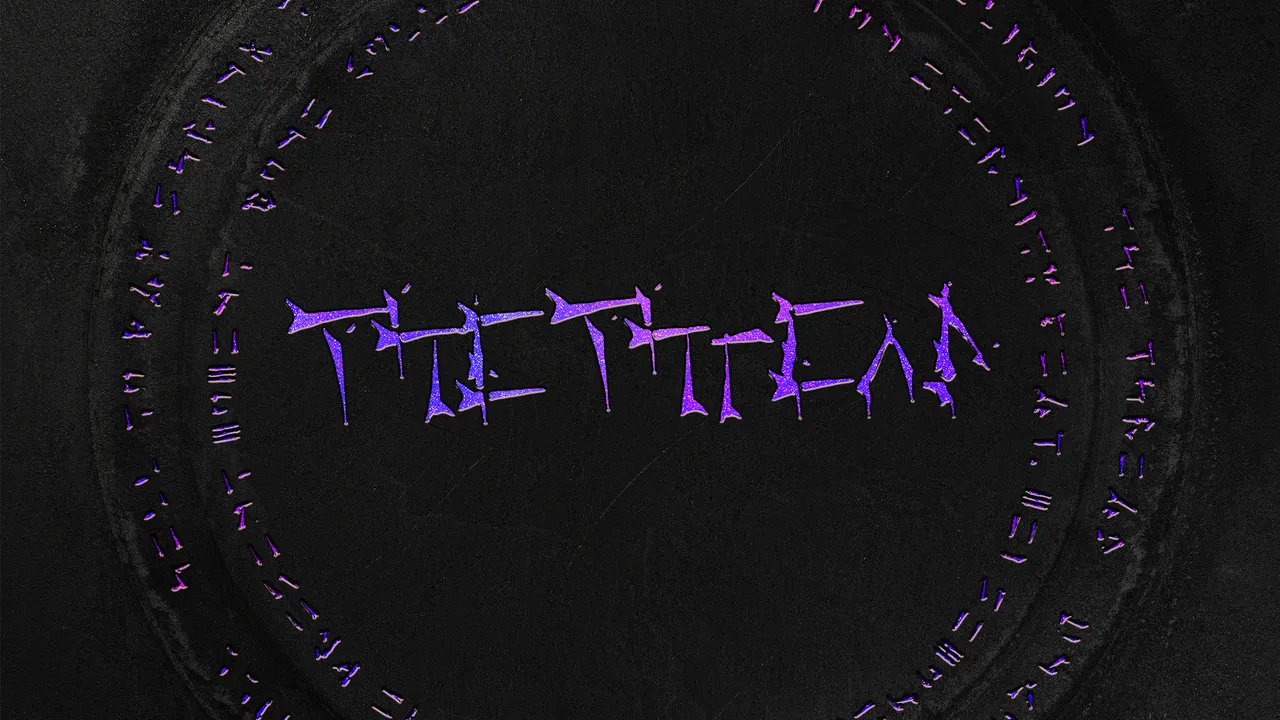
“I feel like I’m just now getting to the point to where I actually really like and love the music that I’m creating,” Willow recently told The New York Times. “Before, I just felt like I was kind of stumbling in the dark.” What felt like stumbling could also be seen as a series of leaps. At just 25 years old, she has released nine genre-spanning solo albums, earning two Grammy nominations in the process. As of late, she’s also been playing most of the instruments herself. In February, she released petal rock black, where she showcased her skills on piano, guitar, and drums while seeking to fuse art-pop and jazz and collaborating with luminaries such as George Clinton, Kamasi Washington, and Tune-Yards. More than another reinvention, her latest album, The Thread, feels like a continuation of that process, furthering her immersive practice as a multi-instrumentalist and composer.
Willow’s vocal dexterity—a light, climbing soprano, falling easily to a shaking tenor vibrato—is notable from the opener, “She’s My Religion,” a layered spiritual and “love song to the cosmic mother,” backed by choral flourishes that sound like snippets from a breathwork practice. She has embraced a wider range, a more confident timbre, a deeper resonance. This vocal evolution is clearest on “Unconditional” as she sings in a featherlight falsetto over flickering percussion and intricate acoustic arrangements, crooning sweetly, “I wanna be a part of your family/I wanna laugh and drink whiskey with your mother.”
No score yet, be the first to add.
“Crush on Eternity,” which features Brooklyn-based musician Mei Semones as guitarist and co-writer, poses the strongest evidence of Willow’s methodical approach. It swerves in strange and delightful directions, incorporating stirring harmonies, staccato guitar picking, jazz-inflected vocal runs, and plainspoken but poignant lyrics. With its fidgety guitar playing and pop penmanship, it’s an approachable entry to Willow’s sometimes dense, esoteric writing. “I’ve kissеd desire and called it grace,” she sings, “Holding hands with time and space.”
At its best, The Thread is a testament to Willow’s ongoing exploration. It’s more internally consistent than her previous albums, and the genre-hopping she’s known for seems to be synthesizing into recognizable patterns, whether it’s the punk guitar picking and glitchy drums under her yearning vocals in “Tall Baby” or the scat-sing-speak of “Hell to Pay” leading to its sultry R&B refrain. Even with its admirable strides toward peculiar sounds, the songwriting still sometimes plays too high in the clouds, and the dedication to virtuosity casts a shadow over the simple aspects that shine in her work. In that sense, The Thread is less of a final dissertation than a revealing snapshot of Willow’s musical process and, more than ever, her promise.
