
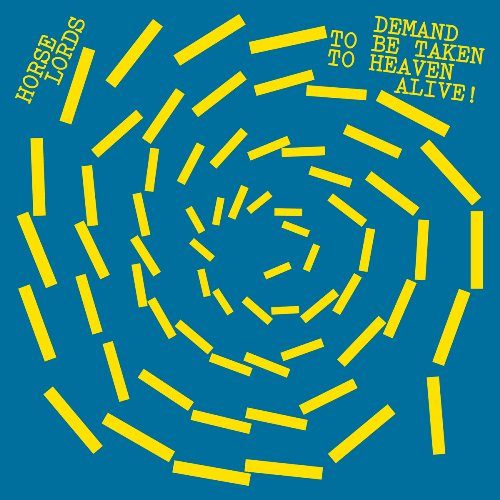
Experimental, unconventional and close to both kraut-rock and math-rock, advocates of a minimalism that goes hand in hand with microtonal music, the Horse Lords are one of the most creative groups on the contemporary scene.
The Baltimore quartet, now resident in Berlin, knows how to intercept both King Crimson fans and avant-jazz-rock admirers, continuing with the skilful reinvention of Steve Reich/Philip Glass-style sound canons, of kraut-rock rhythmic geometries, of groove mutant-funk and post-rock provocations.
The new album, “Demand To Be Taken To Heaven Alive!”, confirms their fragmentary and repetitive style, dense and exasperating, yet intelligently dynamic and unpredictable. The art of sound collage in kaleidoscopic form remains the band's most effective weapon. This is demonstrated by the irresistible rhythmic vortex of “Before The Law”, as well as the splendid “After The Last Sky”. In this last piece, a fugue in loops Of finger picking it blends with guitar distortions, screaming horns and restless electronic textures à la Aphex Twin, raising the emotional tension and confirming the excellent management of any contamination.
The physical abstractionism of the band today is less surprising than in the beginning, especially after Angine de Poitrine made certain microtonal destructurations or the massive use of odd tempos and polyrhythms familiar. With “Demand To Be Taken To Heaven Alive!”, however, the Horse Lords play the usability card. The playful use of synths and vocoder-filtered voices in “First Galactic Utopia” and “Second Galactic Utopia”, together with the unorthodox “A City Yet To Come”, creeps into the mind and overturns the canons of pleasantness. Suddenly, the mannered melody that reigns in other musical fields – even avant-garde ones – becomes annoying, insipid and similar to noise understood as mass distraction.
In contrast, the Horse Lords' noise is pure expressive art.
All this creative ability is magically contained in the choice to entrust the interludes to a phrase extrapolated from American sacred music, “We seek a city yet to come”, repeated endlessly throughout the album (“Eureka 378-B”, and the three parts of “Rotation”). This formula, combined with the essential minimalist fresco of the title trackk, erects a potential gateway towards a sonic and spiritual transcendence that remains unique and distinctive in the contemporary panorama.
07/25/2026
Daniel D`Amico for SANREMO.FM