
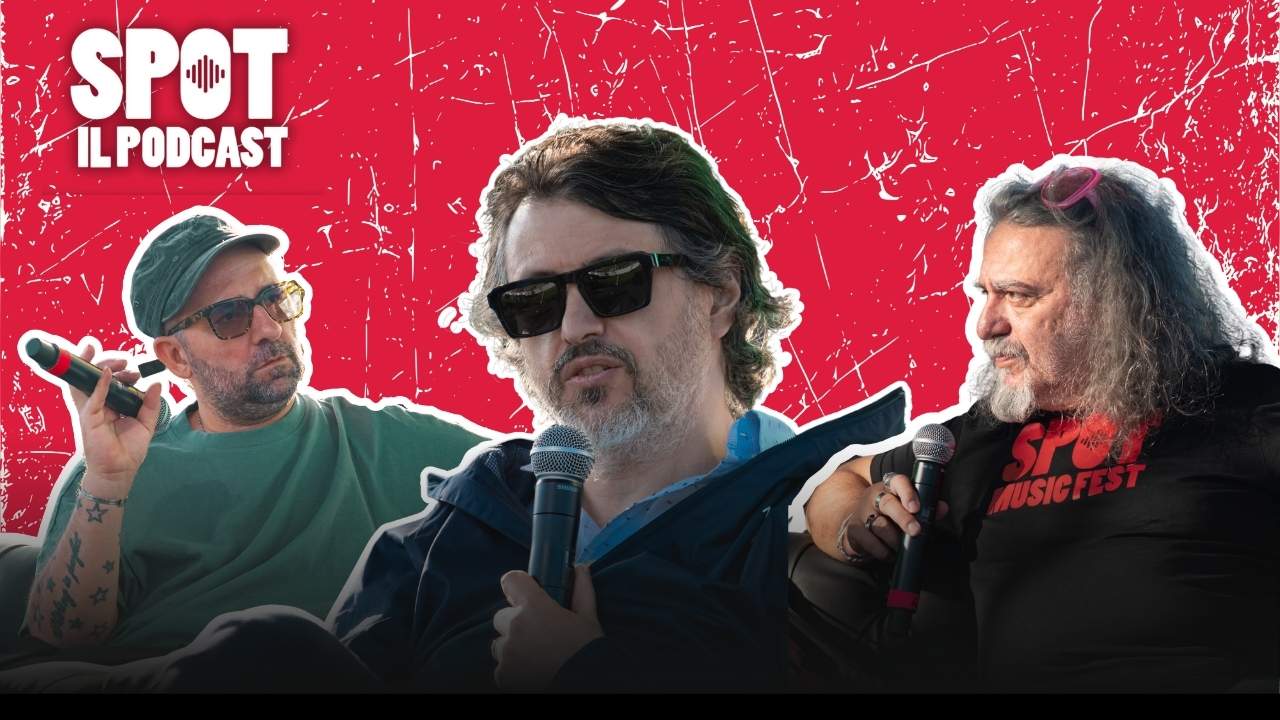
Andrea Vittori was a guest of SPOT – The Podcastthe program that Michele Monina And Massimiliano Longo they record live at the Spot Music Fest in Bareggio, in front of the audience of the young artists of the festival. Founder of MA9 Promotionradio plugger and manager of, among others Francesco GabbaniVittori is someone who knows the mechanism of Italian music from the inside. Including the night that mechanism jammed on live television.
Sanremo 2016, the night Gabbani was eliminated by mistake
It's the anecdote that Monina asks him to tell, calling it one of the most difficult nights a promoter can experience. Sanremo 2016, Youth category, Gabbani competing with Amen and in direct challenge with Miele. In the press room the voting mechanisms don't work, the count is wrong, and Gabbani's elimination is announced live.
That evening, Vittori says, his team made a lot of noise behind the scenes to bring back what they considered justice, because behind an artist who arrives in Sanremo there is an enormous amount of work. The mistake was recognized live on national television, a re-vote was held, and Gabbani passed. The following evening he won among the Young, the following year he won among the Big with Westerners' Karma: the only time in the history of the Festival that this happens.
Gabbani, he adds, still recognizes this today: without that night, he probably wouldn't have been an artist.
Andrea Vittori: “You don't go on the radio by paying”
In his main profession, that of a radio plugger, Vittori immediately dismantles one of the most widespread beliefs: you can't get into radio by paying. Other things are needed, starting with music that has characteristics suitable for that type of programming.
He defines his method as going against the grain: he has always worked by subtraction, taking few things, so as not to present himself to his interlocutors with what he calls the shopping cart, that is, seven items to be placed all in the same week. Personal credibility, he explains, then transfers to the artists he represents.
Why emerging artists have such a hard time getting onto the radio
To Longo's question about the difficulty of emerging people, Vittori gives a systemic answer. Radios have limited space for Italian music, a network can program about fifteen songs, and there are already big names in that space. It is difficult for anyone to give up Cesare Cremonini or Tiziano Ferro for a stranger.
The path he indicates is regional radio, which is acquiring more and more specific weight and guarantees visibility and ratings. Until the networks understand that giving space to young people is also the way to bring them closer to the radio.
“Discography always comes a little later”
The broader reasoning concerns cycles. Vittori says he saw the record industry find itself unprepared for every change in the power system: first MTV, then the radio, then streaming. The interlocutors change, but the mistake remains the same, that is, chasing what matters now without being able to read the present as it happens.
He adds a current fact: streaming has started to decline. It's not yet clear whether it benefits something else, perhaps TikTok, or simply declines.
Ghali, the lateral waste and the culture that is created from above
On how changes in taste arise, Vittori has a clear position: culture is not only created from below, it is also created from above, because what is proposed is what then becomes popular.
The examples he gives are two breaking moments in Sanremo: Westerners' Karma Of Gabbani in 2017, which brought something new to the stage, and Money Of Mahmoodwhich made urban mainstream. And then he talks about when he worked with Ghali at the beginning: on the radio he was considered an alien, before that Dear Italy opened the door.
“You have to build an artist over time”
Regarding management, his idea is that the true artist is not the one who lasts two or three years, but the one who after twenty years still does this job in a dignified way. And that we get there with choices that respect the public.
The example he uses is Lastwith whom he has a close relationship even though he is not the manager. Beyond personal tastes, he says, he had a great idea: think only of his audience. He has never compromised and has not denied where he comes from, like when last summer he returned to play in the park with those from his neighborhood. The name itself, he observes, is a manifesto.
“There are artists who are better at making records than artists”
It is the consideration that Vittori says he is making publicly for the first time, and which hurts him. Today the things that matter in music are so many and varied that the distance between those who do their job and the artist has been reduced to a minimum. So much so that there are artists who would make great marketers.
The goal, he says, would be to go back to making sure that what matters is the music. He knows it's a utopian ambition, but it's the reason he does this job.
The nose against the algorithm, and the praise of boredom
In the finale, Longo asks Vittori a question generated by artificial intelligence, which also answers for him: that night, he asks him, would you have bet against an algorithm that told you the opposite? The machine's response is a surrender: I know how to tell you what worked, it knows how to feel what will work, and I haven't learned how to feel first.
Vittori closes with two considerations. The first is the praise of imperfection, because we make mistakes and that's right. The second is the one that gives the episode its title: creativity and art are also formed in boredom, and what scares him today is precisely the lack of boredom, in a time in which we are constantly connected and excited by information. As children, he remembers, when we didn't know what to do we played with breadcrumbs.
The episode is also available on Spotifyalong with all the other episodes of SPOT – The Podcast.