
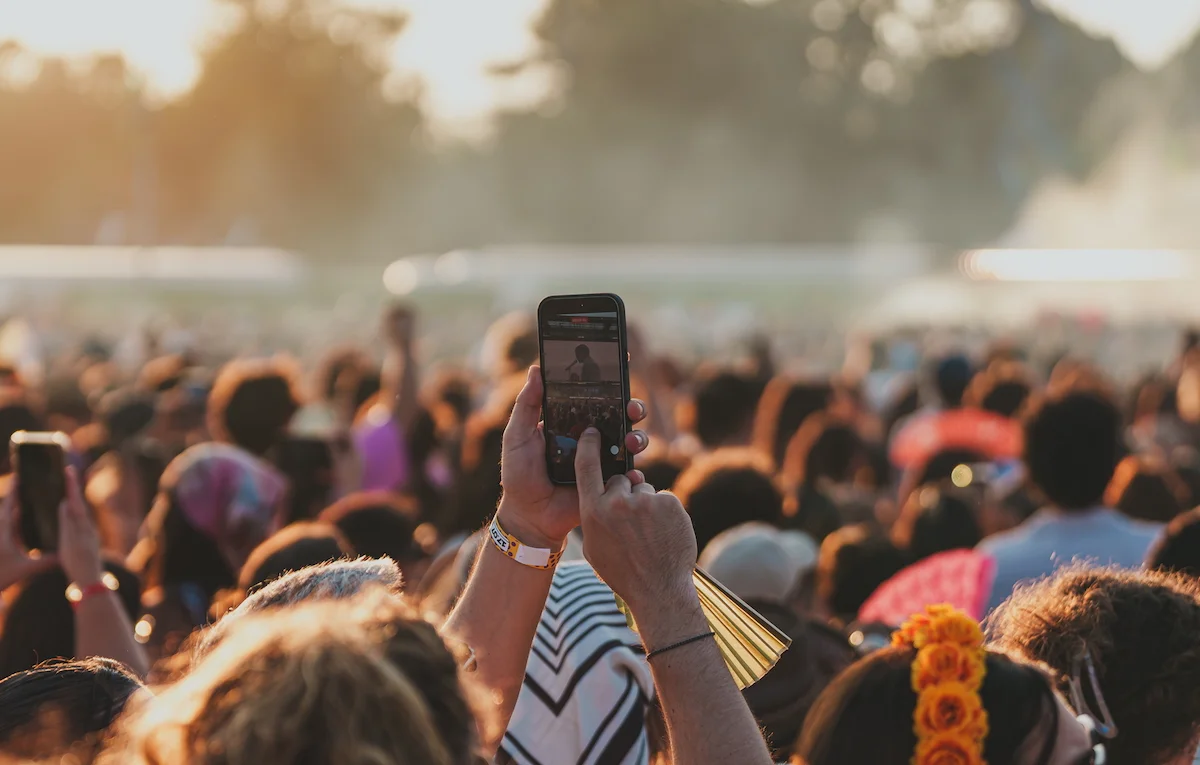
The note released by the Ministry of Health in July 2026 spoke clearly. The new epidemic of tropical origin had been classified as Bad Bunny Acute Exposure Syndrome (SEABB) and, according to initial estimates, had already affected almost five million Italian citizens. The Ministry even admitted that the real figure could be considerably higher: many subjects, in fact, continued to declare themselves simple occasional listeners, despite already pronouncing the words Puerto and Rico with the nostalgic intonation of those who had spent their childhood there. Concert organizers invited the population not to be alarmed: the fatality rate was nil and the contagious rate depended exclusively on proximity to the stage and dropped dramatically in the event of hail.
But it was clear that the first symptoms had been underestimated. The patients continued to lead apparently normal lives, yet they made decisions as if their body had revoked the powers of the brain. They booked hotel rooms in Milan for the price of a used small car. Even more curious, when their anguished parents pointed out to them that they would be leaving for the La Maura Hippodrome without a ticket and without money, they responded like this, after having crouched down and stood up with a jump: «Mamá, yo hago lo que me da la gana».
Within a few days, epidemiologists had identified a common feature in all the cases observed: none of the patients were truly turning into Bad Bunny. They were all transforming into the person they imagined themselves to be while listening to Bad Bunny. The distinction initially appeared academic, but would later prove essential to the endemicity of the disorder.
It was then that the Ministry established the National Center for the Containment of the Bad Rabbit. The MRI scans showed an unexpected phenomenon: while listening to Bad Bunny, the patients' brains not only processed musical stimuli, but built a second identity profile, perfectly functional, destined to replace the ordinary one for a period between August 2026 and A real man without you.
Only later did scholars realize that it was not a new disease at all. The clinical cases had been documented for decades, but had always been archived as statistical curiosities. Already in the 1980s, some researchers had observed subjects who, after prolonged exposure to Bruce Springsteen, developed extremely vivid memories of an adolescence spent in working-class towns in New Jersey, despite having grown up in Cinisello Balsamo or Frosinone. The phenomenon had been dismissed as a normal form of “musical tastes”. In the 1990s, thousands of the so-called Battiato cases were covered up. Patients with no previous interest in Eastern mysticism suddenly began to purchase Gurdjieff texts, casually utter words like asceticism during standing dinners, and become convinced that the synthesizer could be a valid tool for spiritual elevation. Even in that case no one deemed it necessary to intervene.
The oversight, as would emerge many years later, was to consider those cases independent of each other. Bad Bunny syndrome was the turning point of decades of more or less silent mutations.
Patients of the BB-26 strain walked waddling, with soft pelvises and slightly splayed feet. They took up more space, as if every sidewalk or doorway was set up for an entrance on stage. “Mami” replaced the first name of at least three categories of contacts in the address book, none of which could be traced back to close relatives. “Baby” was used as a universal name for the entire male and female population. Patients who had been proud advocates of Uniqlo-style minimalism began showing up at the office wearing hats and shirts open to the sternum. They reacted indiscriminately to observations about their change with phrases such as «Nunca me quitan el flow» or «Estamos bien». They all seemed more psychomotor coordinated and happier, in every other way.
For a few months the government tried to contain the epidemic. Therapeutic playlists with low choreographic involvement were introduced. Radios were forced by a special law to alternate each Bad Bunny song with two albums by Andrea Laszlo De Simone. The streaming platforms included a disclaimer in their free version: “Prolonged listening could temporarily change the perception of how Latin you think you are” (the fake premium, however, continued to pump Tití asked me as much as I can).
Obviously it didn't work. The number of infections continued to increase. A few years passed before the international commission responsible for studying Bad Bunny Syndrome, chaired by Stefano De Martino, published a report with its definitive conclusions. In the meantime, the Government had withdrawn all containment measures. Isolation centers were transformed into rehearsal rooms. Epidemiologists changed jobs and became music critics or dancers, with not always encouraging results.
The document consisted of thousands of pages of epidemiological data, mathematical models and medical records. The last side contained a sentence underlined several times with a red marker: “Our most serious mistake was considering pathological what was, simply, ¡hoteeeeee!”.