
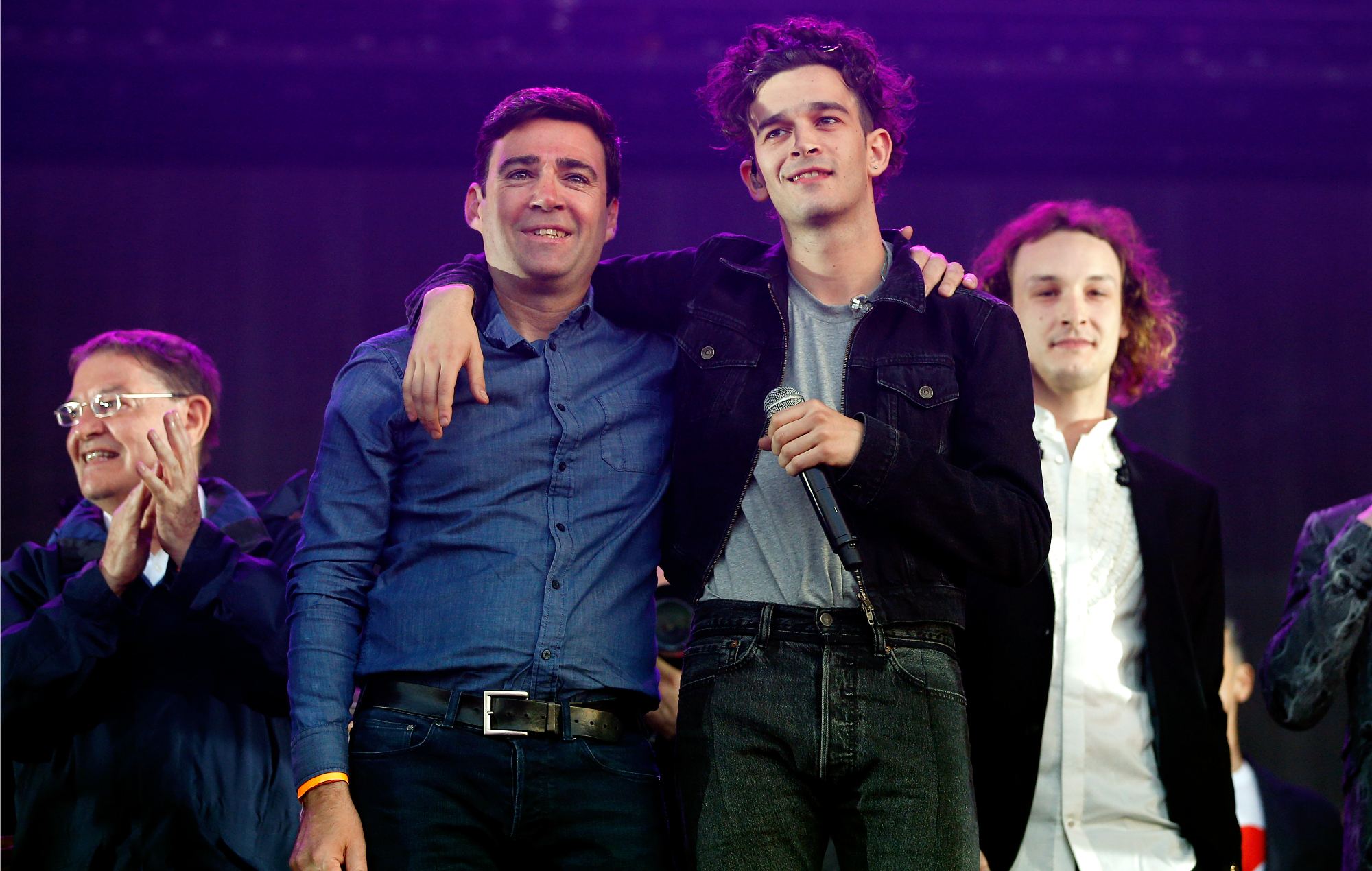
The UK government has announced details of a £45million investment to “turn up” the music industry, but attention now turns on the work that needs to be done by new Prime Minister Andy Burnham and his government.
While former Mayor Of Manchester Andy Burnham officially entered Downing Street as new Labour leader and UK Prime Minister after the resignation of Keir Starmer today (Monday July 20), last week saw the government reveal their ‘Music Plan’ to bolster their growth package by £15million to a total of £45million. They say this will back over 40,000 artists and businesses, 2,000 projects and millions of children over three years. The hope is to destroy the glass ceiling that is seeing less people from working class backgrounds enter the world of music.
“Music is our shared language. It brings people together, breaks down barriers and gives voice to every community. At a time when too many people feel disconnected, music has never mattered more,” said Culture Secretary, Lisa Nandy. “As the song says, ‘Every generation throws a hero up the pop charts.’ But pop is getting posher, and that must change.
“Talent is everywhere, but opportunity is not. After a decade of mindless vandalism that stripped culture and creativity from too many classrooms and communities, we are putting music back at the heart of education, investing in creative careers and backing grassroots music across the country.”
Nandy added: “We believe music belongs to everyone, not just the privileged few. That’s how we widen opportunity, strengthen our communities and ensure the UK’s incredible fans and extraordinary musical talent continues to inspire the world for generations to come.”
‘Turn It Up: Our Plan for Music’ aims to further boost the UK’s music industry, worth around £8billion to the economy. The cash includes £12.5million for libraries to be transformed into music lending libraries with free studio spaces and live performance opportunities and £10million for creative mentoring for young people.
Speaking to NME, the Minister for Creative Industries, Media and Arts and for Digital Government and Data Ian Murray MP said that he hoped this investment would lead to “a fundamental step change” in the UK’s creative sphere.
“The UK music industry is worth £8billion to the economy, we want to grow the sector, and there’s not another country in the world that wouldn’t give their right arm for a fraction of what we do in the UK,” said Murray. “We’ve given the soundtrack to the world before and we want to make sure that future generations can do the same. It’s about artists, it’s about the talent pipeline, it’s about venues, it’s about access. We know there’s talent everywhere but opportunity is not, and the music plan is there to try and address some of that.”
Asked what his message would be to those who feel that the world of music is out of their reach and only the playground of the wealthy, he replied: “This government is on your side.”
“This music plan is about working with the industry to make sure you can get access to it and allow your talent to flourish,” he shared. “We’re trying to get that to 40,000 musicians and artists over the next three years. I would say to any fledgling artists out there who have never picked up an instrument to pick one up. To all musicians out there, please use this plan and hold us to account for it. We want you to have access to the music industry.”
The government also shared plans to cut red tape for music festivals to allow for longer licences. “All of that bureaucratic red tape stuff has really hampered things,” said Murray of the lack of growth for UK festivals. “You have to go through it on an annual basis, and we want new events and festivals to have a freer licensing routine so they can have a bit of certainty about growing their business through their licensing, rather than just having one year of certainty. Having five year licensing will mean they can plan, grow and invest.
“We need to also make sure that Agent For Change for live music is there so that new developments can’t come in and shut down existing music venues through noise complaints. It’s about the entirety of government, local government and bureaucracy to work together for the benefit of the music industry rather than being a hindrance to it.”
Meanwhile, established and beloved music venues continue to face threats from noise complaints and new developments – with London’s legendary Moth Club currently at war with the council. Mr Murray MP said that a detailed national policy framework was due soon and that they’d be working with Music Venue Trust to ensure that councils have all the information required to “protect and save these spaces”.

New Prime Minister Andy Burnham’s love of music is well-known, with the former Mayor Of Manchester leadership bid gaining support from local legends Oasis, Courteeners, Elbow and more. He previously served as Culture Secretary from 2008-2009.
He’s also been very vocal in his support of grassroots music venues and in pushing for “urgent action” on the £1 ticket levy on gigs at arena level and above to pay back into the pipeline for rising artists and essential smaller gig spaces. He enters his premiership at a vital time for the sector.
Last year saw 30 grassroots venues lost forever with more than half of those remaining making no profit and over 6,000 jobs lost – posing an existential threat to the future talent pipeline of the country’s world-renowned live music industry.
The £1 levy collected and distributed by the LIVE Trust has received widespread support and could provide a future-proof lifeline for grassroots talent and venues. At the start of this year, a deadline was set for June 30 for 50 per cent of all gigs at arena level and above to be voluntarily paying into the scheme before the government steps in and makes in statutory and mandatory by law. It is currently believed to be around 30 per cent with the deadline now past.
With just 8.8 per cent of shows in 2025 signing up to the levy, Music Venue Trust CEO Davyd put the blame largely at the foot of market leader Live Nation.
“These companies are delivering,” he said of the likes of SJM, Kilimanjaro and AEG back in January. “Live Nation, you know, and the whole industry knows, you are not. If the voluntary levy fails, it will not be the fault of the companies who have already embraced it, or Music Venue Trust, or the government, or any will to do it on behalf of individuals, artists, managers, agents, audiences or anyone else.
“It will be a direct consequence of the overwhelmingly dominant force in the arena and stadium market deciding not to deliver a voluntary levy. That’s your choice, Live Nation, and everyone in the industry hopes you make the right one.”

At the time, Live Nation responded to the criticism by telling NME that they “support artists’ choices on charitable donations, and has worked with numerous artists who have contributed to the voluntary levy – from Coldplay and Harry Styles to Biffy Clyro – and will continue to do so.”
Speaking of the levy, Mr Murray MP described it as “huge for the music industry”.
“The LIVE Trust have just put £100,000 in, there’s another £1million on the way, all to support grassroots music, artists and venues,” he told NME. “We want to see that happening across the country so while our target was 50 per cent, I want 100 per cent of those tickets to have the £1 voluntary levy on it so we can have more money going to the grassroots. We need the big artists to be supporting the very grassroots that they’ve come through in order to make their careers successful.”
With the the deadline now passed, Murray would not speak on any imminent moves to make the levy statutory. “We want this to be voluntary because it’s for the industry to come together, but we have always said that if it isn’t on a voluntary basis then we might look to legislate for it,” he shared. “It works best when the industry comes to the conclusion that this is good for the industry.”
He added: “I would say to the big promoters to the big artists that they have to start somewhere, and those venues and places where they started are under threat and we need to support them, we need to grow them, we need to make sure there’s much more availability. Grassroots funding is all part of that, and that’s why the £1 voluntary levy is so important.”
Chief Executive of UK Music Tom Kiehl welcomed Andy Burnham into his new role, but called on him to deliver on past commitment to the industry and its artists by seeing through policies to remove costly and prohibitive barriers of the post-Brexit touring crisis,
rule out any new copyright exceptions in relation to Artificial Intelligence and deliver on the Government’s manifesto pledge to ban ticket touts.
“We welcome Andy Burnham back in Westminster as the new Prime Minister and look forward to continuing our work championing the music industry with him,” said Kiehl. “As a former Culture Secretary and big music fan, he has a deep understanding of what makes the music industry tick. He also knows the challenges facing a sector which is one of the Government’s best international calling cards with the £4.8billion we generate in annual exports.”

There was widespread disappointment back in May when the government shared news of only a draft bill to stamp out secondary ticketing in the King’s speech. Kiehl has now argued that “the new Prime Minister must speed up long-promised legislation to crack down on ticket touts who rip off millions of music fans by reselling concert and festival tickets at exorbitant prices.”
Mr Murray MP has assured NME that they’re working hard to deliver on this policy this year.
“The draft bill is being worked on as we speak,” he told NME. “We are very keen to get this done as quickly as possible, we have the commitment and we can do it in this term. Everyone is working together to do it and we’ve done all the consultations already. We want to get this bill through, I am personally committed to it, the secretary of state is too, and it’s a great news story for fans. We need to make sure that every single penny that fans spend on tickets is going back into the industry and not into the pockets of touts.”
Back in March, the government and the EU pledged “full commitment” to solving the Brexit touring crisis for artists. Burnham himself has previously slammed the “ridiculous” post-Brexit rules and demanded “free exchange” of artists through Europe. Kiehl agreed that the time was now to “tear down the barriers of red tape and extra costs that make it so hard for UK music creators, performers and crew to tour the EU post-Brexit.”
Mr Murray MP said that they were working hard to resolve this, but it was proving to be a slow process.
“It’s very complex because it’s not just about visas, it’s about moving around merchandise, transportation,” he said. “We’re making progress. It’s slower than we want it to be, but with the annual EU-UK agreements and summits in place, hopefully we’ll be making more progress soon.”
In his first public speech as Prime Minister today, Burnham pledged his government would be “a circuit breaker for Britain” introducing the “biggest changes in 40 years”.
“In the 1980s Britain took some wrong turns,” he said. “Political power was centralised, economic power privatised, large parts of the country de-industrialised and they still haven’t recovered. Many feel as though they’re still in decline, and they don’t have the ability to turn things around.
“And that’s why we will change politics, to make it more collaborative, more about problem solving than point scoring.”
He added: “And we will take power out of here and carry it into every postcode in the land so that they can do more and in doing more, build a new economy where we put life’s essentials back under stronger public control to make them affordable to you again.”