
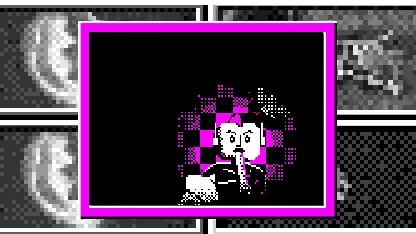
Dark bangs, a lace shirt, and the most agonized kidney stone grimace. A woman stands before a microphone with a pop filter, barely moving except to wrench out cavernous screams and arch her shoulders like she’s shadowboxing a traumatic memory. At one point, she plummets from a falsetto to a guttural belted groan with no fade in or moment for breath. This cover of Bring Me The Horizon’s “Doomed,” a metal song about embracing the darkness, has amassed over 50 million plays across YouTube and Spotify since it dropped in February. The artist’s name is Maphra, and that’s basically all we know about her. She’s done no interviews and posted next to nothing. Only similar covers of bands like Linkin Park and Bad Omens, where she’s dressed in exactly the same outfit, snarling angelically into the same mic, while a flickering candle in the background gives the proceedings the air of a Ouija board ceremony. Quickly, a large swath of people began to believe that she was not a real person, and that her impressive sweet-scary range was an overperfect fiction generated by artificial intelligence. The lyrics “The Devil told me, ‘no room for cheats’/I thought I’d sold my soul” gained new resonance.
The ghosthunters were probably suspicious because her videos have the same super-pristine intimacy of AI avatars. The corpse paint makes Maphra’s skin glisten. The camera shot never changes but for a robotically looping judder. She erupts into challenging notes and extreme facial expressions with startling precision. Look closer, though, and you’ll notice details the machine can’t conjure: the trembling of her eyelashes, individual hair strands jumping, the shading of her cheeks.
Bring Me The Horizon brought out Maphra, a real fleshly creature with dark bangs, to perform the cover at a show in May, shutting up the doubters. “Nice that we can leave all the AI speculation to rest,” one top comment on a YouTube upload of the performance reads. “To be out on stage like this KILLING it after everyone doubted and hated on her saying she was AI or that she couldn’t really sing,” goes another. “It’s such an amazing thing to see.”
We’re at a weird point in the will-they-won’t-they adoption process of AI in music: not yet normalized or fully mainstream, but increasingly understood as a bleak reality of our times. A lot of people know the telltale signs, and a lot of people know how vexed the anti-AI crowd will be if they catch someone using AI. This introduces a strange irony where baiting people into thinking you’re a robot could actually work as a rollout scheme, what one Deezer forum user calls the “double bluff” strategy in a discussion of Maphra’s success. The huge swath of listeners who treat AI like the plague have an energy that can be harnessed to generate attention. Then, when the human underneath is revealed, fans will rejoice. Or the artist will never fully admit to using AI, edging people with obvious robo clues but insisting it’s all organic.
Daniel D`Amico for SANREMO.FM
