
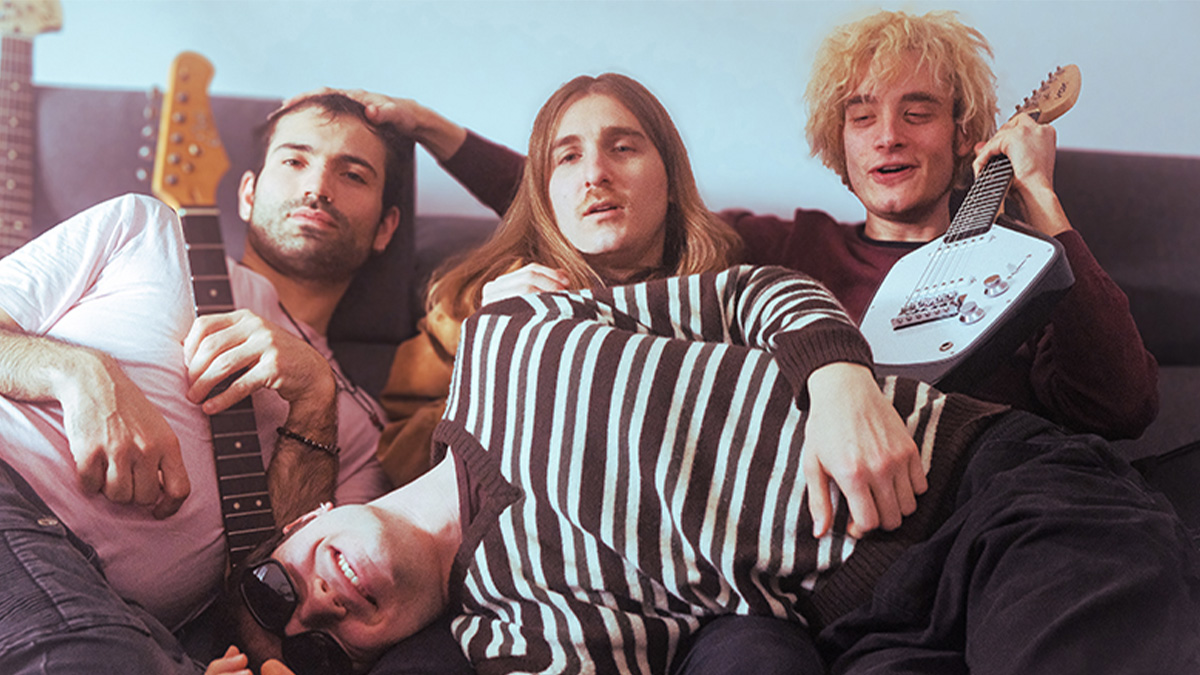
After attracting attention with the first three singles and gaining space in Spotify's editorial playlists, i Lovvbömbing! they reach the finish line of their recording debut with PISS! PEAS! PEACE!album released by Vina Records. For this work, the band from Cesena chooses the spontaneity of direct recording, a rough, instinctive and visceral sound.
Between art punk, garage, psychedelia, noise and hardcore, the ten tracks on the album tell of an authentic expressive urgency and an attitude that favors energy over perfection.
Pitchfork included them among the best publications of the period and we met them to talk about the birth of PISS! PEAS! PEACE!of their way of understanding music and everything that hides behind a debut that is as explosive as it is outside the box.
What was the spark that gave rise to Lovvbömbing!?
We wanted to do something that entertained us and the public and we started from common influences such as Fugazi, Minutemen and similar groups and immediately started writing our own pieces
Why did you choose to record the album live?
We wanted to go against the idea of hyperproduction and studio perfection, leaving our interplay with its strengths and weaknesses as intact as possible.
Is there a common thread that links the ten tracks of the album?
It is not a concept in the strict sense but the writing has points in common and proceeds with surreal and random inspirations and images
What was the biggest challenge while making the album?
It was probably maintaining the energy and interplay of the live performance even in the recording studio
How did the idea for “The Big Alien Come Up” trilogy come about?
It was born because we were simply amused by the idea of the alien protagonist of “President Alien” and we thought we'd tell an ironic parable of his
Why did you choose the figure of the alien as a narrative symbol?
For the idea of a sort of figure alien to society who, with his oddities and his inability to be a human being, seems to instead gather consensus
Do you think that provocation still has a cultural value?
In principle yes but we don't take ourselves too seriously
Daniel D`Amico for SANREMO.FM