
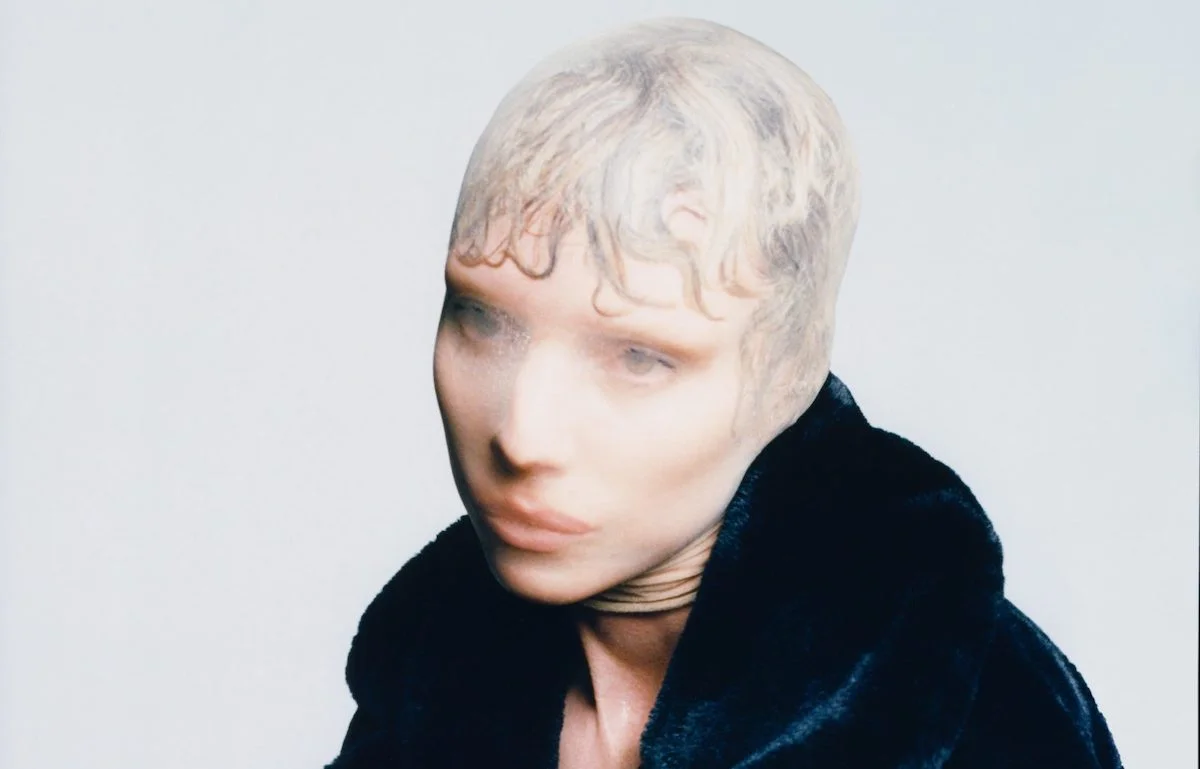
Lykke Li was in the car listening to the news on the radio when a strange sensation came over her. Maybe it was the Los Angeles sun's fault, but suddenly she felt like she was watching the world fall apart from a distant spaceship. «It is the era of AI, of war, of capitalism, of climate change. We're at the afterparty. There are still a few moments of euphoria left before total chaos.”
From that thought was born his sixth studio album, entitled precisely The Afterparty. It revolves around one question: “How can we continue to have hope and believe in humanity if we have reached a breaking point?”.
Presented as «a record to dance to for the end of the world», The Afterparty was released almost twenty years after the debut that made her known to the general public, Youth Novelsfrom 2008. Then the excellent was released Wounded Rhymes in 2011, with the worldwide hit I Follow Rivers. The industry wanted to pigeonhole her into the indie-pop girl category, a label she found limiting. Li, now 40, continued to shape his identity over the next three albums: he won over critics with the devastating I Never Learnhas divided fans especially in Reddit threads with the trap influences of So Sad So Sexy and teamed up again with longtime producer Björn Yttling for the more intimate Eyeye.
Connecting on Zoom from her kitchen in Los Angeles, Lykke Li wears large black sunglasses and a hoodie pulled over her head. She gave herself, she says, permission to imagine herself as one of those English rock stars who fuck around. But we'll get there. «This album, as well as the world and the person I am, is full of contrasts and contradictions. There are always two forces pushing in opposite directions and this tension is interesting. After all, that's how we are made, right? We say one thing, but underneath there is always another meaning.”
It's a duality that runs through all 24 minutes and nine tracks of the album, largely written by the singer in Los Angeles and recorded in Stockholm. Produced with Yttling, it is played with a 17-piece string orchestra that accompanies lyrics suspended between ecstasy and fear, from Lucky Again in which he sings “I wait and I wait, it's not long before I fall on my face” until So Happy I Could Diewhere you ask “how long can it last?”.
«My dream is to be able to crack the code. What if you could describe with words and music what it means to be alive? I'm obsessed with songwriting. I like it when something shocks me, when there is something mysterious.”
During the sessions The Afterparty her private life (she is the mother of two children) was “the exact opposite of freedom”. «Just the physical fact of childbirth is a horror film. It's brutal. So I decided to go into the studio and give myself permission to be rock'n'roll, to become, at least in my head, a fuckboy British rock star». It's a nice change from the days of Youth Novelsbut over the years she has learned to feel more and more comfortable with herself. «The more you live, the more you understand and know yourself. Today I am a strange creature, very androgynous, and I'm fine with that.”
Getting to this level of acceptance wasn't easy. «As a woman you feel the duty to be beautiful, to be worthy. There's always a role you're expected to play, but when you're young you don't realize it.” Men, he adds, don't have to deal with the same expectations when it comes to creativity: “Guys can just put on a trucker cap and pick up a guitar.” This is why today she asks herself: “Is there a way to strip away everything that is physical and simply be an artist?”.
For the next project he wants to go even further: «In my next album I would like to go even further. Maybe force myself to work using only six tracks.” I point out that you said that some time ago The Afterparty it would be his last album. “I said it at the release party because I was drunk and nervous,” she says, laughing. «For me making an album is like going through hell». Then he stops and asks: «You saw Burden of Dreamsthe documentary on Werner Herzog?”.
He tells me about it. The film follows the tormented making of the 1982 blockbuster Fitzcarraldo and shows, among other things, Herzog attempting to take a 320-ton steamship up a hill. “There is so much suffering in trying to shape your vision. And even when it finally comes to life, it's completely different than you imagined. Just finishing something and seeing it exist in the world is a merciless process.”
Thinking back to when he said that The Afterparty it would be his last album, he adds that «I said it because that's how I work: I put all my chips on the table. I think: maybe this time I will finally be able to do things right and I can go back to being a normal person.” He smiles. «But I don't think I'm capable of it. I really can't imagine myself doing any other job.”
While she believes she will continue making music forever, she likes the idea of being able to “unsubscribe from the rules, limits and values imposed” by the industry and having the freedom to choose her own character each time. He remembers the ending of his last concert at Coachella, when he lit a cigarette on stage and danced to the tune of The Rhythm of the Night of the Coronas. A video camera followed her backstage as she continued to move in a state of pure euphoria.
It was a reference to Beau Travail by Claire Denis. In the film, inspired by a novel by Herman Melville Billy Budd and focused on the deconstruction of masculinity, Denis Lavant plays a sergeant who, in the finale, abandons himself in a state of liberation and delirium by dancing alone to that song.
At heart, Lykke Li chases freedom and creative expression. «How many masks can I still get rid of?», he asks himself aloud. «What really belongs to me and what has been imposed on me by society? This is my dream. In the end it's just work, it has nothing to do with me. I want to be a conduit. We all just want to be free, don't we? This is what we want: to be free.”
From Rolling Stone US.