
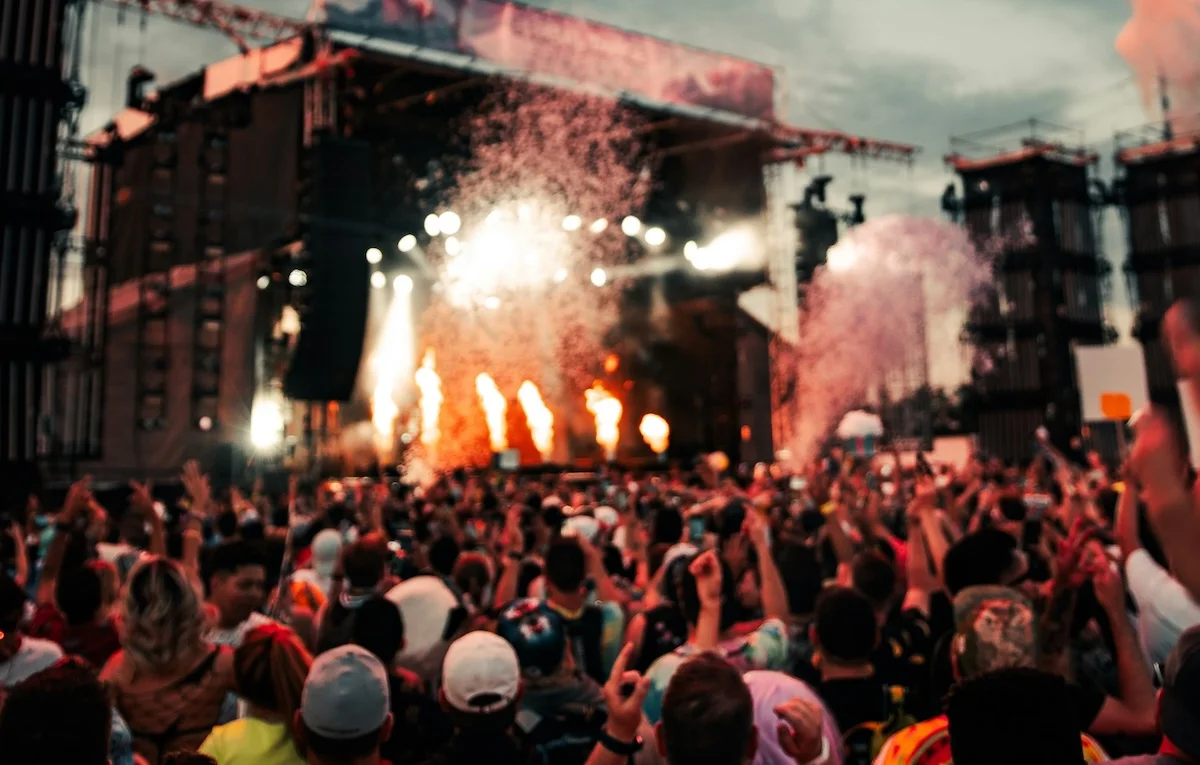
The rumors about the bursting of the live industry bubble were evidently exaggerated: Italians did not stop going to concerts because they were discouraged by ticket prices that were too high or by venues not equipped to host live music. Indeed, during 2025 they spent a record amount of one billion euros. Half was spent going to see concerts in the summer, more than a third for major events in stadiums, racetracks and racetracks.
This can be deduced from the annual report on entertainment in Italy released by Siae which contains the numbers relating not only to concerts, but also to cinema, theatre, exhibitions, discos, parks, fairs and sports. Let's stick to music: the aggregate data says that the concert market is in great health overall. No other entertainment sector in Italy has generated so much value: concerts represent 2% of the events that take place in our country overall, but attract 12.4% of spectators and 27% of spending.
It doesn't mean that there aren't critical issues, from rising ticket prices to the structural lack of places capable of hosting large summer concerts, from the crisis of small clubs to territorial imbalances. There have been tours downgraded and tickets sold off, but the indicators are growing: 1,162,064,376.7 euros spent by the public on concerts in Italy, much more than football and double that of cinema (with +17.5% compared to 2024), 31,512,325 spectators (+8.7%), 67,890 events held (+3.6%). The average individual expenditure went from 34.13 euros in 2024 to 36.88 euros in 2025. The average income per event was 17,117 euros (+13.3%) and that per venue was 68,672 euros (+15.5%). The number of active venues increased slightly (16,922, +1.7%) and the municipalities involved (4567, +1.7%), while the number of organizers decreased (11,965, –1.9%).
These are facts that bring together the concert at the pop star's stadium and the performance in a jazz club, the performance in a hippodrome and the one in the square. Breaking them down it is clear that pop-rock does the big numbersand this is obvious. It collects 83.8% of the public and 91.6% of the total spending on music. Pop-rock alone exceeded one billion euros in spending by the public (1,064,869,479) with 39,195 shows, 26,398,136 spectators (+9.3%) and spending that grew by a notable 18.5%, around 40 euros on average per spectator.
Be careful though, if things go well it is thanks above all to the summer season and the so-called big events. They are the ones who “pull” despite being at the center of controversy. In the three months from June to August, half or almost half of the total audience was collected (48.8%) and over half of the spending (53.7%), all with a third of the shows organized in those 90 days compared to the entire year.
Stadiums, racetracks, racetracks and structures capable of hosting at least 30,000 people recorded a +40% increase in spectators and a +34.2% increase in spending. The decline that was recorded in 2024 was recovered: during 2025 the large venues gained over 1.5 million more spectators and 96.5 million euros in spending, for a total of 169 events, 5.4 million spectators and 378.9 million euros in spending. In short, if the market is growing it is also thanks to the mass of people who do not give up on big events. One thing to understand: those that take place in the large venues concentrate 20.3% of the public and 35.6% of spending despite being just 0.4% of all concerts held in a year in Italy.
The picture varies from region to region, of course. The largest part of the public and spending is concentrated in the centre-north of the country and in particular in Lombardy and Lazio. This applies in general and especially to large events. Milan is the city of music: over 1.4 million spectators between San Siro (971,850 attendances over 18 concerts in 2025), Ippodromo Snai and Ippodromo La Maura, plus over 130,000 spectators in the Rho FieraMilano area.
Another trend: Italian artists perform more and more often in large venues. Once upon a time, our pop and rap singers dominated the streaming charts, but the concerts were mainly performed by foreign stars. In 2025, venues with 30,000 people or more hosted 129 concerts by Italian singers (+61%) and 30 by foreigners (-23%). The fact remains that concerts by international artists record a higher average turnout and a higher expense, the latter justified by the fact that higher prices are charged (92 euros on average compared to 57 for Italians).
Siae also released the ranking of individual concerts by number of spectators. In first place is Ligabue with 87,938 spectators at the RCF Arena on 21 June 2025. Followed by Max Pezzali in Imola (82,446), Ed Sheeran at the Olimpico (78,501) and three concerts at the Maura in Milan: Linkin Park (78,354), Imagine Dragons (77,208), Dua Lipa (72,411). Seventh were AC/DC in Imola (69,234), eighth and ninth were Pinguini Tattici Nucleari on 11th (61,360) and 10th June in San Siro (59,990). Springsteen in tenth place at San Siro (59,254).
In the ranking for box office expenditure, AC/DC in Imola on 20 July 2025 is at the top, followed in order by Ed Sheeran at the Olimpico in Rome, Linkin Park at the Ippodromo La Maura in Milan and then Kendrick Lamar/SZA (Rome, Olimpico), Imagine Dragons (Milan, La Maura), Ligabue (Reggio Emilia, RCF Arena), Stray Kids (Rome, Olimpico), Blackpink (Milan, La Maura), Max Pezzali (Imola, Autodromo) and Bruce Springsteen (Milan, San Siro). The presence of many foreign artists is also due to the higher average price of tickets compared to those charged by Italian artists.
On purpose, ticket prices increased by 12.4% in the space of a year (against general inflation of 1.5% in 2025, so to speak). On average, people paid around 40 euros, now they are 45. The average ticket price in large venues (excluding festivals) has grown more for Italian artists (from 52.25 to 57.34 euros) than for foreign ones, which however, as mentioned, cost more in absolute terms (from 90.59 to 92.15 euros). The increase in total spending on concerts is not entirely attributable to the increase in ticket prices: Siae data say that at least for now, more and more Italians are going to see concerts in stadiums, racetracks and large outdoor spaces. Whatever the cost.
