
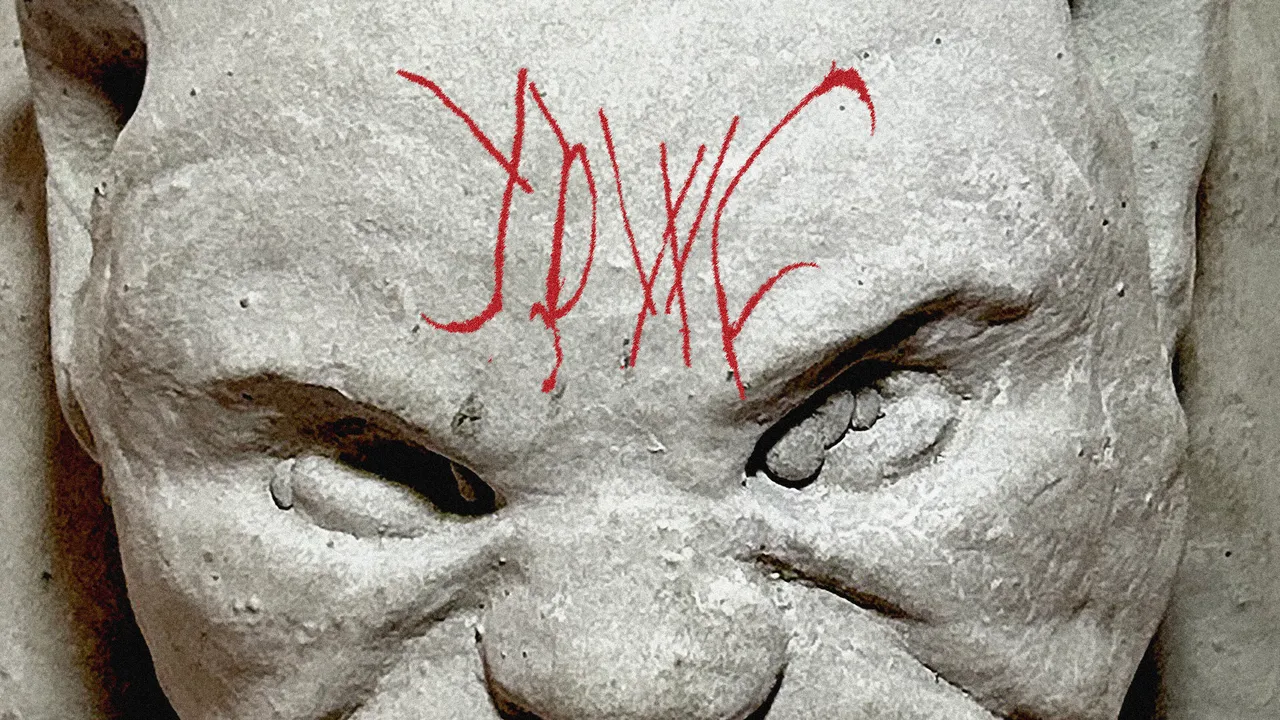
Your day will come. Your day will come. Your day will come. Say it enough times and it tilts from an optimistic mantra to a looping curse. On 2024’s Your Day Will Come, Shane Lavers sought relief from guilt, the death of a loved one, and other phantoms of the mind with a nervy tangle of organic and digital sounds that felt at once scuzzy and super-clean. Inspired by Donald Fagen’s concept of “fake jazz,” Lavers defaced his sophisto-pop influences: Keep the regal strings, the pingy bass, and the gossamer synth shivers, but pollute it with askew guitars and samples, and the cries of a man picking at a scab in his brain. The album arrived soon after Lavers moved to New York—before then, he’d been living in Seattle, handling audiobooks at a library for the blind. It propelled his band to the front of a folk?—ambient pop?—experimental? scene. Within a couple of years, they went from playing ratty Bushwick tunnel shows with YHWH Nailgun to opening for Lorde at Madison Square Garden.
On Your Day Will Come, Lavers’ second album as Chanel Beads with the same title, the day has still not arrived. Rather it’s like the first album’s songs went on a quest and came back both brolic and anemic—even more expressive, stricken, and achingly contradictory. These protagonists are howling about killing themselves and key-bumping because they didn’t think anyone could feel this bad. They’re buckling under the pressure, trapped in cycles of nihilism and cope. But they’re also spending the happiest summer of their life with their partner, declaring themselves ready to commit forever. The cumulative feeling is an understated sense of hope, with love as the only real defense. “You’re in trouble now/Won’t give you up,” co-vocalist Maya McGrory commands on “Silver Cup.” “I jump in the water, you follow.”
No score yet, be the first to add.
Lavers is riding with the same crew as the first go-around, which includes his partner McGrory, who sings under the alias Colle, and the violinist Zachary Paul. Across the album, Paul’s violin is basically its own character, shivering and squealing with an anachronistic quiver that makes the melodrama of a line like “There is a language to your soul/I give it all, I know it’s hard to believe,” from “Silver Cup,” land with life-or-death seriousness. Additional contributions come from spontaneous jam sessions with friends: the gently hypnotic pulse of Isaac Eiger’s six-string bass welcomes us into the first track like footsteps wading into a warm, dark pool. Mari Rubio’s weepy pedal steel sets up the tender gallivant of “Song for the Messenger,” which seems to chafe against industry expectations and the passage of time. Lavers programs everything on a DAW like a beatmaker, or a Tetris addict, subordinating and texturizing all these offerings in the slippery swell of drums, samples, and vocals. Even with so many elements and voices, nothing feels out of place.
If the album has a narrative or set of themes, maybe it’s about redemption, imperfection, and accepting the world’s unsolvability and uncertainty, a message echoed by fragmentary compositions like “Profane Break” that make limbo sound transcendent. “I thought I saw you smiling in all our memories,” Lavers chants with a grimace on “The Coward Forgets His Nightmares,” a highlight ostensibly about grief and the need to conveniently misremember. “Thought that you went insane/Better off you went away,” he groans on “Outside Your Life,” whose baleful drone soon gives way to jumpy drums. After a skybound reprieve and two samples—a man sobbing and a deep voice intoning, “I owe you my life”—the final lyrics grope toward something more generous and forgiving: “Lightning shining out across your sky/Dirty fingers wrap them around mine.”