
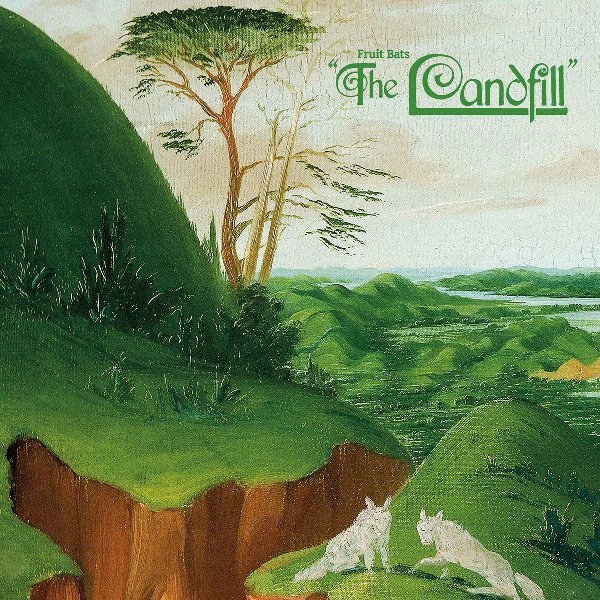
After the solitary parenthesis of “Baby Man”, the American musician Eric D. Johnson gets the band back on track for “The Landfill”, an album that feeds on the loose and frank writing of the previous project. Same criterion but different context, this is the whole revolution that not only puts the Fruit Bats back on track, but which actually sees them at work with one of the most convincing pages of an almost thirty-year career that originated in Eric D. Johnson's bedroom in Chicago and which does not seem to have lost the genuineness and adventurous spirit of the beginning.
Registered live in the studio, “The Landfill” was conceived in a short time, the result of that much-vaunted term flow of consciousness which accompanied the agency dispatches, but also some critical comments. To be fair, the mood exploration of these new songs has certainly found strength in the author's newfound inspiration.
Johnson's ethereal and sorrowful falsetto tiptoes into the flourishing season of the 70s, with intense songwriting pages that could very well be part of an old Bill Fay album, the gloomy but enveloping “Wild Pony Tower Moment”, or from Harry Nilsson's secret repertoire, the evocative and minimal “Silverfish In The Sink”, the latter a song that may also remind some of the solo album by Paul Buchanan of Blue Nile.
The truth is that the American author has returned to writing songs of rare beauty, above all the inebriating country-soul of “The Saddest Part Of The Song” which without hesitation powerfully enters among the musician's best compositions, and that the title track you replicate its greatness with a Celtic-soul hint and an instrumental tone worthy of the best War On Drugs confirms the state of grace of Johnson and his companions.
That the musicians (bassist David Dawda, guitarist Josh Mease, keyboardist Frank LoCrasto and drummer Kosta Galanopoulos) are perfectly aligned with the rebirth of their leader is evident in the power-pop vibrations based on piano and electric guitars of “Think Aboutcha” and in the remarkable alternation of shadows and lights of “That Goddamn Sun”. The skill with which the band leaves room for hope and melancholy in the same song is beyond intense. Even when the music flows with panache and pop lightness (“Perhaps We're A Storm”), or seems to lose depth for a moment (“Fishin' For A Vision”), the prevailing sensation is that of being in the presence of an excellent work by the composer that conquers and seduces.
06/25/2026
Daniel D`Amico for SANREMO.FM