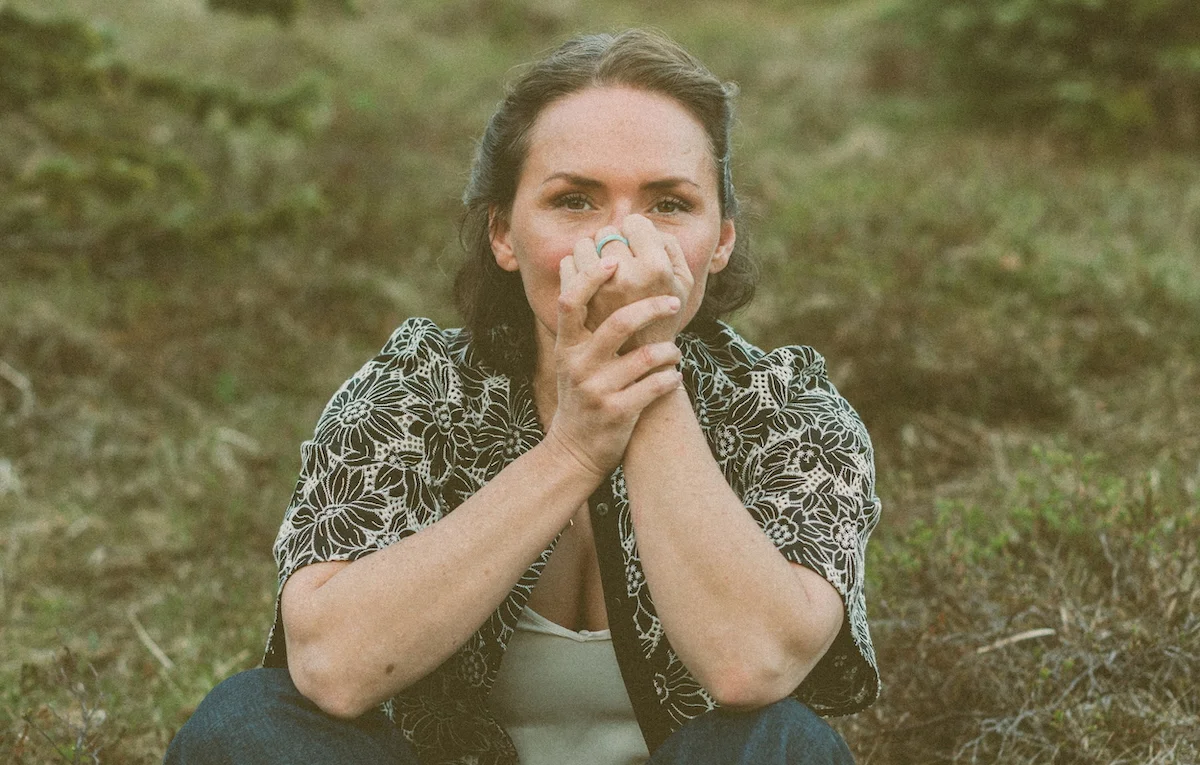
More than twenty years have passed since Emilíana Torrini's voice started appearing in records, films and playlists. Yet, unlike many of her contemporaries, the Icelandic singer-songwriter of Italian origins has never chased the speed of the music industry. Each of his projects arrives when it is ready to arrive. No rush, no algorithms to satisfy. On the eve of the concert of the second weekend of La Prima Estate (Friday 26 June, Lido di Camaiore, with Nick Cave, Sleaford Mods, Dove Ellis, Sara Parigi) we talked about festivals, Italian roots, social networks, creative burnout and the revolutionary value of taking time.
You have a long and very particular career behind you. Looking at a project like Miss Flower it almost seems like the natural outcome of a journey that has always mixed memory, story, tradition and experimentation. Who is Emiliana Torrini today?
I feel very relaxed right now. And I think the best thing about the concerts I'll be doing this summer is that I have nothing to sell to anyone. There isn't a new album to promote, there isn't a particular agenda. I can just go on stage and enjoy the moment. Obviously I've always loved playing live, but it's different when you're not trying to accompany a release or support a specific project. I can be more present and calmer.
So those who come to see you should expect some sort of greatest hits?
Yes, partly. At festivals time is always limited and you have to find a balance. There will be many of the songs that the public knows best, also because at festivals it often happens that someone discovers you by chance. Then there are the people who have been following you for years and want to listen to their favorite songs. When you do a concert that is yours alone, you can allow yourself to be more selfish, more personal, follow your emotional path. At a festival you have to build something that works for everyone.
Do you like festivals? Many artists love them, others find them terrifying.
For me they are the scariest thing ever (laughs). Really. They make me anxious a lot before going on stage. When you give your own concert you can create an intimacy that almost resembles the living room of your own home. That's where I feel I'm at my best as a musician. I can tell stories, talk to the audience, build a more personal relationship. At festivals it's much more difficult. You try, but the context is different. There is a much stronger component of unpredictability. You have to win people's attention and build something together with them. This is what makes it fascinating but also scary.
You have always had a special relationship with Italy. They often ask you about your Italian origins, but I would like to turn the question around: what do you find in the Italian public that you don't find elsewhere?
I believe that in Italy there still exists an authentic passion for art. It is part of the cultural roots of the country. It's something that I still feel very strongly about and that I find beautiful. Every time I return to Italy I get excited. And I also feel a little ashamed because I don't speak the language. I know, I know. I should talk to her (laughs).
However, the relationship with Italy seems to go beyond simple family heritage.
Yes, absolutely. When you grow up between two cultures there is always a part of you that remains invisible to others. The people you meet know one half of your story but not the other. They don't know your Italian family, they've never seen that side of you. For years that part was kind of a mystery to me too.
In what sense?
My father, for example, seemed completely out of place in Iceland. He was expansive, emotional, loud. In a much more reserved culture he almost seemed like an alien. The Icelanders were much more restrained, much more formal. Then you arrive in Italy and suddenly you understand your father.
In fact, imagining the story of an Italian immigrant in Iceland in the 1970s is already a novel.
(He laughs) It's a difficult feeling to explain. When I am in Italy I feel that a part of me is recomposed. As if a void were filled. Maybe no one really considers me Italian, but I feel that connection deeply.
You make few records, you're not obsessed with constant presence.
I don't want to artificially speed up my work. It's the same approach I've always had with social media. I never wanted to adapt to a logic that asked me to continually publish something. My growth has been slow, but I know that the people who follow me are there for the right reasons. For me, every project takes its own time. I can't compress that process. To make music you have to live. We need to observe the world, be interested in something else, step away from creative work every now and then to be able to return with something to tell.
Are you concerned about the way the music industry treats young artists today?
Very. I see many very young musicians arriving already exhausted. After the first tour they are often completely burned out. And I understand them. They work a lot, continuously publish content, travel non-stop and in the end they ask themselves: what is the point of all this? Why am I doing all this if I can't even make a living from my work? Having a history behind it, a catalogue, an audience built over time has almost become an advantage.
Speaking of the future: are you working on new music?
Yes, I'm back writing with Dan Carey. In fact we never really stopped. We are very good friends as well as collaborators, even if he has now become a sort of superstar (Carey produced, among others, Fontaines DC and Kneecap, ed). Also, I'm also with Simon Byrt (his collaborator and last producer, ed) and I have a lot of material in progress.
So the next album already exists, at least in embryonic form?
In some ways yes. But after the last few years I needed to stop. There have been the album and the film since The Extraordinary Miss Flower (directed by Iain Forsyth and Jane Pollard, the directors of 20,000 Days on Earth about Nick Cave, who appears in Torrini's film, and of Broken English on Marianne Faithfull, ed), there was a divorce. There was life.
As you said before, to make music you have to live.
Exact. I thought I'd jump straight into the next project but instead I got stuck. I realized that I needed to be with my children. To spend time together. To go to the beach, live in a caravan for a few weeks, do nothing. Watering the garden. Nourish daily life. Sooner or later we always start again, but first we need to have something to start again from.