
A dissing as a full-blown rapper, applied to songwriting. Not the first, though. In 1976, in fact, Francesco Guccini had already transformed a song into a showdown with an opponent. In “L'avelenata” he had directly called into question the critic Riccardo Bertoncelli, guilty of having panned “Rooms of daily life” and having dismissed him as “a finished artist”: “What can I tell you? Go and do, there will always be, you know, a failed musician, a pious man, a theorist, a Bertoncelli or a priest who shoots bullshit”, the Maestrone had ruled in the final verses of his piece. In 1982, Vasco Rossi ideally picked up that lesson, but took it to different terrain: on the most pop stage of Italian music, that of the Sanremo Festival.
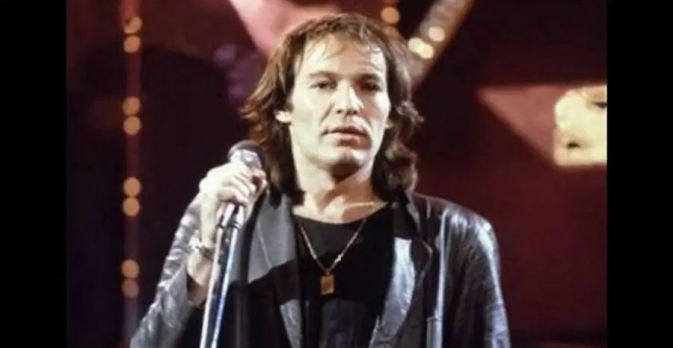
When he presented himself at the Ariston in 1982 with “Vado al massimo”, Vasco Rossi was not yet the national phenomenon he would become in the following years. He has already published four albums, from “Ma cosa viso che sia una canzone” to “Sono solo noi”, passing through “We are not mica the Americans” and “Colpa d'Alfredo”, but his following is still concentrated mainly in the North, between Emilia, Lombardy and Piedmont. Sanremo represents an opportunity to move beyond the local dimension and conquer a much larger national audience. As he would recall years later, his goal was not only to make himself known, but also to shake up an environment that he perceived as rigid: “I wanted to amaze them, provoke them, desecrate that stage with irony and provocation”.
Yes, because on the national-popular stage par excellence, between plastered rituals, redundant scenography and obligatory playback, Vasco appeared like an alien. Yet that very stage, apparently so distant from his world, would prove decisive for his career. Starting from the “settling of accounts” or “dissing ante litteram” with one of his famous detractors, contained in “Vado al massimo”.
At first glance, the song brought to the Ariston stage in the first of Vasco Rossi's two forays seems like a light, almost summery song, crossed by reggae suggestions which in those years were also finding space in Italian music. A Po Valley reggae. Behind the apparent light-heartedness, however, lies a precise thrust. In fact, an enigmatic “guy who writes in the newspaper” appears in the text, the target of verses that few people immediately identified at the time. That “so-and-so”, in fact, had a first and last name: Nantas Salvalaggio. Journalist, writer and founder of Panorama, he was one of the most authoritative names in Italy at the time. In December 1980 he had witnessed one of Vasco's first television appearances, guest on Pippo Baudo's Domenica In with “Sensazioni forti”, and was scandalized. On the pages of Oggi, he had published a very violent invective that went far beyond music criticism: “I was like a pope sitting in an armchair, a beautiful book by Joseph Roth on my lap, when my daughter pressed the button on the cursed box, and on the small convex screen the hilarious and Pinocchio-like face of Pippo Baudo appeared. In short, it was 'Domenica in'. Anything to object to? Didn't I like the vocabulary and the Baudesque movements? But no, there's something worse, I sat through the 'live shows' from Bologna (the stunt cars, the acrobats on the steering wheel) and the suburban chorales of the Giuseppe Verdi theater in Busseto without any trauma. Salvalaggio's article read – is the star of this 'complex', who dies more complex than that, a certain Vasco de Gama? But no, Vasco Rossi. To describe him I would need the pen of a Grosz, of a Maccari: a handsome idiot, or rather a rather ugly idiot, with the smoked glasses of a zombie, of a… 'done' doubt: what if he was pretending? What if he wasn't an alcoholic or a drug addict at all? Oh no: a true artist, even when he plays a 'zombie', a suburban bum, a human wreck, puts the spark of genius into it; that yeast that repays you for the ugliness of the mud, of the ravine that contains the character. In short, the accusation was not only that of being a drug addict, but also of inciting young people to use drugs. A thought in full harmony with the respectable and right-thinking rhetoric of an Italy that was starting to react with the so-called “ebb” to the revolts of the Years of Lead. “I imagined the hundreds of thousands of beardless, submissive kids who drink everything that comes from the TV, as if it were rosolio”, theorized the reprimand of Salvalaggio, who was only 58 years old at the time.
The article caused an outcry and also provoked an unexpected response: that of Novella Rossi, Vasco's mother, who wrote a disarming letter, recalling the dignity of her family and the honest work of her husband, who had recently died, vindicating her son's honesty against accusations deemed gratuitous and offensive: “I have no words, also because I haven't studied much and wouldn't be able to make myself understood, but I would never wish you to have to read such atrocious, bestial and gratuitous insults about one of his children – wrote Vasco's mother – It must be so sad to earn a living like she does. My husband died recently from hard work, he was a truck driver all his life, but honestly he didn't have to hurt anyone to earn his living and send his son to school. Vasco is neither a… nor a saint, but he is honest like his father and that's enough for me.
Vasco, however, preferred to serve his particular “revenge” on a cold plate, consuming it a few months later on the most famous stage in Italy, in front of millions of viewers. In the verses of “Vado al massimo”, Salvalaggio was transformed into a nameless character, the object of a mockery as evident as it was ironic: “Better to take a risk than to become / like that guy, that guy / who writes in the newspaper”. And then in the second part of the song, after “I go to the max” it becomes “I go to Mexico”, the new mockery: “I want to see if you can really fly there / without the risk of falling / To always, always meet that guy / that guy who writes in the newspaper”.
The Sanremo race, in an edition conducted by Claudio Cecchetto with Patrizia Rossetti, did not give him immediate satisfaction. “Vado al massimo” ended in the last positions of the final ranking, won by Riccardo Fogli with “Storie di tutti i giorno”. Formally Vasco did not come last, because eight competitors had already been eliminated in the previous evenings, including Claudio Villa, who contested the rules and went to the judiciary. The real blow for Vasco Rossi would come the following year with “Vita spericolata”: another participation coldly received by the jury, even finishing with a penultimate place, but destined to definitively enter the imagination of Italian music, laying the foundations of a career as a national superstar.
It is not known whether there was ever a reconciliation between Rossi and Salvalaggio. It's difficult to even imagine given the distance between the two, generational and beyond. The curiosity of that sardonic remains dissing before its time which forever buried the nineteenth-century idea that a singer could lead the younger ones astray. Or maybe not.
Daniel D`Amico for SANREMO.FM