
Article by Umberto Scaramozzino
When the festival The First Summer announced this second day of his first weekend, many of us were taken aback. Some perhaps even disappointed, still intoxicated by the announcements worthy of a top international festival with which the event presented its 2026 edition. Nick Cave, Gorillaz, Twenty One Pilots, Jack White. And who expected it? Also for this reason to read that on June 20, 2026 to play on the big stage of Lido di Camaiore they would all be Italian rock artists it was quite surprising.
Yes! Boom! Voila! (the alt-rock/post-hardcore supergroup led by Roberta Sammarelli), Casino Royale, Ministers and finally i Marlene Kuntz. The reason why this thing works and should not be evaluated only on the basis of tickets sold, is the same one that led Jack White to accept the offer, by virtue of the presence of The Hives as an index of credibility and awareness of those who organise. The same one he brings Federico Dragogna to say on stage: “we thank this festival, which remains one of the few in Italy to have decent volumes“, touching on one of the many crucial points of the current live entertainment panorama. The truth is that in this choice, whether forced or not, we can glimpse some of the reasons why La Prima Estate, with ample room for improvement, is one of the few credible and far-sighted projects currently in development in the country. There is the intentionthere is the desire to try to do things differently, to overturn some logic of instant profit in favor of trustwhich often also leads to long-term profit.
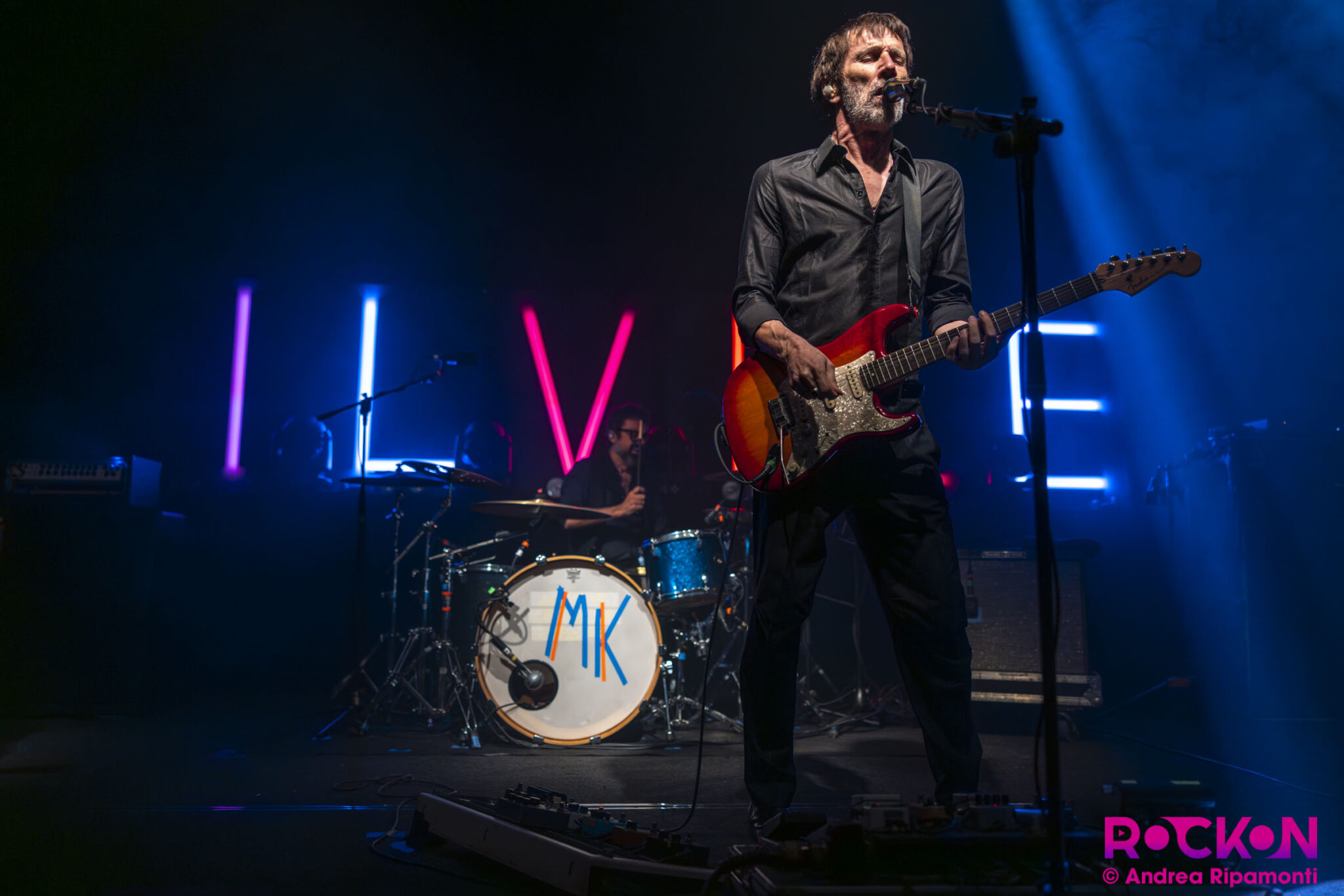
But putting aside the praise for the day with the least appeal and most heart of the entire festival, how did the biggest set of the day go, with Marlene Kuntz honoring their second studio album, “The Vile“? Let's start by saying that the natural habitat of “Il Vile” and its complete live performance (with the exception of “And it doesn't stop turning my head in the middle of the sea”, a bone of contention already at the time) is certainly not a huge stage among the trees, a few meters from a beach in Versilia. To celebrate one of the most seminal and unforgettable records of alternative rock of our nineties the most congenial dimension remains that of the clubs, where the dark and harsh sounds can crash against the black walls, instead of dispersing in the air of a seaside location. Yet this dichotomy between music and venue results in some way disturbing and therefore equally successful.
It's like a journey into Multiversethanks to which we have the opportunity to savor the alternative future in which an exceptional band like Marlene, with the timing of the great international groups of that decade, reaps the fruits of a formidable career and those fruits are no longer just for a cultured portion. Enough with the self-styled connoisseurs. In this branch of reality, beautiful things are for everyone. Whoever has bread also has teeth and for this very reason having been seminal means something more. A wonderful illusion that works because those on stage believe with all their being in what they are doing.
The spaces of the festival seem endless when compared to the small audience, but how much fervor that is there, both on stage and below the stage. And how good Marlene sound, back in their four-piece lineup, with Luca “Lagash” Saporiti (low) e Sergio Carnevale (battery) which flank the nucleus composed of Riccardo Tesio And Cristiano Godano with the same compactness of those who have been playing together for a lifetime. Songs like “3 di 3”, “L'agguato” and “Cenere” have such a sensational shot that the seductive blasphemy makes one believe that they could be better today than then.
Godano's words are as always abrasive and if they were not known by heart to the passionate audience they could sometimes be incomprehensible, even if made semantically clear byintensity with which those sounds come out of his mouth. To quote the artist himself: “Ultimately, what a singer must do with his songs is create something made to be listened to by people, even before being read, and reading a song's lyrics first of all serves to understand what escapes from listening to a record.”.
This is why the Marlenes insist on the verb “honor“, as if to remain faithful not only to the songs, but also to the intentions with which they were written, to the vitality with which they were played, for the people who listened. Perhaps the best way to look at the past, while remaining firmly anchored to the present.
Daniel D`Amico for SANREMO.FM