
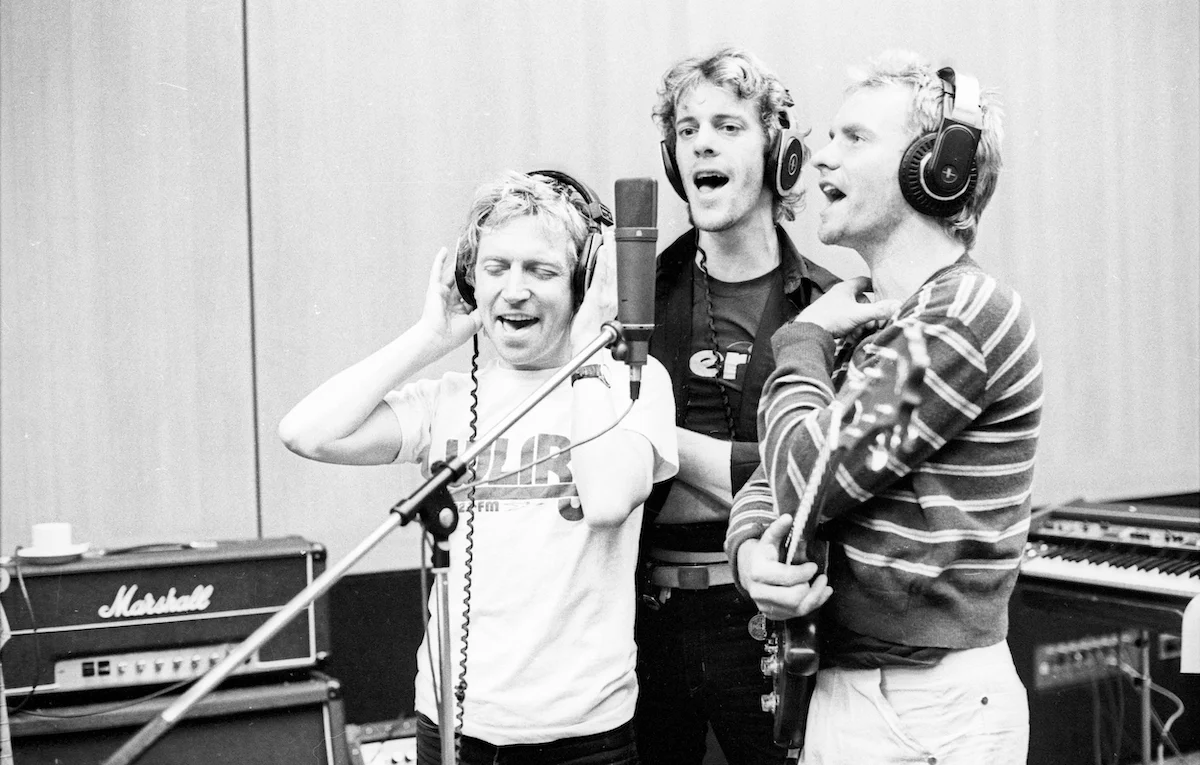
According to Stewart Copeland, the lawsuit pitting him and Andy Summers against former bandmate Sting hasn't ruined their relationship. Indeed, they get along well despite the fact that the drummer and guitarist have sued the singer, saying they were unfairly excluded from the distribution of royalties from The Police's songs. They asked for two million dollars. Sting awarded them $870,000, but the two are demanding a larger sum.
Something like this usually ruins relationships (not that before…). Copeland instead says that he, Summers and Sting get along well. «We are not the ones who are in court. Accountants are, somewhere in London,” he told Billboard. “I'm just asking you to let me know how it will end,”
The drummer says he still hears Sting. The two talk to each other (or write to each other) about “children, Instagram memes, various stupid things… I'm happy that we get along perfectly, and we also know why. It is not a matter of satanic impulses or because of some human weakness such as jealousy, greed, pride or anything else. It's because there was a time when our musical universes overlapped and we created incredible things. We achieved everything we needed to achieve. As I've been saying a lot lately, ol' Sting-O and I make music for different reasons, and music has a different place in our lives. So we get along as long as we don't try to make music together.”
Copeland is writing a new book that he describes as “a kind of guide to the life you have when people chase you for an autograph, journalists ask you uncomfortable questions and all the other things that come with being a rock celebrity, in all its bizarreness. Because it's really strange, it's not normal: people don't treat musicians like they treat dentists, even though dentists are infinitely more important for their health. Living in that bizarre world, standing on a precarious pedestal, is a very special experience.”
When we spoke a year ago, Copeland told us the title of the book The Complete Rockstar: How to Survive on More Fame and Fortune Than You Deserve and described it as “an anthropological analysis of fandom and at the same time a manual for young musicians in which I explain how to deal with various situations, from ceremonies like the Grammys to what to do in the dressing room to pass the time or how to choose between a Learjet and a tour bus.”