
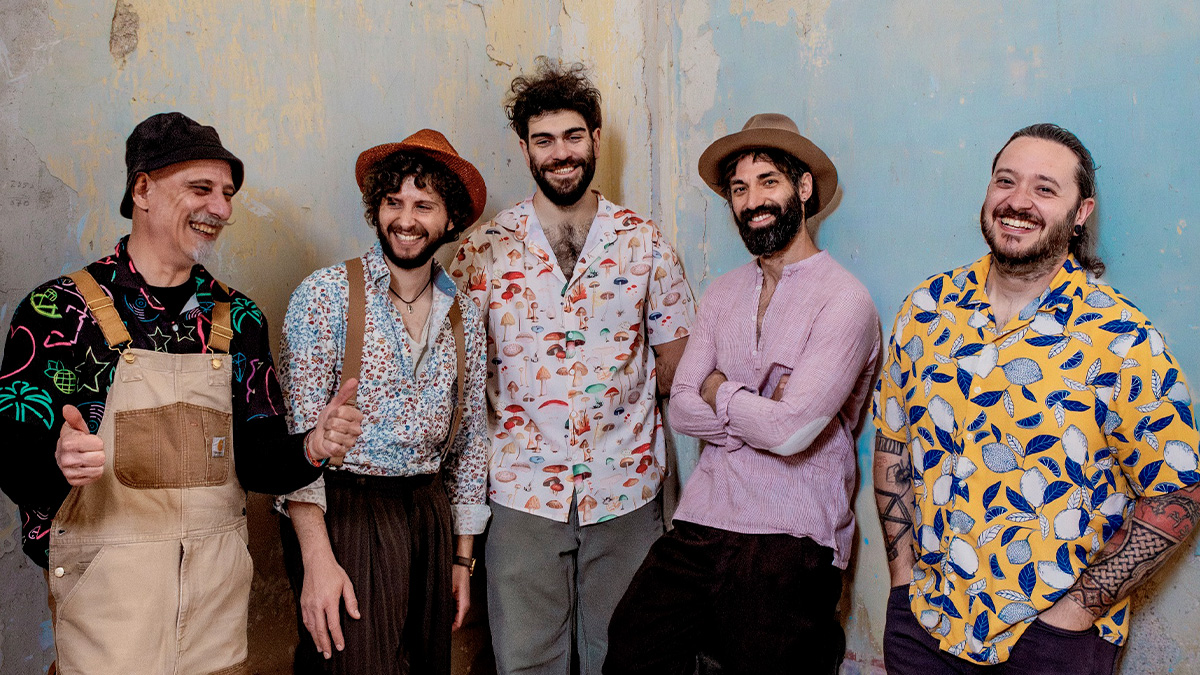
“Back when things were made to last” is the title of the latest one album by the Umbrian band Livestock Wagonavailable from Friday 8 May on all digital platforms for Maninalto! One year after the EP “Venivo dal manure” and two years after the first album “In Fondo al Lago”, the formation that mixes folk pop and rock returns with ten tracks that confirm and further develop their artistic identity. Less punk than Gogol Bordello, but more modern than the Dubliners, CarroBestiame present themselves as the link between folk tradition and the more modern pop rock. A project that wants to move outside the stereotypes that often characterize the genre. With this album the band perfects its sound recipe, freeing itself from those canons and preconceptions that too often relegate folk to a niche for a few enthusiasts. In the tracks of “In the time when things were made to last” there is a balance between quieter reflective moments and rhythmic rides made for dancing. If the violin it somehow runs through all the songs giving that traditional aftertaste, guitars electrical And rhythmic explosive they color verses and choruses.
Your music seems to come more from the street than from the studio. How much does lived experience matter compared to technique when you write a song?
We have always had a visceral connection with the experiences we have lived. Our songs are full of stories kidnapped from the street, the study is simply a means to put that something extra in them to be noticed by an attentive listener.
If you had to describe CarroBestiame to someone who has never listened to you using three images and not three musical genres, what would they be?
A van full of instruments and warm beers crossing a provincial road at 3 in the morning, a village festival with people dancing even if it's raining, a bonfire almost extinguished at 5 in the morning when few people remain but still singing.
In folk tradition and rebellion often coexist: which of the two souls do you feel most represented by today?
I would say rebellion, but through tradition. We are interested in folk precisely because it is popular music: it comes from ordinary people, not from living rooms. And so there is always a form of resistance inside, even when the piece seems light or ironic.
The title of the new album is very evocative. How was “In the time when things were made to last” born?
In a world marked by planned obsolescence we feel we must launch a loud and clear invitation to make repairs. From objects to relationships, everything is now disposable, when in reality what makes everything special is precisely the time that one is able to dedicate to it.
Musically the album seems to further broaden your sonic identity. What has changed compared to previous works?
Let's say that not assigning limits to our musical identity has always been a necessity. We like exploring and it allows us to discover new sides of our project and our personalities. This new work has also left room for more acoustic sounds and more committed lyrics than usual and we are satisfied with it.
The concept of the album speaks of a “disposable” world. How much is autobiographical in this reflection?
Very. We believe that the superficiality that has now affected the entire world is a real evil, on all fronts. We cannot afford to lose healthy principles, healthy values and above all sacrifice which is what alone can sculpt the authenticity of anything.
Does social media help you tell your story or force you to simplify yourself?
Both things. Social media allows you to reach people you might never meet, and this is beautiful. But they often ask you to be immediate, concise, always “on”. And music doesn't always work like that. Some things need time, silence, maybe even to be understood badly before they are truly understood.
Apart from the presentation quotas where you distance yourself from Gogol Bordello and Dubliners, which Italian or international artists do you feel closest to you – apart from featuring -?
Certainly the Modena City Ramblers for a certain way of experiencing the stage and telling stories. Then Bandabardò, Cisco, but also more distant things like Tom Waits or Manu Chao. We like artists who have strong and human identities, even imperfect ones.
If you had the chance to choose a collaboration with an artist very far from your genre who would you choose?
Maybe someone like Caparezza. He is musically distant from us but close in the way he uses images, irony and social criticism. Or something completely unsettling, like with an electronic producer who forces us to leave our comfort zone completely.
During live performances are you used to rearranging pieces adapting them to a more direct dimension?
Always. The live pieces change constantly. Some get faster, dirtier, more choral. Others perhaps lengthen because a dialogue with the public arises. For us, live is not a copy of the album: it is the place where the songs really come to life.
At concerts, on average, you find an audience that already knows you or it's an opportunity to conquer new fans?
Both, and that's the beautiful part. There are those who have followed us for years and sing every song, but often you also find people who arrive without knowing who we are and after three songs they are under the stage jumping. Our music works a lot on direct human impact.
What would you like the public to be left with after listening to “Back when things were made to last”?
We would like to leave him with a real feeling. Maybe the desire to stop for a moment, to hold on to important people, to do fewer things but live them better. And also the desire to go back to a concert, drink together and sing something at the top of your lungs without worrying too much about being perfect.
Daniel D`Amico for SANREMO.FM