
If you purchase an independently reviewed product or service through a link on our website, Rolling Stone may receive an affiliate commission.
Table of Contents
Amid the sea of supplements in today’s wellness and biohacking megatrend, there are a few standouts. Creatine is one of them.
Some of the wellness world’s biggest names, from Andrew Huberman to Mel Robbins to Joe Rogan, are vocal supporters of the stuff. Dozens of health-conscious celebrities have also discussed how they use creatine for different effects: Ciara, an ambassador for the creatine brand Thorne, says it combats brain fatigue amid a busy life. Mark Wahlberg, who started his own brand, says he uses it to stay in shape. Legendary skater Tony Hawk is a fan. And earlier this year, on the Run Through With Vogue podcast, Halle Berry talked it up, saying, “I thought I would never take creatine — [I thought,] that’s going to blow me up. But no, girl needs that.” She says it’s helped improve brain fog caused by menopause.
At a Glance: The Best Creatine Supplements of 2026
But unlike some wellness trends, creatine actually has serious scientific credibility. Creatine monohydrate is one of the most extensively researched supplements in existence. And increasingly, researchers and clinicians are noting that its benefits extend beyond muscle growth into cognitive performance, aging, and metabolic health. These new use cases, along with creatine’s well-researched effects on muscle growth, have opened the door to a new wave of interest from people who aren’t elite athletes.
The format has also evolved. While powders and capsules used to dominate the market, a new class of creatine bars and functional foods is making the daily habit more convenient and a lot more enjoyable.
If you’ve been hearing as much buzz about creatine as we have and want to try it out, read on. Below is everything you need to know about creatine, including how it works, who should take it, and the best creatine supplements to try right now
What Is Creatine and How Does It Work?
Creatine is an organic compound that your body makes naturally in the liver, kidneys, and pancreas using building blocks from protein. Most of it lives in your muscles, where it acts like a backup battery for quick, intense bursts of effort during activities like lifting heavy weights, sprinting, or jumping. When you need a short surge of power, creatine helps your body do it. In scientific terms, it facilitates the recycling of adenosine triphosphate (ATP), which is a crucial part of the body’s ability to turn fuel into energy. But, as many have been realizing recently, this process isn’t exclusive to our muscles. Better ATP recycling, thanks to our body’s creatine levels, also affects brain tissue and mental function.
“Creatine is one of the most researched molecules for muscle metabolism and cognitive health,” says Dr. Andrew Salzman, Chief Medical Officer at Wonderfeel and a Harvard physician-scientist with over 170 peer-reviewed publications. Creatine supplements work by essentially topping up our naturally occurring reserves, which helps our body produce energy faster when we need it. This means you can push harder while working out, recover more quickly, and gain muscle mass faster.
Recently, some studies have suggested that taking creatine also has positive effects on our brains. Just like our muscles, brain cells require ATP for energy and rely on creatine to make it happen. Research has found that creatine can sharpen short-term memory, improve problem-solving, and fight off mental fatigue — especially for those who are stressed or sleep-deprived.
It’s also worth noting that creatine is not a stimulant, it does not spike your blood sugar, and it has a long and well-documented safety record across healthy adult populations.
Who Should Be Taking Creatine?
For years, creatine was almost exclusively used by young male athletes and bodybuilders. But that’s changing. The positive effects of creatine can be tapped into even if you’re a more casual gym-goer. Research also shows meaningful benefits for women, including those in perimenopause and menopause, where muscle mass and bone density decrease. Studies have also demonstrated benefits for adults over 50, where creatine supplementation combined with resistance training can help counteract age-related muscle loss.
People with existing kidney disease should consult a physician before supplementing, and the safety profile during pregnancy has not been sufficiently studied. But for the broad majority of healthy adults, creatine is among the least risky, most evidence-backed supplements available.
The Best Creatine Supplements of 2026
If you’re looking to try creatine, here are seven of the best creatine supplements to buy online.

Best overall
Wonderfeel ChocoCreatin™
➤ Pros: Tasty, high-quality creatine, rigorous testing
➤ Cons: Fixed dosage (4g per bar)
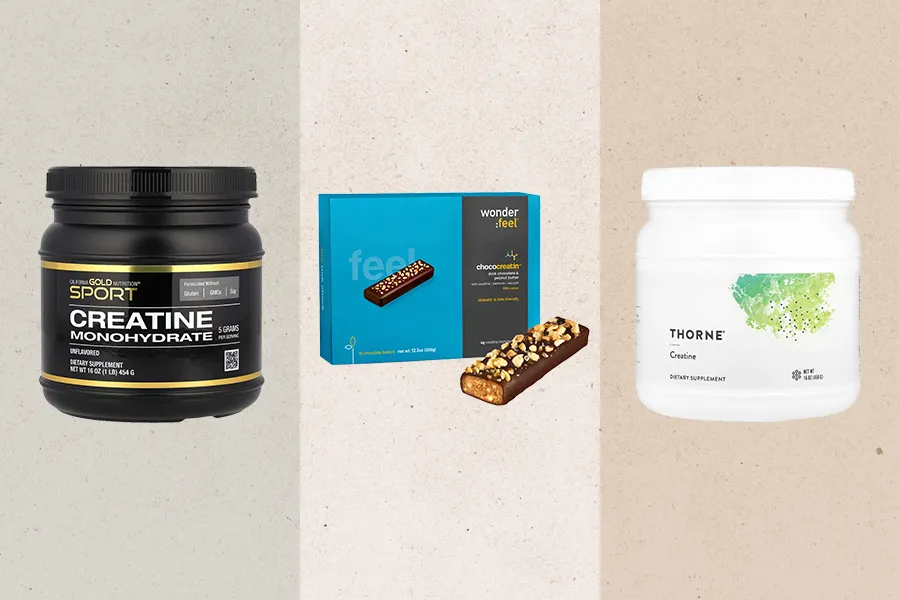
Wonderfeel’s ChocoCreatin checks all the right boxes in terms of ingredient sourcing, scientific backing, and dosage. But the chocolate experience is what really separates the ChocoCreatin bars. The creatine is delivered in a tasty, portable format, making it easier to stick to a daily routine. The dark chocolate bars are zero-sugar, low-carb, vegan, keto-friendly, and diabetic-friendly, and they’re sweetened with a natural sugar called allulose that doesn’t spike blood glucose.
Each bar delivers four grams of creatine monohydrate that’s sourced from the same German manufacturer behind Creapure, which is considered the gold standard for purity and quality control. “By pairing premium creatine with allulose and single-origin cacao, we have created a delivery system that respects the body’s glycemic response while providing an elevated culinary experience,” says Dr. Salzman. The ChocoCreatin bars themselves have also been subjected to rigorous third-party lab testing to ensure purity, quality, and effectiveness. In short, it’s everything we look for in a creatine supplement, and it actually tastes great.
Runner-Up
California Gold Nutrition Sport Pure Creatine Monohydrate
➤ Pros: Exceptional value, straightforward powder, third-party tested by iHerb
➤ Cons: Requires mixing
One of the best pure creatine powders is this one from California Gold Nutrition. It’s a clean, high-quality creatine, but the best thing about it is its price. At $14.80 for a one-pound package or $29.23 for a two-pound package, it costs as little as 15 cents per serving. The product is also verified by iHerb’s iTested program, which means it’s been run through an independent laboratory that confirms quality, purity, and label accuracy.
Best Powder
Thorne Creatine Powder
➤ Pros: Pure, high-quality, NSF Certified for Sport, good value
➤ Cons: Requires mixing
Another pure, high-quality creatine powder is this one from Thorne. Each serving contains five grams of pure creatine monohydrate that mixes easily in water and doesn’t have a flavor. These servings come in at about 50 cents each, making it very affordable. It’s certified by NSF Certified for Sport, a reputable third-party certification for quality and transparency that checks for more than 290 substances banned by major sports organizations. For that reason, and its quality, it’s a favorite among professional athletes, and even has an official partnership with the UFC Performance Institute.
Premium Pick
Transparent Labs Creatine HMB
➤ Pros: Good additional ingredients, Informed Sport certified
➤ Cons: Harder to stack, pricey
This creatine and HMB blend from Transparent Labs offers a great mix of high-quality creatine and other ingredients that can support muscle growth and retention. The main one is HMB (hydroxymethylbutyrate), another natural compound that helps prevent muscle breakdown. It also includes black pepper extract (for absorption) and vitamin D3. As the name suggests, the brand is also dedicated to transparency, so customers can view the product’s third-party certificate of analysis and ingredient verification test results on the website. Transparent Labs does charge a premium for its blend and transparency, but it’s worth it if you don’t mind the extra cost.
Best for Women
Wellah Creatine Monohydrate
➤ Pros: Tailored for women, made in NSF Certified GMP Compliant facility
➤ Cons: Includes sweeteners
Creatine supplementation is just as effective for women as it is for men, even though women naturally store less creatine than men. This powder from Wellah is tailored for women’s bodies, with dandelion, cranberry, and Uva-Ursi extract to help manage water retention, which can happen during the first few weeks after introducing creatine supplements to your diet. The creatine itself is made in an NSF Certified GMP Compliant facility, and it’s very affordable at about 30 cents per serving.
Best Gummies
Momentous Creatine Chews
➤ Pros: High-quality creatine, easy to dose + transport, NSF Certified for Sport
➤ Cons: Some don’t like the taste, additional ingredients
Another great creatine product that comes in a pre-packaged consumable is Momentous’ Creatine Chews. That means you don’t need to worry about mixing, and they’re highly portable. But the best thing about Momentus’ product is what’s inside. The brand uses Creapure creatine, the gold standard for purity and quality control. It’s also NSF Certified for Sport. The downsides are that each chewable only contains one gram of creatine, and some users aren’t fond of the flavor.
How Much Creatine Should You Take Each Day?
The clinical consensus is that three to five grams of creatine daily is the best dosage for most people. That range is supported by the bulk of the research and is generally sufficient to saturate muscle creatine stores over time without requiring a “loading phase.” A loading phase is when you take very large doses of creatine to start (typically around 20 grams per day) to quickly saturate your muscle stores. It may help you see results faster, but it might exacerbate minor side effects like an upset stomach.
Timing for creatine consumption isn’t too important, although some studies suggest that you should take it close to your workout (either before or after). Overall, consistency is key, so pick a time during your day when you’ll remember to dose.
Are There Any Risks With Creatine?
The short- and long-term safety of creatine monohydrate in healthy adults is well established. A comprehensive review of the clinical literature found no adverse effects on kidney or liver function in healthy users supplementing at recommended doses. The myth that creatine damages kidneys appears to stem from early theoretical concerns, not human trials.
A commonly reported effect of creatine supplementation is mild water retention in muscle tissue during the first few weeks. But this is an increase in intramuscular water — not water in the skin that causes visible bloating — and means that the creatine is working as intended. As with any supplement, creatine can cause slight stomach discomfort when you first start taking it.
Individuals with pre-existing kidney disease, those taking medications that affect kidney function, and pregnant women should consult a health-care provider before use.
How We Selected the Best Creatine Supplements
The recommendations in this guide were developed by evaluating several criteria: The form of creatine used (with monohydrate as the evidence-backed standard), per-serving dose relative to clinically-suggested ranges, ingredient transparency, third-party testing and certification, manufacturing standards, and value. We looked for products that source clean, high-quality creatine. Price-per-gram of creatine was also a factor, although a high price point did not disqualify a high-quality option. We also considered dosage ease (i.e., pre-packaged options vs. powders) and stacking potential for people taking other supplements. We excluded products making unsupported claims, relying on proprietary blends that obscure dosing information, or lacking credible quality verification.
Disclaimer: The information in this article is intended for general wellness and informational purposes only and does not constitute medical advice, diagnosis, or treatment. Supplements are not regulated by the FDA in the same way as prescription medications, and individual results may vary. Before adding any new supplement to your routine, consult with a qualified health-care professional, particularly if you are pregnant, nursing, have a pre-existing medical condition, or are taking prescription medications. The products featured in this article have not been evaluated by the FDA and are not intended to diagnose, treat, cure, or prevent any disease.
