
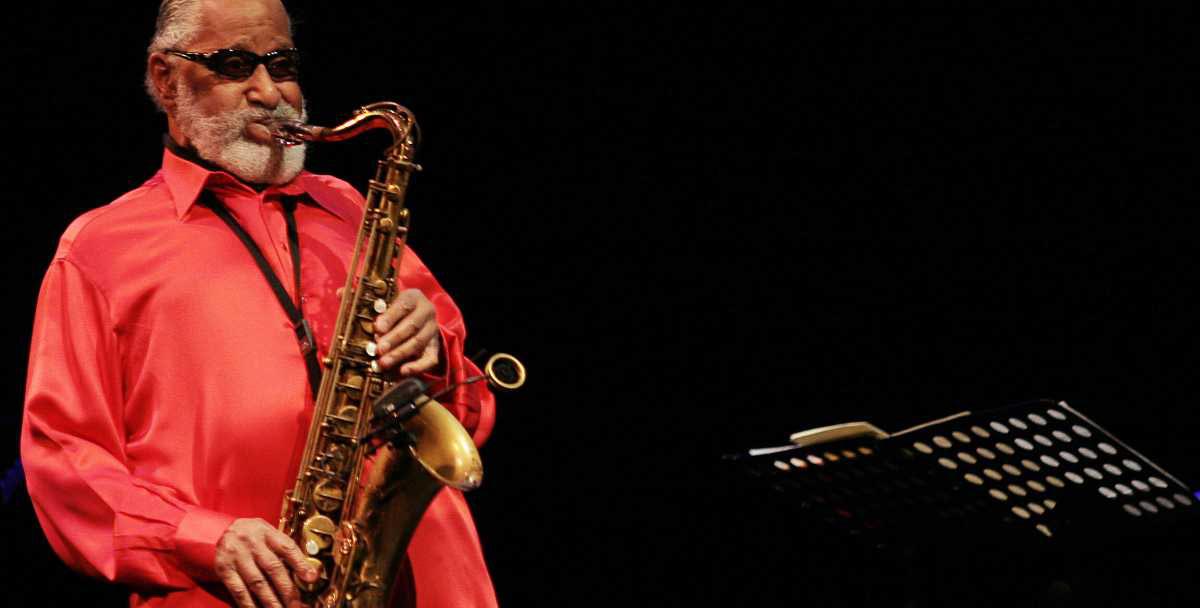
Sonny Rollins, one of the great protagonists in the history of jazz, has died at the age of 95. The news of the saxophonist's passing was confirmed by spokeswoman Terri Hinte. Considered among the last giants of the bebop era, Rollins has been compared in terms of influence and artistic stature to figures such as John Coltrane and Charlie Parker.
His fame was linked above all to his exceptional improvisational ability, a quality that made him an absolute point of reference for generations of musicians. In an interview with “People” in 2018, he explained his relationship with music like this: “Many of those I grew up with wanted to become jazz musicians, but they didn't have the necessary talent. Music is a gift. Anyone can learn it, but only a few really have something special.”
Born in New York in 1930 with the name Walter Theodore Rollins, he grew up in Harlem in a family originally from the Virgin Islands. After starting out on the piano and the alto saxophone, at 16 he switched to the tenor, inspired by his idol Coleman Hawkins, the instrument that would consecrate him.
At a very young age, he had already played alongside some of the biggest names in jazz, including Miles Davis and Thelonious Monk, who he would later define as his “musical guru”. “I played and studied with Monk, he taught me a lot and he was also an extraordinary person,” he said in a 2013 interview.
In the 1950s he faced a long addiction to heroin. After several drug-related arrests, in 1954 he was admitted to the federal rehabilitation center in Lexington, Kentucky, known as “Narco Farm”, at the time one of the few US institutions specializing in the treatment of drug addiction.
He later moved to Chicago, where he gradually returned to performing while maintaining sobriety. In an interview with the “Chicago Reader” in 2008 he recalled: “I thought I had to be strong enough to live with that environment, because that was the jazz scene at the time. When I left Lexington I was clean, but I still had to find my place in society.”
Over the course of his career, Rollins has received seven Grammy nominations, winning two awards. In 2004 he was awarded the Grammy for Lifetime Achievement, while in 2011 he received the Kennedy Center Honor and the National Medal of the Arts. In 2017 his personal archive was acquired by the Schomburg Center for Research in Black Culture at the New York Public Library.
On OndaRock we recently dedicated an in-depth analysis to one of his masterpieces, “Newk's Time” from 1959.
Daniel D`Amico for SANREMO.FM