
In her 2022 song “Sioux Falls,” Jesca Hoop looks out an airplane window and sees a whirling vortex the size of a stadium. Is it a body of water? A crop circle? No—as the plane descends, the scene comes into focus: thousands of men, women, and children, spinning “like thread around a spool,” terror on their faces, trampling those who lose their footing. The uncanny vision is made even eerier when Hoop spots her late mother dragging her five children through the human tide. Despite the grimness of the scene, the tone of the song is peppy and disorientingly pretty, with a shivery Dorian twist in its churning melody. The chorus’ ascending harmonies rise like an ecstatic congregation, and a cryptic, whispered bridge checks off a packing list for the apocalypse: “A torch, a Zippo/A pocket knife, whistle/One space blanket and a first-aid kit.” The first time I encountered the song, I listened three times in a row; I’ll never think about Armageddon the same way again.
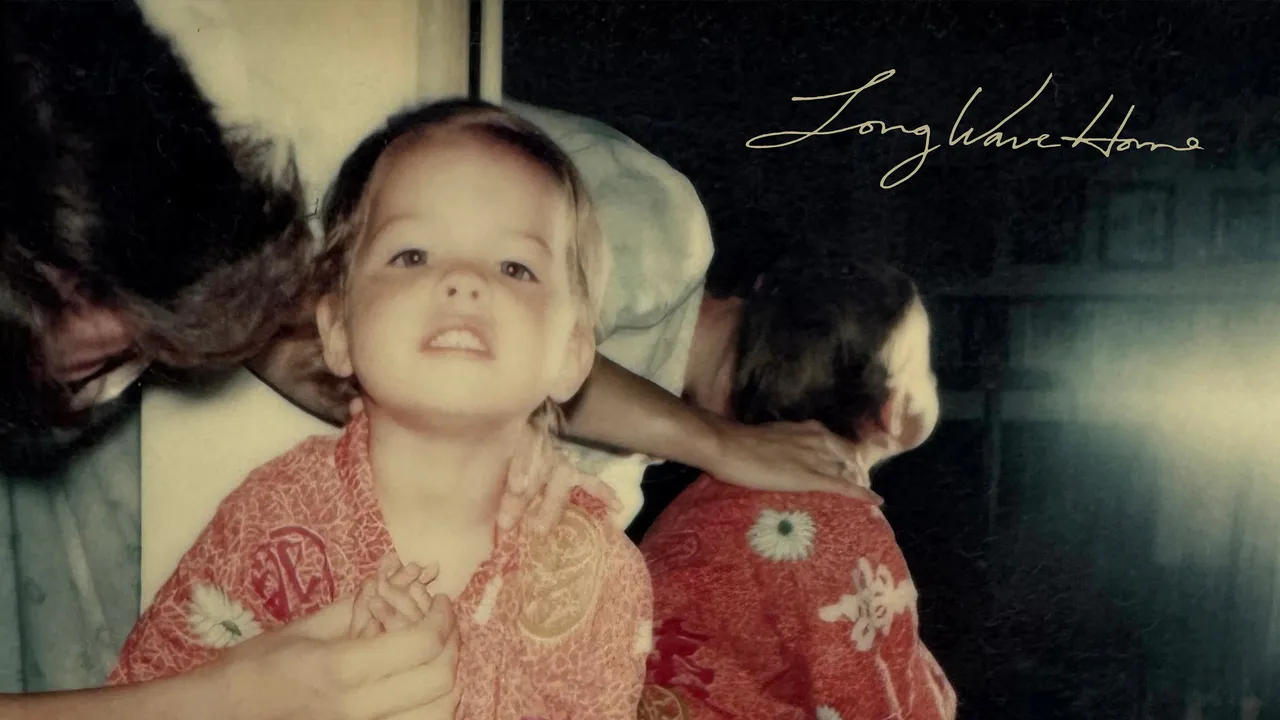
Hoop is a California-born singer-songwriter who left the Mormon church at 16, lived off the grid for a few years, nannied Tom Waits and Kathleen Brennan’s children, and ultimately decamped for Manchester, England, nearly two decades ago; she has a knack for rendering big subjects in head-turning ways. She has an eye for a vivid detail, a fondness for trenchant metaphors—her 2019 album STONECHILD was titled after a rare medical phenomenon in which a woman unknowingly carries the petrified remains of a dead fetus in her body, sometimes for years—and a cheerful disregard for musical convention. On Long Wave Home, her first album in four years, she mostly keeps her gaze focused close at hand, writing meditations on love and human frailty, along with a few sharply rendered protest songs. But whether confronting a friend’s addiction or addressing a nation on the brink, she writes and sings from a singular perspective; long after they’ve finished, her songs linger in the mind, buzzing with restless energy.
No score yet, be the first to add.
Long Wave Home is Hoop’s first self-produced album, but rather than opt for folky simplicity, she has leaned into her idiosyncrasies, leveraging an ear for studio craft honed by mentors like John Parish (PJ Harvey, Aldous Harding) and Blake Mills (Fiona Apple, Feist). Muted guitars twirl in curlicued shapes, fleshed out by harp, woodwinds, and brass; clanking bells and mbira-like harmonics flare up in quiet patches, and background vocals fan across the stereo field.
Tripping along a lilting triplet rhythm, the album opens with one of its catchiest melodies—and one of those sleight-of-hand maneuvers that are Hoop’s specialty. “There is no wrong weather/Only the wrong clothes,” she begins, putting a fresh kink in an old saw, before pivoting to the song’s namesake: “Adam, Adam,” she repeats, harmonies spiraling upward. With dreamlike logic, the meteorological conceit turns into a mountain road, and then an overlook on an unexamined life: Whoever Adam is to her, and whatever he’s done, she’s all out of patience. He’s out here in spiritual flip-flops, and she’s taking her umbrella and going home. The silver lining is in the song’s sparkle; there may not be a sweeter song about giving up on someone you love. (A bit like Adrianne Lenker, whose music hers sometimes superficially resembles, Hoop is fond of peppering her songs with her characters’ given names; on one of the album’s most bittersweet songs, she wistfully urges a friend to “choose Viv over drink.” )