

vote
9.0
- Bands:
SARACEN - Duration: 00:38:37
- Available since: 01/10/1981
- Label:
-
Nucleus Records
The temptation – typical of a posteriori analysis – to force the soul of the NWOBHM into a codified sound or aesthetic, made 'only' of street attitude and raw, galloping riffs disguised with studs and shiny leather, is always around the corner, but often leads one astray. The rediscovery of albums and bands from the British underworld from the period between the Seventies and Eighties, however, has given us a multifaceted and complex portrait of a phenomenon that is much less uniform than subsequent narrative would have us believe. More than a specific genre, the musical-cultural ferment that generated superstars like Iron Maiden, Saxon or Def Leppard, or smaller groups like Saracen, was an unrepeatable convergence of different energies, aesthetics and musical forms, held together by a common necessity: to push the 'heavy' music of its time beyond its limits.
Saracen, in this sense, represent almost an emblematic example, similar to that of many bands such as Demon or Diamond Head who were able to carve out a respectable following without however making the definitive generational leap (or at least not immediately), remaining confined to that cult dimension which today fuels their charm, despite having continued their recording journey in the years to come with alternating fortunes. Born in the mid-'70s as Lammergier, well before the official explosion of the scene, they arrived at their debut with a background that looked more to the Judas Priest of “Sad Wings Of Destiny” and “Sin After Sin” and to Uriah Heep (even the incarnation with John Lawton on vocals) than to their rougher and more impetuous contemporaries. Yet, when “Heroes, Saints And Fools” saw the light in 1981, the album fit perfectly into the climate of the time: not because it sounded 'typically NWOBHM', but for having embodied that spirit of transition, of search for identity, which in some way defined the movement.
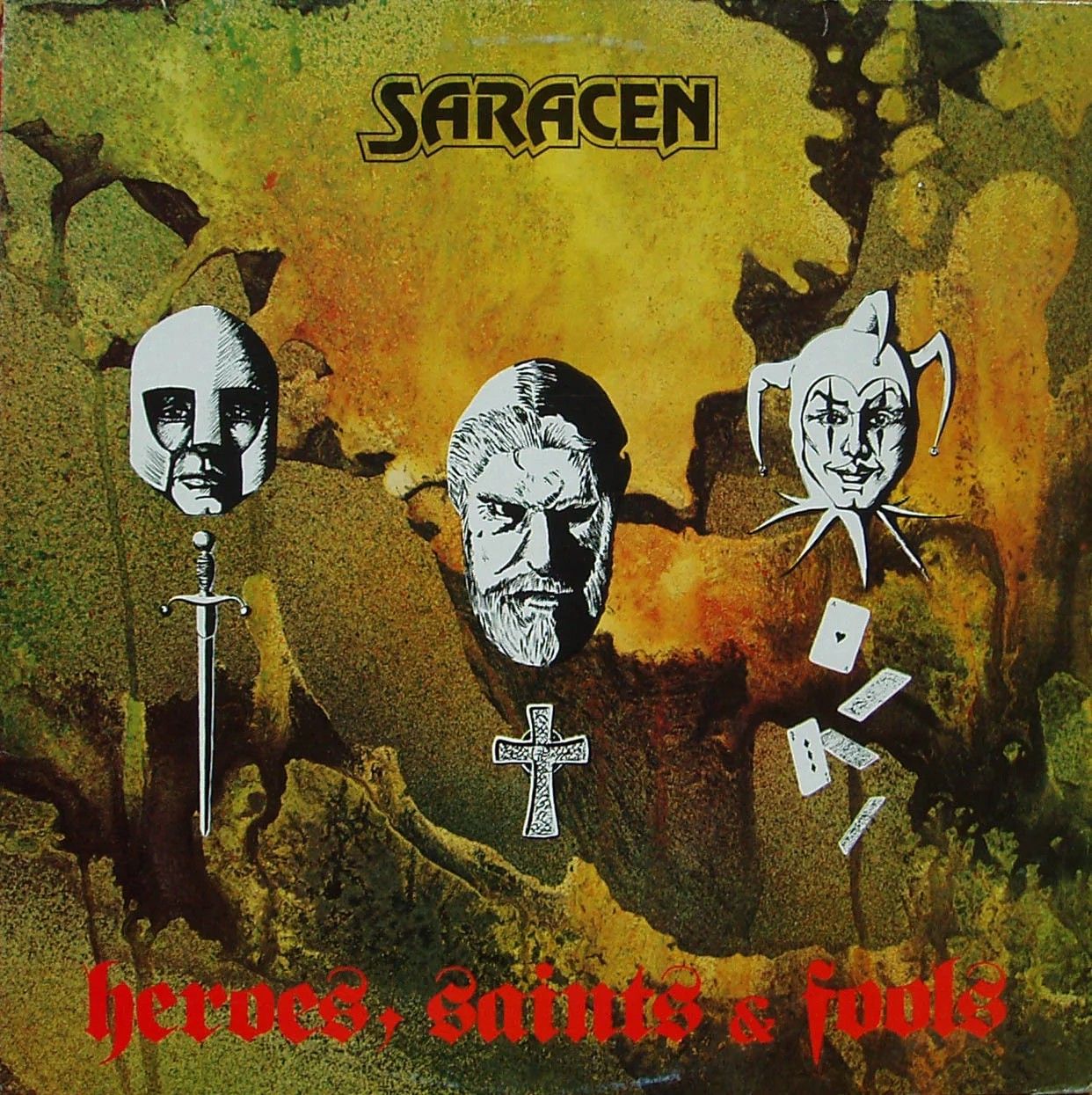
The group was born in the second half of the seventies around the guitarist and main composer Robert Bendelow and keyboardist Richard Lowe, long-time friends from Matlock, Derbyshire. The first incarnation of the band had a decidedly more progressive imprint than the future Saracens, with influences, declared several times by the protagonists, ranging from Yes to Emerson, Lake & Palmer. Alongside Bendelow and Lowe, bassist Barry Yates soon arrived, initially a folk guitarist – and you can hear it! – converted to bass to join the project, while the definitive line-up took shape only towards the end of the decade with the entry of drummer John Thorne and above all of the singer Steve Bettney, with a very powerful and clear uvula halfway between the very first Rob Halford and Bob Catley of Magnum. It was precisely this line-up that recorded “Heroes, Saints And Fools“defining that very particular balance between epic hard rock, progressive and early NWOBHM elements, with songs that told of heroes, saints, jesters and aliens, elements that still make the album so difficult to classify today.
The criticism was immediately harsh on our team; the sharp pen of the great Geoff Banks in Kerrang!, the most important trade organ of the time, dismissed Saracen's debut with typically English sarcasm: “I prefer Magnum if we talk about pomp rock… […] …Saracen pose no threat to Magnum, who remain the only pomp band really worth listening to… […] …you can form your own opinion, but as far as I'm concerned it's better to leave Saracen alone and listen to Magnum“. A judgment that we feel like defining, with hindsight, certainly ungenerous, but not entirely unfounded. The comparison with Magnum, in fact, is not at all out of place: both bands share that melodic tension and that taste for the 'romantic' epic that has its roots in the elegance of British rock of the 70s, combining a powerful hard rock vein with the melodiousness of AOR and the refinement of English progressive, but while the latter will be able to channel these suggestions into a more accessible and cohesive form, bringing it into focus precisely in the years following Saracen's debut, our band remains suspended in a middle ground, as fascinating as it is unresolved, perhaps too heavy metal for lovers of hard rock pomp and too epic, pompous and stratified for those who followed the NWOBHM.
Daniel D`Amico for SANREMO.FM