
There ain't no place I'd rather be
But I've gotta go, I've gotta run away
At a certain point, the assumption that Karnivool would never release a new album stopped being an exaggeration. The Perth band, one of the most relevant groups to emerge at the turn of the 1910s thanks to a refined balance between alternative rock, heavy metal and progressive, had left an almost unbridgeable void after “Asymmetry” (2013).
The first news about a successor began to circulate only six years later, but the history of the group foreshadowed the usual long and complex gestation. To complicate the picture, the Covid-19 pandemic has entered, which – as declared by the frontman Ian Kenny – made the creative process “mentally devastating”, fueling moments of stalemate to the point of true compositional paralysis. In this context, the return of producer Forrester Savell, already the creator of “Themata” and above all of “Sound Awake”, takes on a strategic value: not a simple nostalgic recovery, but the choice to re-establish an expressive balance that had defined the band's identity over the years.
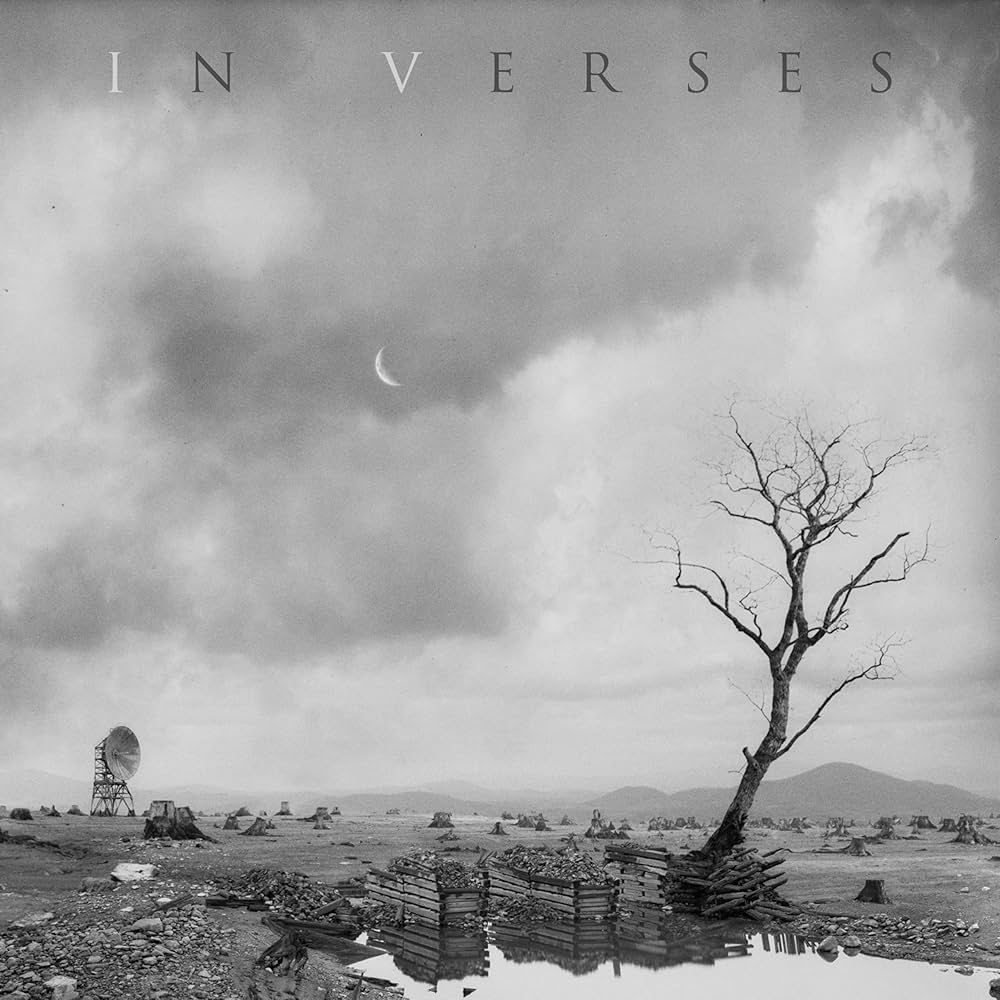
In light of a process that stratified ideas developed over more than fifteen years, expectations regarding this coveted “In Verses” were inevitably ambiguous. Yet, the most obvious surprise lies precisely in its cohesion: a compact, solid, surprisingly organic work. From the opening entrusted to “Ghost”, an almost obsessive approach to the management of the dynamics and macrostructure of the songs clearly emerges. The more rarefied passages and the more massive ones coexist without interruption, avoiding self-referential drifts and maintaining the narrative tension constant. The following “Drone” consolidates this direction with a tight rhythmic construction, which explicitly recalls the language of Tool and A Perfect Circle, supported by drumming precise and nervous by Steve Judd.
The initial triptych is completed with “Aozora”, already known to fans as a preview, one mini-suite wide-ranging where literally everything happens: over six minutes in which the band deploys the entire expressive arsenal made up of guitar intertwining, sudden register changes, a central atmospheric gash and Kenny's vocal performance, capable of oscillating with versatility between aggression and introspection.
Compared to “Asymmetry”, a work full of intuitions but sometimes unbalanced towards extreme and hyper-technical solutions, this time Karnivool mark a return to that balance between complexity and immediacy that had made songs like “Goliath” and “New Day” the true cornerstones of their discography. Despite its compactness, the album is crossed by a clear internal structure that can be separated into three macro-sections. After “Animation”, which insists on overt coordinates toolianthe album changes gear and enters a more introspective phase: the tempos expand, the sound structures leave the prog inflections more in the background, while the atmospheric components gain space, with openings that border on post-grunge. The highlight of this act is “Conversations”, one of the album's highlights. A ballad extensive and layered, curiously excluded from the European tour, which represents the emotional fulcrum of the work: the chorus, rather than imposing itself as the central element, becomes a hub between the various sections, accompanying the listener with ease along a journey lasting over eight minutes.
Crucial, in addition to Judd's usual performance, is the contribution of bassist Jon Stockman, author of slanted and dynamically decisive lines. “Reanimations” continues along similar lines, enriched by the guitar contribution of guest Guthrie Govan.
“Remote Self Control” is in turn responsible for placing a seal to open towards the end of the work. Song of the lot most attributable to their first full length “Themata”, at least in terms of harmonic and melodic construction, is probably the most out of context moment of the work. A technically impressive episode, once again driven by Judd's drums, but which may appear excessively indulgent towards virtuosity as an end in itself and above all represent too abrupt a stylistic break between the previous stage of the album and the highly emotional ending that the authors have foreseen to seal their work. The two final tracks in fact mark a clear change of perspective.
“Opal” takes us back to a more emotional and contemplative dimension: built on a measured crescendo, embellished with discreet orchestrations and always very targeted interventions by the Goddard/Hosking guitar duo, it expands and broadens the sound front, leaving Ian Kenny's voice to stand out in interpretation and measure. It is the prelude to the final “Salva”, which abandons the more complex architectures to favor a more direct and stratified writing by accumulation. The song develops like a long hymn in progression, in which the refrain – evocative and immediate – is grafted onto a constantly expanding sound fabric until the final guitar explosion, accompanied by surprising bagpipe inserts that give a further level of pathos and emotional depth. It is the ideal closure not only on a musical level, but also thematically: Kenny's voice takes us by the hand and accompanies us on a journey that addresses the themes of escape, identity and the dissolution of the self through archetypal images – the sea, the heart, loss – restoring a universal emotional dimension without giving up a strong psychological concreteness.
After over a decade of recording silence, “In Verses” is not only the long-awaited return of Karnivool, but the reaffirmation of a poetics capable of combining complexity and measure. A work that, against all odds, manages to transform a troubled gestation into a strong point and restores to the Australian band a centrality that now seemed to have faded with the passage of time, thanks to a compositional maturity never before demonstrated at this level.
04/05/2026
Antonio Santini for SANREMO.FM
