
Since his inception nearly 75 years ago, British secret agent James Bond has proven to be unkillable. Not literally, of course, as the fictional hero’s on-screen death was seen in the swan song send-off for actor Daniel Craig’s era in 2021’s No Time to Die. But as a concept, the man codenamed 007 is immortal, bound for resurrection to serve king and country.
Yet the biggest threat to Bond has never really been mortality, but the Hollywood machine that’s kept him static. After 25 mainline film releases, not including licensed parodies or remakes, the franchise has proven neverending. Bond will return, but how and when has increasingly been the mystery.
In 2021, Amazon acquired MGM, owner of the film’s distribution rights, giving fans hope that the prolonged gaps between cinematic entries would shrink, despite the accompanying fear that the streaming giant would turn the property into a trough of content. In five years, progress has been slow as longtime Bond producer Barbara Broccoli creatively clashed with the studio’s new owners. Last year, Broccoli exited as the series’ steward, a role she took on from her father Albert R. Broccoli in the Nineties, going as far as calling Amazon brass “fucking idiots” in the process.
And while a new movie is in development with Dune director Denis Villeneuve at the helm, the next entry is still reportedly years away, with the official casting search just now beginning. Fortunately, Bond is not one for singular solutions; there’s always another way. In the middle of what will ultimately be the longest hiatus the film franchise has ever seen, a new 007 video game might just be the salve that fans sorely need.
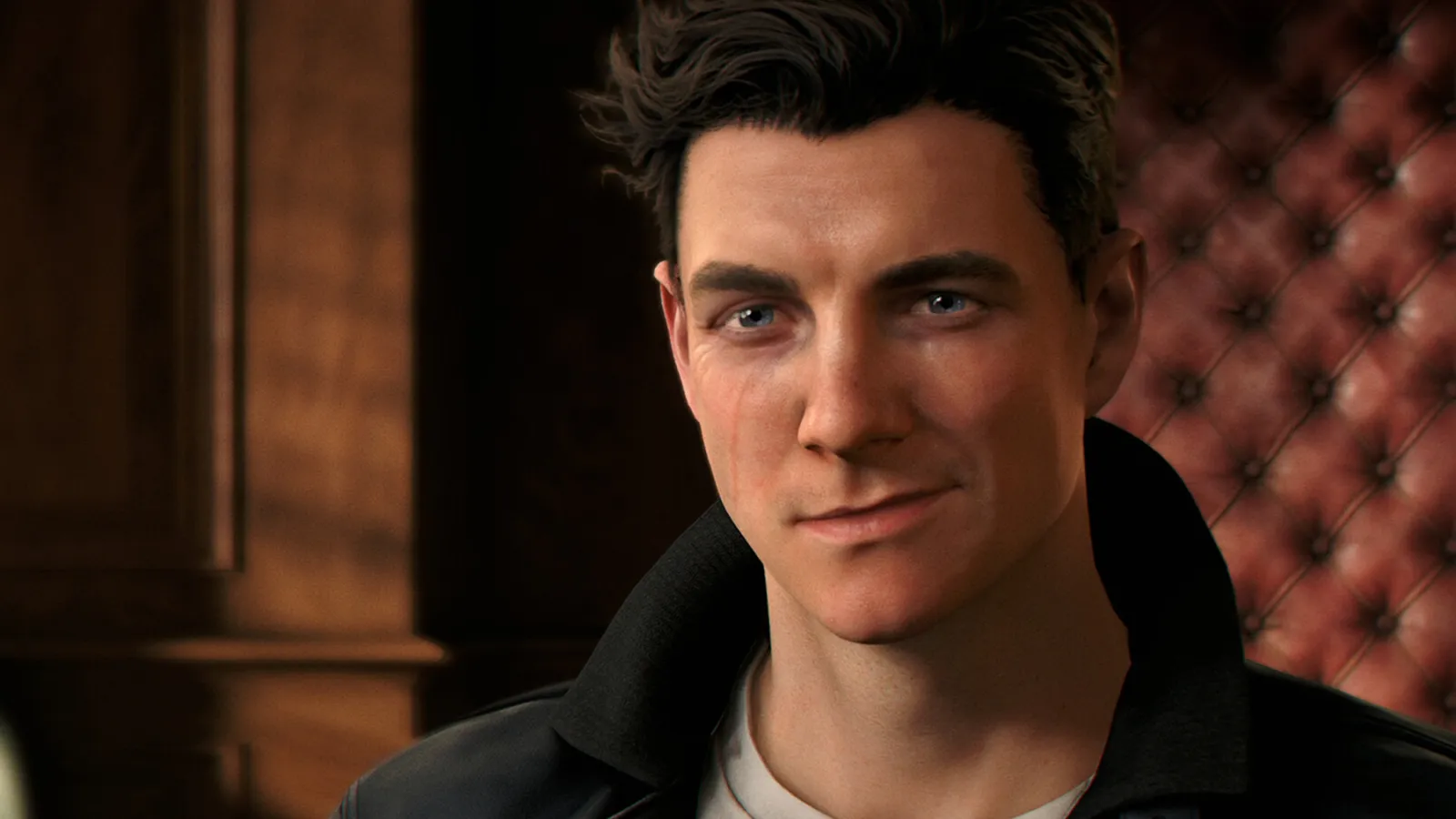
Developed by Danish studio IO Interactive, 007 First Light marks Bond’s return to gaming 14 years after his last major entry, 2012’s 007 Legends. But unlike the last one (and many before it) this take on Bond isn’t based on any existing movie or likeness, instead aiming to tell an all-new immersive story that can stand on its own, complete with modern production value that can finally meet the cinematic ambitions the series demands.
Based on our time with the game, 007 First Light might be more than just a good-enough stopgap between films. It could be the blueprint for the best way to experience James Bond for diehard fans.
A fresh start
Despite the fact that the franchise is known for perpetual reinvention, James Bond has only been genuinely rebooted a handful of times. Following 20 movies, 2006’s Casino Royale gave the spy a full origin story that separated it from the (very) loose continuity of previous films. Two decades later, First Light does the same, although it goes even further than highlighting the agent’s first big assignment. This Bond hasn’t even undergone basic spy training.
The game opens with a salvage mission gone awry where a fresh-faced British airman named James Bond survives a crash-landing behind enemy lines. Amid the rubble and flames, he must track down others while an unknown voice handler spouts orders into his earpiece. Bond doesn’t know who his guide is — he doesn’t even understand what kind of mission he’s on — but he’s determined to make it out alive. Of course, that means ignoring what he’s told.
One of Bond’s defining traits has long been his willingness (and downright desire) to break the rules. When creating their own version of the character, the developers at IOI sought to emphasize that insubordination as a gameplay tool, grounding it in this Bond’s age-specific propensities.
“When you just think of Bond as himself, [there’s] already two parts to him,” producer Theuns Smit tells Rolling Stone. “There’s Bond as the man, and there’s 007, the secret agent spy. Sometimes, throughout the books and films, these can kind of be in conflict with each other — [he has] his own personal motivations, but then the job requires more, and he has to put that aside and go for it. So there’s been that tension, which makes for a really compelling and complex character.”
Going back to the start of his career afforded the developers an opportunity to depict Bond as more fallible than usual. He’s capable, but prone to mistakes. “With our Bond,” Smit adds, “we wanted to create a reimagined origin story [which] allowed us to bring a third pillar into his character dynamics: youth. His enthusiasm, his energeticness, his go-getter mentality. He’s not yet been scarred by many things; he has some naivete and youthfulness.”
Impulsiveness is a core character trait for Bond, but it’d be for naught if he didn’t have the charm to back it up. “He’s a cool guy, he says the right things at the right times to everybody,” says gameplay director Andreas Krogh. “He’s capable in his own way, and he’s not afraid of being who is. He always says he’s ‘Bond, James Bond,’ no matter if he’s supposed to be undercover or not.”
As part of the developers’ vision, this iteration of 007 needed to have it all in terms of personality. A voiceless avatar or digital recreation of James Bonds past wouldn’t suffice — it had to be built from the ground up to exist alongside the cinematic versions. That meant casting the first new actor in the role since Daniel Craig.

IO Interactive*
You can’t cosplay Bond
Outside of comic book staples like Batman, few characters have had the cultural staying power to transcend the actors that portray them. Every generation has their own Bond, and it’s a given that there will always be someone new to pick up the mantle. “Bond is one of those things that everybody grew up with. No matter how old you are, you grow up with one,” Krogh says.
For much of the creative team on First Light, including Smit and Krogh, their personal version is Pierce Brosnan. They just happen to fall into that age group. But passing the torch is an essential part of their burden, and it’s one they don’t take lightly. “I remember I was quite young when [I] figured out there were other Bonds,” Smit adds.
Whether it’s the result of possessiveness from fans or the particularly savage way British media has covered it, casting James Bond has historically been a painstaking process. Actors who are fan-cast in the role are hounded endlessly in interviews about a job they’ve never actually been offered, and even legitimate picks like Craig, who later became a beloved addition to the franchise, have been met with ridicule from the press long before they even appeared on screen. While IOI might be under slightly less scrutiny by working on a video game, their selection would prove to be just as pivotal. After all, players will need to love this character enough to spend 20 or more hours with him, not just the length of a standard blockbuster.
The team ultimately found their star in Irish actor Patrick Gibson, best known as the younger version of serial killer Dexter Morgan in the series Dexter: Original Sin. Technically, Gibson is right on the money for the typical age of Bond. At 31, he falls between George Lazenby (who was 29 for his only excursion) and Sean Connery (32 in his first appearance, Dr. No) — but he’s playing even younger. First Light’s iteration of Bond is 26 years old, which aligns with the character’s first-ever appearance in Ian Fleming’s original novel, 1953’s Casino Royale. That youthful energy is, in part, what landed him the role.
“When we found Patrick Gibson, or Paddy as we call him, he’s such a great guy. He brings so much charisma and energy and passion to his work, and he was really able to bring to life the words on the page,” Smit says. “Going through the initial casting process, some of the actors coming in sometimes felt [like] they were cosplaying James Bond. When Paddy stepped on the stage, it was like he became James Bond.”
To embody Bond, Gibson revisited the source material extensively, before “throwing it all away,” he says. Although his personal favorite interpretation is Craig’s, the actor wanted to focus on the philosophical pillars of the character, rather than cribbing from anyone else’s work. “It’s quite a hard thing to pin down what that DNA of Bond is, what makes Bond different from the quintessential action hero that we see in other films,” Gibson says. “It’s kind of ephemeral. Bond exists in a world of contradictions a lot of the time. There’s a real darkness in the pursuit of saving the world, and one thing that struck me is the idea of sacrifice, and he’s somebody who, because of his origins and where he comes from, has nothing to lose. That’s a pretty powerful hero to have.”
IO Interactive*
Building a better Bond game
Although 007 is no stranger to gaming, there’s really only been a few standout titles throughout the years. After a wave of mediocre 8-bit entries in the late Eighties and early Nineties, the big breakthrough came with 1997’s GoldenEye 007 for Nintendo 64. Based on the 1995 Pierce Brosnan film, GoldenEye was a seminal first-person shooter whose success was tied more to its accessible mechanics than its deep ties to the franchise. The bar was set high from here, but even the best Bond games have only superficially tackled the essence of the spy fantasy. For IOI, whose work on the Hitman game series emphasized duplicitousness and psychological puzzles over gunplay, a different approach was paramount.
“I think a lot of earlier Bond games focused a lot on the action element, which is obviously important,” Krogh says. “He has these massive shootouts and over-the-top set pieces, but we had an opportunity to also focus on the social aspect, like Bond walking into a casino in a movie. That whole fantasy, talking to the Bond girl or villain directly, and having that exchange and then going away for some action that leads to them eventually meeting again. That social moment is something that we knew that we could actually create with the tools that we had and the gameplay that we’ve done before [with Hitman].”
In Hitman, the gameplay loop generally involves arriving at an exotic locale with a mark to find and kill. Players need to observe their surroundings, picking up on behavioral patterns and the contextual opportunities around them to sneak around unnoticed and set up a Rube Goldberg-style series of events that ultimately end in death. In First Light, a streamlined approach to those social puzzles works to empower players beyond just fighting.
In one early section of the game, Bond is out on the town with his fellow recruits. When an impromptu mission arises, players will need to navigate a crowded nightclub as they gather intel, first by correctly identifying their liaison, then by wirelessly hacking a phone and impersonating an arms dealer. While the objective is clear, there’s multiple paths to success; Bond can eavesdrop on private conversations for intel or chat up the most gullible people he can find. Dialogue is often dynamic, providing different choices for what Bond can say to push forward, although the decisions must when given a visualized timer.
The freedom to roleplay is one aspect that sets First Light apart from other Bond games. “Bond is the kind of guy that you put in any impossible situation and he comes out on top,” Smit says. “And so that means he’s a quick thinker, he has lateral thinking, and is improvisational. He uses his surroundings, and this translates back to gameplay. [He’s] such a master manipulator that he talks himself out of any tricky situation.”
Smit details one specific mechanic, called ”bluffing,” that separates First Light from previous Bond games. If players are caught intruding in restricted areas, there’s a split second where they can trigger a dialogue to schmooze their way out. It doesn’t always work, but then again, you can also grab a telephone to smash on someone’s head or use an electronic pulse to blind them.
The level of detail in each encounter surprised even 007’s actor himself. “We’ve had James Bond games, of course, but I think getting to be there in the front seat with Bond, [that’s[ something that was just so exciting to read on the page,” Gibson says. “[As] a player, there’s a lot of wish fulfillment there. I felt like every time I’d ask the game directors, ‘Would I be able to do X? Can I get into that dustbin truck and drive it and smash through the doors?’ The answer was always yes.”
A brighter future for fans
Although there’s been more traction for the movie franchise as of late, the modern age of Bond has mostly been a slow drip for the fans. Satiating that hunger is one of First Light’s best tricks, and it does so in ways only video games as a medium can. Like Fleming’s original novels, which often relished in travel log-styled prose about exotic places and inner monologues on what makes a luxury watch or car worth having, the game’s world is one to be savored at length.
Being in control means you can rifle through Bond’s London flat to see his personal effects, tease his roommates about their budding romance, and drive fancy cars — not just at breakneck speed, but stuck in traffic while dropping a colleague off at the pub. Traditionally, these slice-of-life details would lack a sense of urgency, but here they serve to build a more complete fantasy. Being Bond is great, even beyond the action movie aura farming.
But what First Light truly offers is an alternative to the uncertainty around the future of the Bond franchise. By combining the visual splendor and thrills of the cinema with a more extensive, intimate view into the character’s daily life previously only seen in the novels, the new video game version of 007 provides more of everything, and may not be fully reliant on periodic installments to dole out bliss.
“Something that started to become exciting as we were doing it, just the idea that when you sit in a cinema, you get to spend two hours with a character and part of you puts yourself in their shoes, and I think to be able to do that over the space of 15 to 20 hours is a really exciting thing,” Gibson says. “[Video games] really have the opportunity to be an incredibly immersive narrative experience.”
In many ways, AAA game development is no different than Hollywood, with production cycles and budgets growing untenable (hello, GTA VI). Yet while the ambitious scope of a title like First Light might rival the investment of a blockbuster movie, the experience itself offers much more than a single session. At roughly 20 hours long for just the main campaign, the game already immerses players in Bond’s story for a period of time equal to or longer than most individual actors’ entire tenure. That’s even before any replayable side modes or future downloadable content expansions are released.
The IOI team is very careful not to say that they’re working on a sequel, but do coyly tease the potential for more. “The beautiful thing about game development is that, usually, the first iteration of a game takes the longest, with investment time and exploration, but [everything] starts to go smoother and faster,” Smit says of any potential follow-up.
Rather than looking years ahead to a full-blown sequel, the team is capitalizing on the benefit gaming has over other media, the ongoing live-service delivery of new add-ons. “We are a different medium than film, right? We can do different things than just just producing one big thing at a time,” Krogh adds. “In Hitman, we supported it in live after the actual release, and we did some extra missions on locations that we already have and spice them up with new setups and whatnot, and we have the same thing here with Bond. So, it doesn’t end at launch. There will be content going forward, you don’t have to wait for the next Bond game.”
At the very least, 007’s return to gaming means that the franchise can continue to reinvent itself beyond just more movies. “There are [just] so many levels to this power fantasy of Bond,” Smit says.
007 First Light is out now for PlayStation 5, PC, and Xbox Series X|S.