
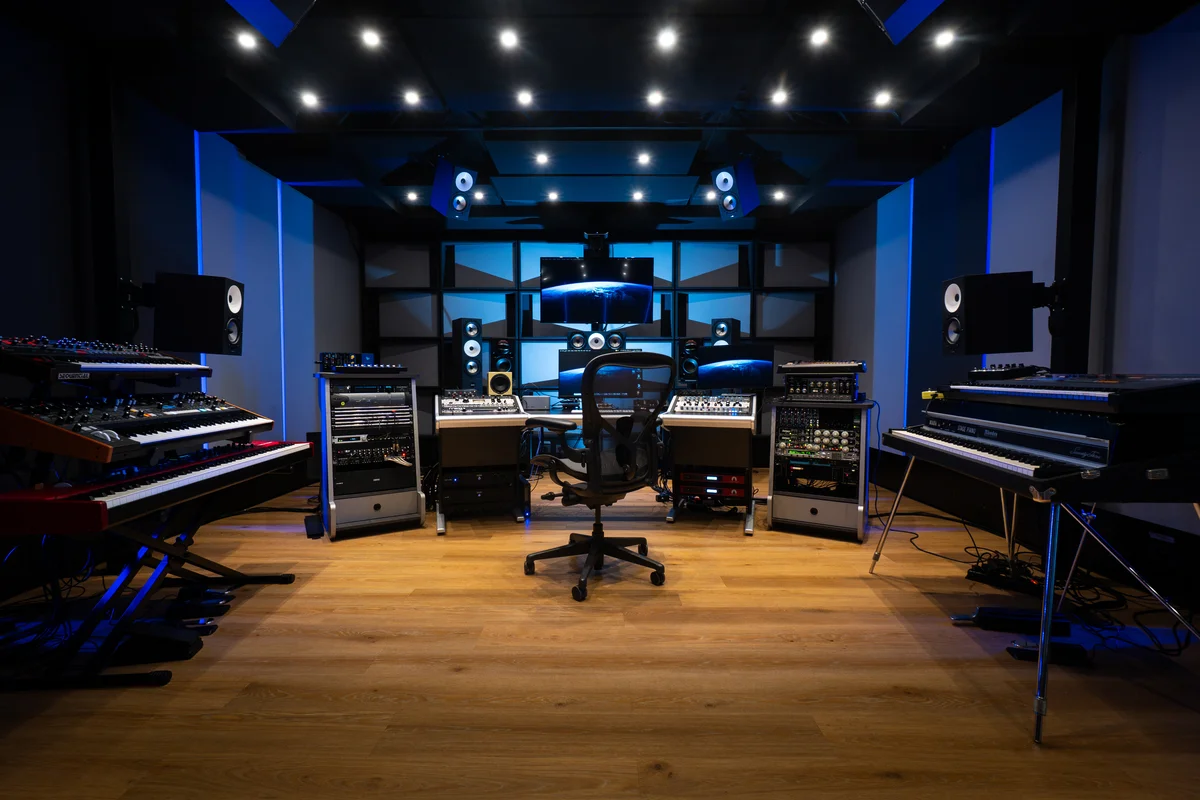
In the era in which a song, and even a potential hit, can be born from an app on a smartphone or from a prompt fed to artificial intelligence, two recording giants are pursuing a choice that, apparently, seems to go in the opposite direction. Universal Music Italia and Sony Music Italy have brought music production back home, re-setting up two recording studios in Milan which are not just an investment in technology, but a declaration of intent.
We entered: the Universal Recording Studios on the eighth floor of the headquarters in via Nervesa (also open to exteriors) and the RCA Recording Studios of Sony Music Italy in via Carlo Imbonati (for now dedicated only to interiors). We thought we would only find consoles, microphones and rooms, but we also found those who talked little about hardware and a lot about the future of music.
«We have become followers of the market, while previously the labels imposed a direction». Luca Mattioni, musician, producer and manager of Universal Recording Studios, immediately makes a premise. «Anyone today can bring out an artist from their bedroom and we end up chasing what comes out. It's also normal: the waves change quickly. However, precisely for this reason, at a certain point the need arose to recover something that we had lost.”
That something takes shape in a space designed to bring different worlds together. Universal Recording Studios brings together a 75 square meter live room, a writing room, three connected studios and a Dolby Atmos 7.1.4 certified control room, designed for both immersive production and traditional recordings. But Mattioni insists on another concept: «In-house studios are nothing new. It is a return to the past in a different guise to have a future with solid foundations. For years labels have outsourced everything and lost assets. Today it's about recovering them, not out of nostalgia, but because looking to the past is essential if you want to build something that lasts.”
Enrico Brun, musician, producer and studio manager of Sony Music Italy's RCA Recording Studios, explains that the idea initially seemed against the grain: «When we started talking about it we were in the midst of the explosion of home production. From 2005 onwards, technology had brought down costs and made it increasingly easier to make music yourself. The internal studio of a major seemed almost madness.” Yet that madness today has become a creative hub with three operating directions, recently expanded, included in the worldwide network of Sony Studios, a network of over thirty structures that share the same technical standards: «When a Sony artist arrives in Italy he finds the same environment that he would find in other studios of the group in the world. It is a way to guarantee continuity, but above all to create a place where things happen.”
In fact, they really happen. Brun reminds us that artists often end up meeting without having planned it: «We are not just a service. We are a creative hub. The fact that the record company is upstairs, can come down to listen to a session, give advice or stop to talk is worth much more than a thousand messages. And then it happens that there are multiple artists at the same time in the various directions: one enters the other's studio, adds a voice, a collaboration is born. A climate that was once normal is recreated.”
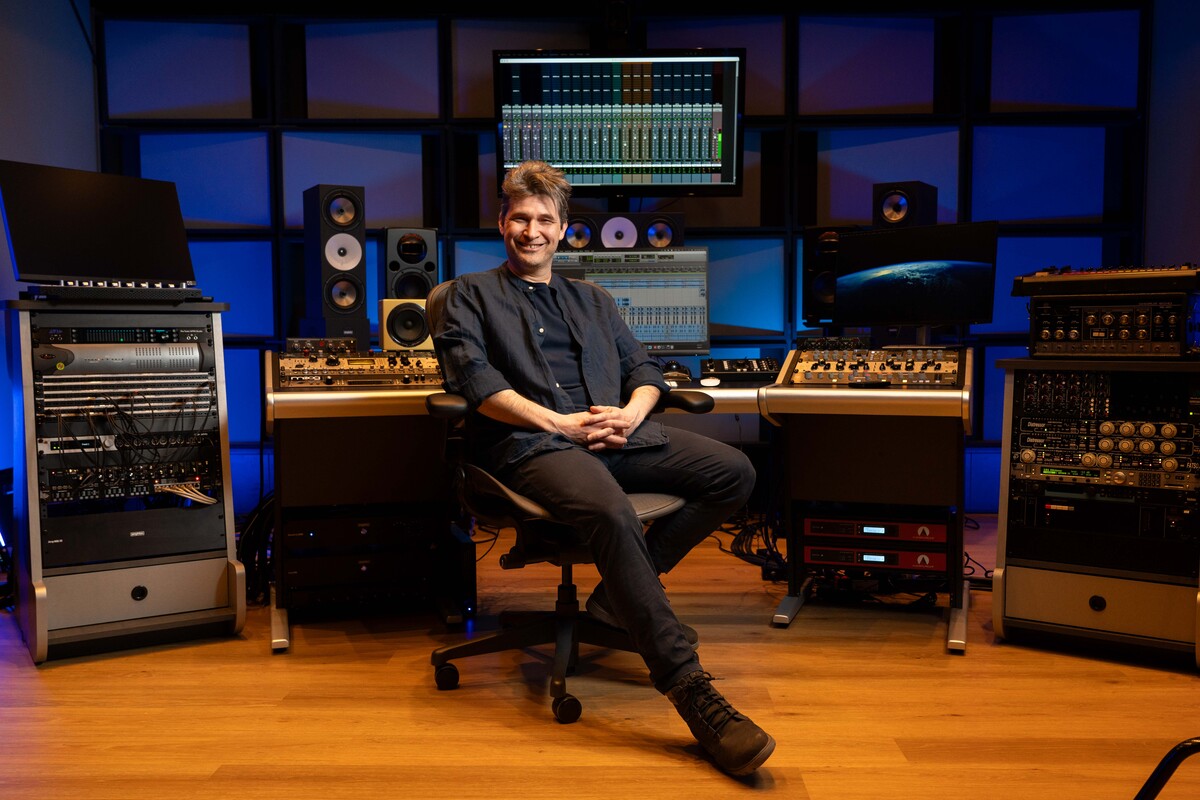
Luca Mattioni, head of Universal Recording Studios. Photo: Universal
The encounter is a theme that continually returns even in Mattioni's words. Except that he approaches it from another perspective: that of competence. «When I arrived here I noticed one thing: there was a lack of know-how on the part of those who arrived. What I call the tutorial generation. Problems are solved by watching YouTube. But the point is not that a producer, today, is often a music maker or a sound designer, but that the producer is another figure: he must manage a session, coordinate musicians, sound engineers, managers, follow the arrangements and have an overall vision. And also the courage to say no.” If Brun describes the studios as a place to rebuild relationships, Mattioni broadens the discussion to the entire music industry. His criticism is not aimed at trap, nor at technology. It is due to the progressive homologation of the market.
«My criticism has always been the very poor diversification of the proposals. In the 80s or 90s you would look at a chart and find ten different artists and ten different genres. Today we often all chase the same audience. I keep telling kids: don't try to take it from others, build your own audience”, explains Mattioni. It is one of the reasons that convinced him to accept the job at Universal, despite coming from the other side of the fence, after years spent as an independent producer with studios in Milan and London: «At the beginning I had a lot of hesitations. A multinational corporation may seem like the big devil. Then they explained to me what the idea was: to create studies that would once again become a creative hub, recovering a quality that had been somewhat lost over the years. I found myself completely in this vision.”
A vision that, curiously, also passes through instruments that many young musicians have never seen live. Mattioni tells us about when Lazza entered the Universal studios and stopped in front of an original Roland TR-808 from 1982: «He asked me: “But is it the real one?”. I told him yes, that it was the same model also used in Thriller by Michael Jackson. He started photographing her. Or someone else hears a Moog turned on and says, “That's a bad sound.” Then you program it in front of him and he completely changes his mind. It's not nostalgia. It is knowledge.” The same, he continues, goes for a Fender Rhodes, for an analogue desk or simply for the way in which a voice is recorded.
In the same way, Brun smiles when he says that many artists arrive with the text open on their phone and record by continuously moving their gaze from the microphone to the screen: «We don't impose a method. We try to amplify what the artist already knows how to do. Sometimes you just need to explain how to stand in front of the microphone or make them hear the difference between a voice recorded in a normal room and one recorded in an acoustically treated booth. This is our job.” Then he throws in a detail that says a lot about the new role of the studios: «Giorgia, for example, recorded all the voices of her latest album here. Not because he couldn't do it elsewhere, but because he was looking for a context in which to compare himself. The same has happened over the years with the Måneskin or with the Nuclear Tactical Penguins. Every artist uses studios differently. There are those who come to record a voice, those to produce an entire album, those who simply want to close a detail. We must be ready for anything.”
For Mattioni, however, the central theme remains the figure of the producer and arranger: «Today it seems like a word that has gone out of fashion, but the arranger is a fundamental figure. There are arrangers who have changed the course of the careers of many artists. And the manufacturer has to have the responsibility to say, “No, this thing doesn't work.” Today it often doesn't happen anymore.” He even talks about widespread malpractice, that is, contracts in which the artist has the possibility of replacing the producer at any time without recognizing the work already done: «I called the legal department because I thought it was a mistake. They replied: “No, it's the standard producer contract”. That's when I realized how much the balance had changed. If the producer risks being replaced at any moment, he will inevitably tend to always say yes.”
Brun also recognizes that the relationship between artists and major labels has profoundly changed: «Today the artist is much more of an entrepreneur than he was twenty years ago. He has a vision, often arrives with his own identity already defined and has much more decision-making freedom. We, in the studio, are a bit like Switzerland: the place where he can work peacefully, discuss and experiment. The record company's intervention only occurs when it's really needed.”
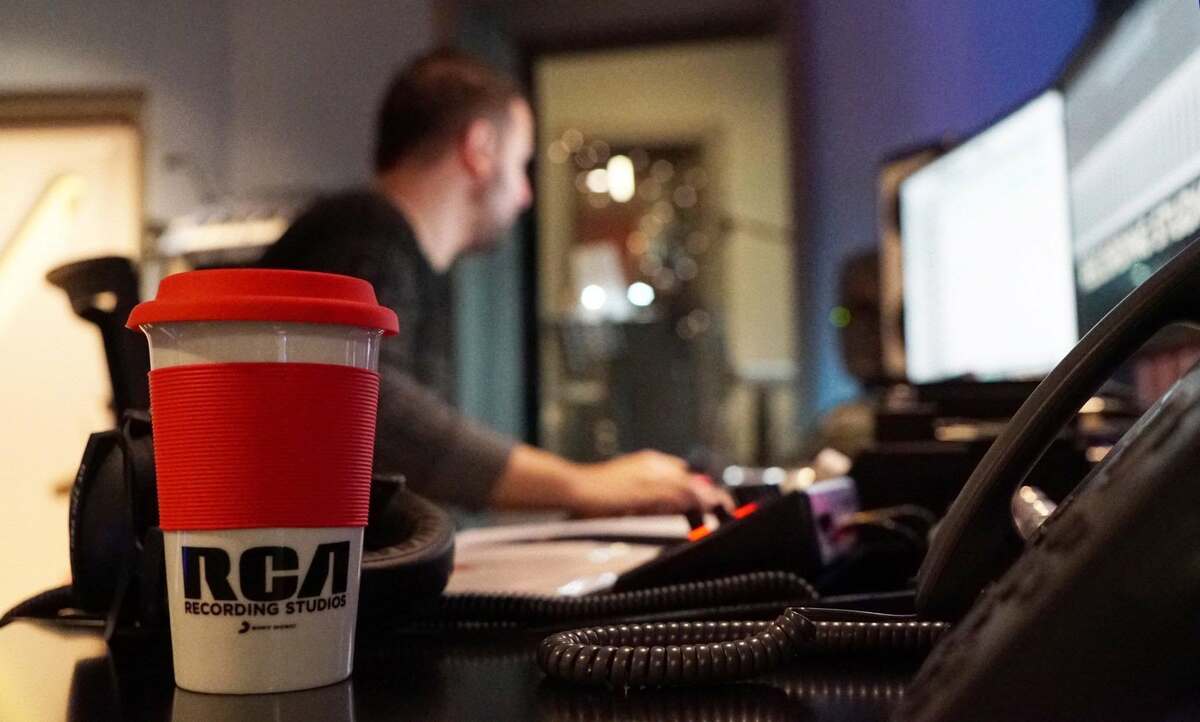
Enrico Brun, studio manager of RCA Recording Studios. Photo: Sony Music Italy
At this point we tried to look to the future together with them. For Mattioni, the majors must stop chasing the market and go back to building skills. For Brun they must create the context in which those skills can grow. The studies? They become the meeting point between these two visions. The challenge, however, does not seem to be just that of bringing artists back into a studio. But if anything to convince them that that time spent there still has value. Mattioni says that, in recent months, something has started to change: «There are kids who come here, see how it works and then ask you: “Can you do the mix for me?”, “Shall we do a production together?”. Without anyone forcing it on him. They simply discover that there is a world they didn't know about. Many grew up always working alone in their bedroom. It's not a fault, it's the world they found themselves in. But music is something else: it is also made by the one who plays the wrong chord, by the sound engineer who proposes a different solution, by the musician who completely changes the piece. The producer, after all, is an orchestra conductor.”
This is also the case for Brun, and it's based on the same reason why Sony continues to invest in studios. Not only to offer a service to its artists, but to build an environment where that comparison can arise spontaneously: «Each direction has its own color, its own mood. There are those who choose one room rather than another precisely because of the atmosphere they find. It's something we didn't fully foresee, but which we see every day today. Artists come here because they feel good, because they find people to interact with. The studio becomes a place where things happen.” It is an idea that, inevitably, brings the discussion to artificial intelligence. And the two are surprising here too: they don't consider her an enemy.
«I am not against AI. In fact, I'm interested in it and I use it. I like technologies, just as I like analog instruments. The problem arises when we think that quality has become an obstacle and that it is enough to produce more and more content. Artificial intelligence will do this better than us. If instead we go back to building competence, musical culture, identity, then the situation changes”, says Mattioni. And he gives a concrete example: «Today you can ask software to write a song in the style of Motown or the Beatles and the result is surprising because it draws from a huge archive and recognizes those languages. But precisely for this reason we must know those languages too. If you don't know who David Bowie, the Beatles or Prince were, if you've severed ties with what came before, you risk believing you've invented something that someone else had already written fifty years ago. At Abbey Road they haven't had the same microphones for fifty years because they can't buy new ones. They keep them because certain things have to be done a certain way.”
Brun instead observes the same transformation from another angle. Artists arrive more and more prepared for their project, but are looking for a place to make it grow. «Today they are entrepreneurs of themselves. They have a very precise vision and much more autonomy than in the past. Our task is not to tell them what to do, but to put them in the best conditions to do it.” But both agree on the importance of the repertoire, both for the artist and for the major label: «AND the only value that remains over time. The hits pass. The repertoire remains. If some catalogs are worth hundreds of millions of euros today it is because those songs continue to live on after decades. This is what we should go back to building.”
And perhaps it is in the final goal that Universal and Sony end up telling us the same story. On the one hand, live and writing room, Dolby Atmos direction and instruments spanning fifty years of music. On the other, three directions that dialogue with thirty studios around the world and artists that meet, mix experiences and create something new without forgetting the past. We met two different projects, but which seem to be driven by the same conviction: in the era in which a song can be born anywhere, the investment is not to bring music back inside four walls, but to reconstruct what, in the meantime, had remained outside.