
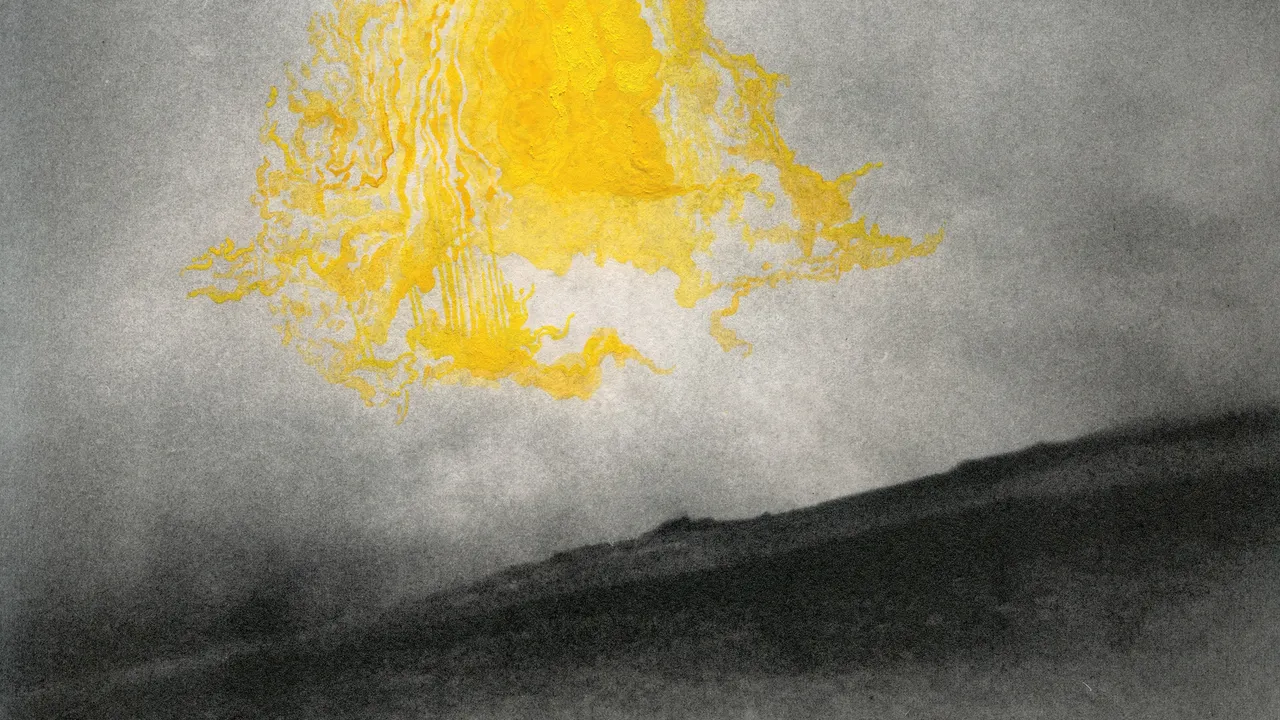
In 1944, around the time Woody Guthrie started writing “this machine kills fascists” on his acoustic guitar, English Marxist A. L. Lloyd penned his own manifesto for folk music as a radical political tool. His booklet The Singing Englishman argued folk’s history of documenting working life had been diluted in the prettified, pastoral songbooks of commercial collectors. Cataloging songs of miners, factory workers, and trade unionists, he helped revive English folk songs as the language of tough, dangerous work and left-wing politics. “They are reports from a changing society,” he declared in the 1985 documentary Bert: A Portrait of A. L. Lloyd, “based on a tradition that seems, and sounds, eternal.”
London nine-piece Shovel Dance Collective, part of a new wave of folk revivalists in England, echo Lloyd’s belief in folk’s role of documenting working life (the shovel) and providing respite from it (the dance). Everything in Readiness collages performances of these antique songs, mixing the traditional sounds of pump organs and high whistles with avant-garde techniques like drone and tape manipulation. Marrying the lush arrangements and field-recording experiments of previous albums The Shovel Dance and The Water Is the Shovel of the Shore, it elaborates on a core idea of the group’s work since 2019. By pulling together songs and sounds across centuries, Shovel Dance Collective aren’t collecting documents of pre-industrial simplicity; they’re establishing new connections between elements of a tradition that still feel radical today.
No score yet, be the first to add.
Everything in Readiness opens with a kind of evolutionary sequence. From a primordial soup of slow, shapeless strings and pump organ, the melody of “Jer the Rigger” crawls out to the sound of a hammered dulcimer. It gives way to the blazing fiddle of “The Foxhunter’s Reel,” gradually electronically distorted, before the rocket launch opening of “Tally Ho! Hark Away!” The traditional and modern meld when the sweet high whistle melody of “Ní ar Chnoc nó ar Ísleacht (Mists Are the Best Times for Sowing)” is crushed into an industrial sound-art piece modeled on Alvin Lucier’s tape experiments. Collages of live and home demo recordings conjure a sense of the songs’ longer history. “A Hundred Stretches Hence / I Wish There Was No Prisons” opens in a field, cuts to an a capella performance in a church, then to a studio via scene-changing tape machine clicks. When Nick Granata’s soaring vocal peaks over Tom Hardwick-Allan’s trombone, backlit by a fireworks display of chiming bells, the payoff feels generations in the making.
Daniel D`Amico for SANREMO.FM