
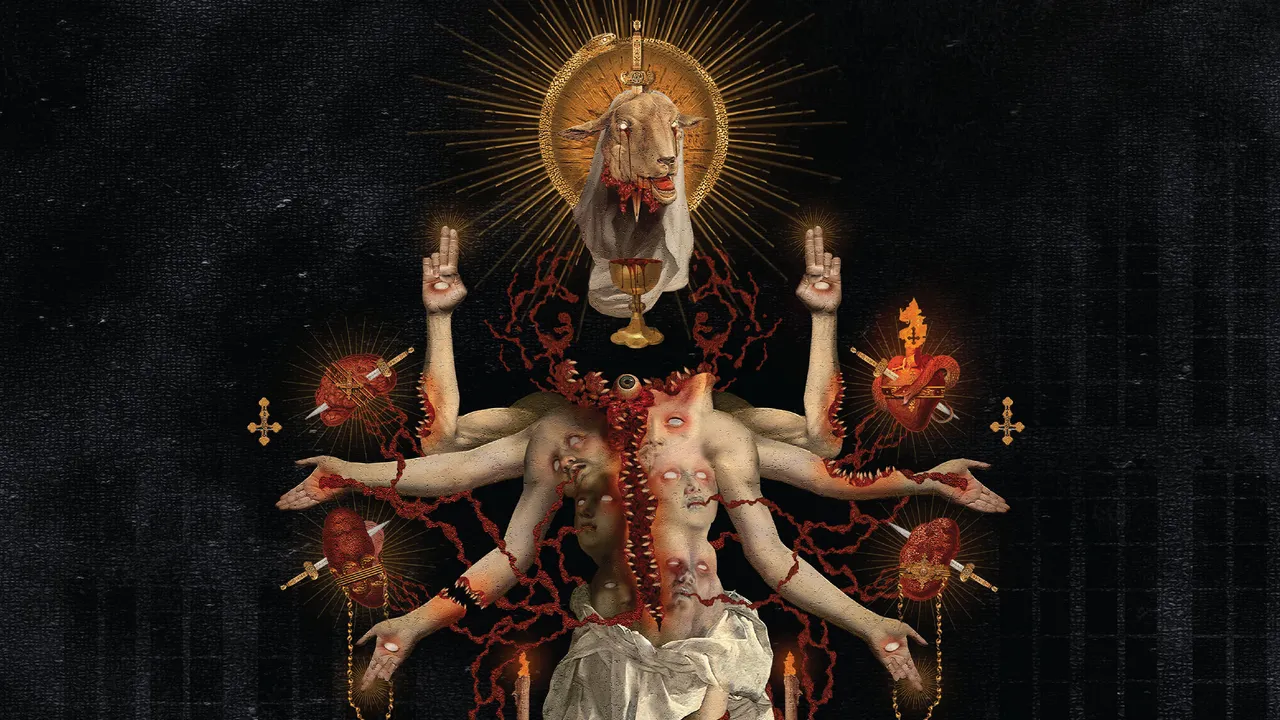
You know who’s having a moment? Satan. Between the theatrical re-release of Ken Russell’s The Devils, the demi-controversy surrounding Satanic doo-wop group Twin Temple being dropped from Charley Crockett’s tour, and Lucifer’s son visiting New Orleans in the new American Horror Story, Ol’ Scratch is everywhere these days. But what happens when the season shifts, when the cloying good cheer of—groan—the holiday season comes with its candy stripes and jingle bells and partridges in pear trees? How do you keep the message of the Dark Lord relevant when half of the world is celebrating his nemesis? This is the goal of evangelical satanist band Satanic Planet.
I mean that descriptor literally. The metal supergroup’s singer Lucien Greaves isn’t just magnificently named, he’s also the co-founder of and spokesperson for the Satanic Temple, the at-times-controversial organization that promotes a non-religious satanism built around a philosophy of self-determination and social welfare programs. In the same way that the Temple presents itself as a serious-minded secular project, Dead Deities, the group’s second album, isn’t some Rob Zombie retread. It’s a legitimate—and legitimately interesting—artistic expression, one that employs the hip-hop production skills of Planet B’s Luke Henshaw, the anything-goes splatter of the Locust’s Justin Pearson, and the extraordinary versatility of Slayer drummer Dave Lombardo to round out Greaves’ poisoned-pen jeremiads.
No score yet, be the first to add.
Unsurprisingly given Greaves’ role as a provocateur, Dead Deities is a political project as much as an artistic one. The press materials quote from the mission of the Satanic Temple: The album endeavors to “encourage benevolence and empathy, reject tyrannical authority,” and “undertake noble pursuits,” among other lofty goals. Greaves’ vocals are heavily processed throughout—in “Church Burning,” he sounds like he’s singing through a bubbling mouthful of magma—but the message occasionally cuts through. “Church Burning” was prompted by the attempted bombing of the Satanic Temple’s headquarters in Salem, Massachusetts, an odd reversal of the torchings of stave churches by black metal bands in Norway in the early 1990s. B-movie organs moan across the track, their potential campiness turned serious by Greaves’ shrieks and the slashes of noise and texture scattered around Lombardo’s clattering drums. “You, me, and your god make two,” Greaves intones, implying either the non-existence of the deity or simply an aversion to anything even remotely trinitarian.