
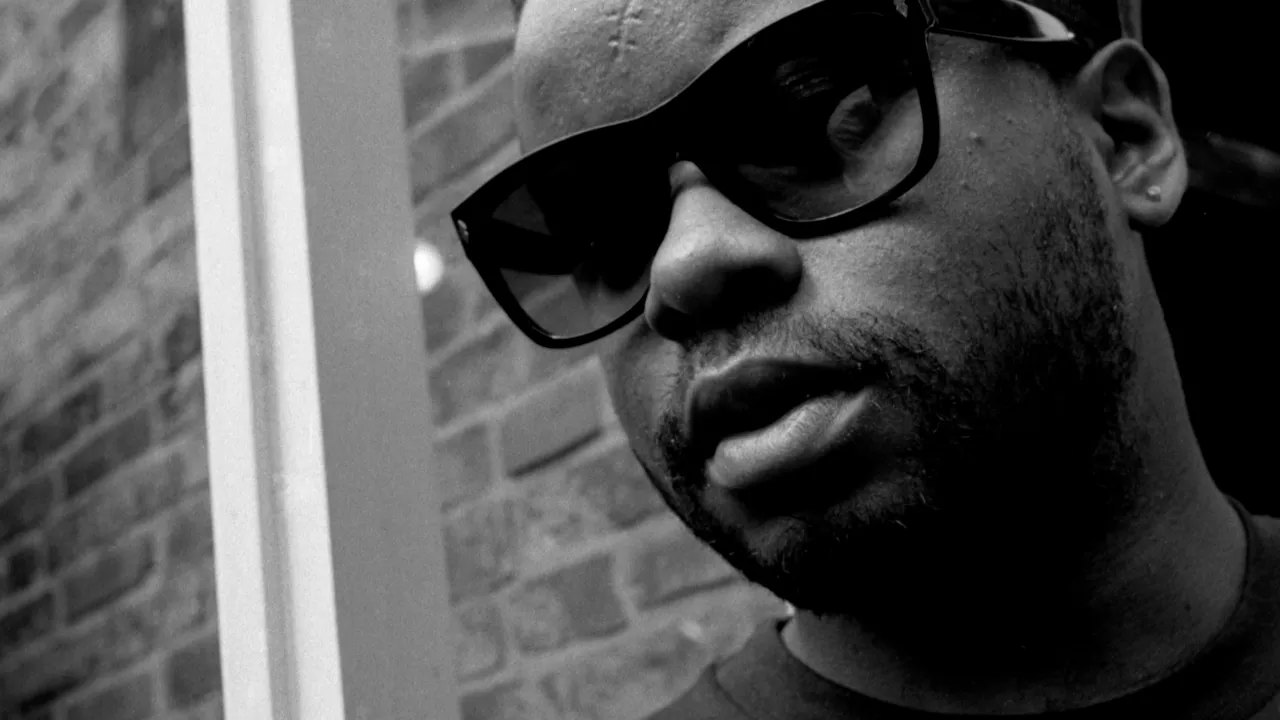
The highway of modern music flows through only a narrow band of people. Juan Atkins was one of them. Born on the east side of Detroit in 1962, Atkins died this past Saturday night, at 63, in his fifth consecutive decade of spreading the techno gospel. Provenance is a claim plenty snatch at these days, yet in Atkins’ case it was fundamentally and incontrovertibly true. From the 1980s onward, he gifted techno its sound, its name, and many of its all-time classics.
The formation of techno in the crucible of Detroit is well-trodden by now. Reams of excellent books and documentaries are available chronicling the scene’s foresight and velocity, from Techno Rebels and Electrochoc to Assembling a Black Counter Culture and God Said Give ’Em Drum Machines. Through Cybotron, Model 500, and the Belleville Three, Atkins influence on electronic music was so totalizing, it actually tended to eclipse his catalog. His nicknames usually reflect his role as a catalyst—The Initiator, The Originator, The Godfather—yet less so his ingenuity and down-home dedication.
But don’t underrate the man. Neither the Belleville Three nor the wider Techno Six would have risen without Atkins as the glue. It was Juan’s patient hand that guided Kevin Saunderson’s first production, “Triangle of Love,” to completion and helped show Derrick May how to mix records. Atkins prided himself on being a master of programmed basslines—accurately, I might add—but what we hear alongside that is the work of a malleable and highly gifted collaborator.
Even as European dance music boomed in the ’90s, offering vast commercial incentives to relocate, Atkins stayed put in the D. He’s there, in 1996’s Universal Techno, hobnobbing amiably with people who may or may not have any idea that this man qualitatively upended and reshaped the cultural history of their city. If he took flight, why should anyone stay? He was always readily available to fund acts through his label, assist artists like DJ Minx with their early break on Deep Space Radio, or make his studio available for the development of a wild conveyor belt of emerging talent, including Terrence Dixon, Anthony ‘Shake’ Shakir, and DJ Stingray, who once told The Wire he laid down his first record in 1987 “at Juan Atkins’ studio, on the spot, right there.” With all of the Belleville Three operational on the same block, it’s not hard to see Gratiot Avenue as techno’s own Hitsville U.S.A.
Daniel D`Amico for SANREMO.FM