
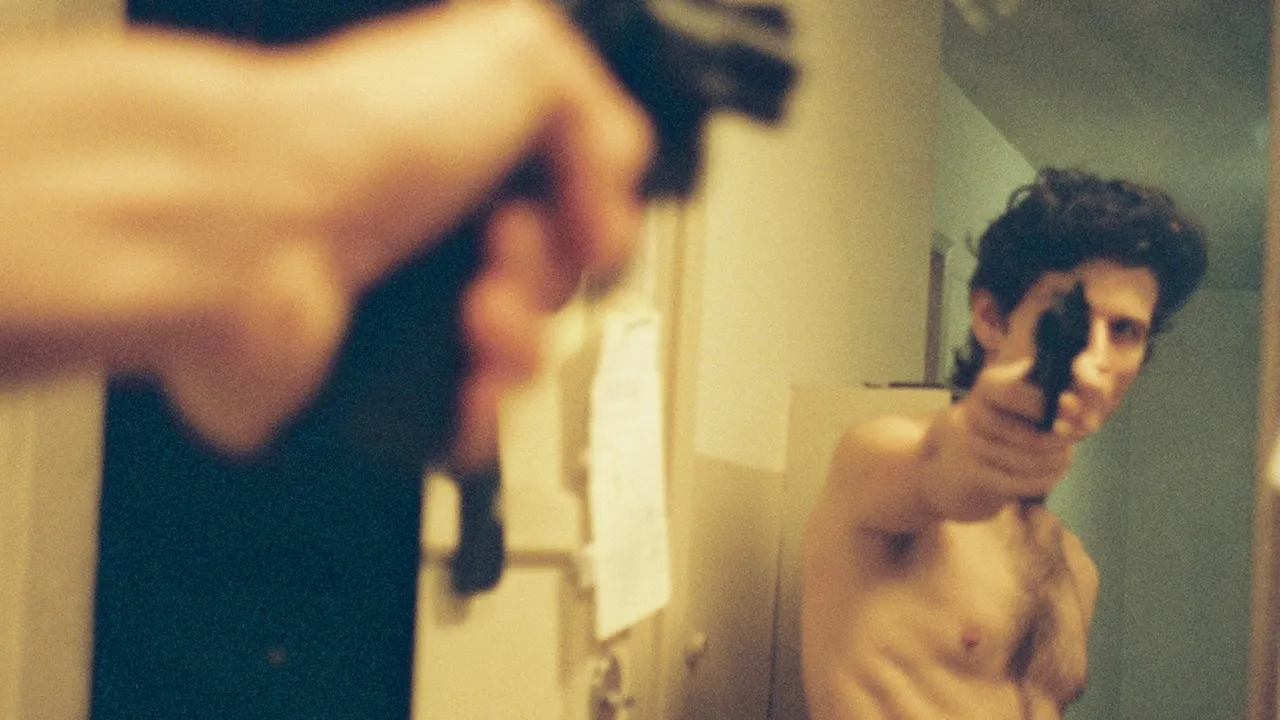
Damage is most rewarding when it uses that same dissonance to explore Errol’s own behavior, particularly when grief mutates into something more sinister. In the incongruously catchy title track, he vows revenge on a manipulative ex, echoing the words “I’ll wait,” “no return,” and “my turn” until the song abruptly ends on a hard rock jam. If, for some reason, you need a melodramatic eight-minute power ballad about an ex-boyfriend using DARVO tactics to ruin your reputation, look no further than “Shifting Sands” and its gloriously ridiculous lyric, “Memories fall down around like rain made of knives.” There’s a sense this narrator is unreliable; it’s not clear who’s DARVOing who, especially when he goes, “Don’t tempt me to cross a line/’Cause I’ll do it this time.”
Songs like “Float,” an effective piece of industrial-rock worship, and “Allison,” a simple, guitar-based song about the allure of a self-destructive friend, prove that Errol’s songwriting can hold up without the conceptual gambits. But the album I’m most reminded of isn’t The Downward Spiral or Adore, but something like Blue October’s Foiled, the kind of uncomfortably earnest, often outright bizarre post-grunge not even the most meticulous 2000s revivalists dare touch. It turns out the sounds and textures of embarrassing radio rock are way more interesting when the artist is actually taking risks, instead of throwing on some distortion and calling it a day. Even Errol’s big climactic pop song is hard to take at face value: “Like it like that” is intentionally overproduced power-pop, stuffed with ad-libs and instrumental layers to convey the desperation of its narrator.
No song here is riskier than “What’s needed of me,” a three-minute pocket symphony in the middle of the tracklist. Over an instrumental that slowly morphs from Midwest emo guitar arpeggios to an overblown nu-metal finale, Erroll’s narrator faces sexual trauma head-on, jumping across time from age 4 to 22 to 16 as men crawl into his bed and ignore his protestations. The chorus unites these experiences in a longing for self-annihilation: “How am I supposed to unsee it?/The basement light flickering/Pick every part off of me/And rid me of all of my meaning.” Even on a song this bleak, there is gallows humor like “Sadim touch” (“Midas” backward) and a bitterly ironic “sweet sixteen.” For all the times Damage references other musicians, I can’t say there’s anything else like it.