
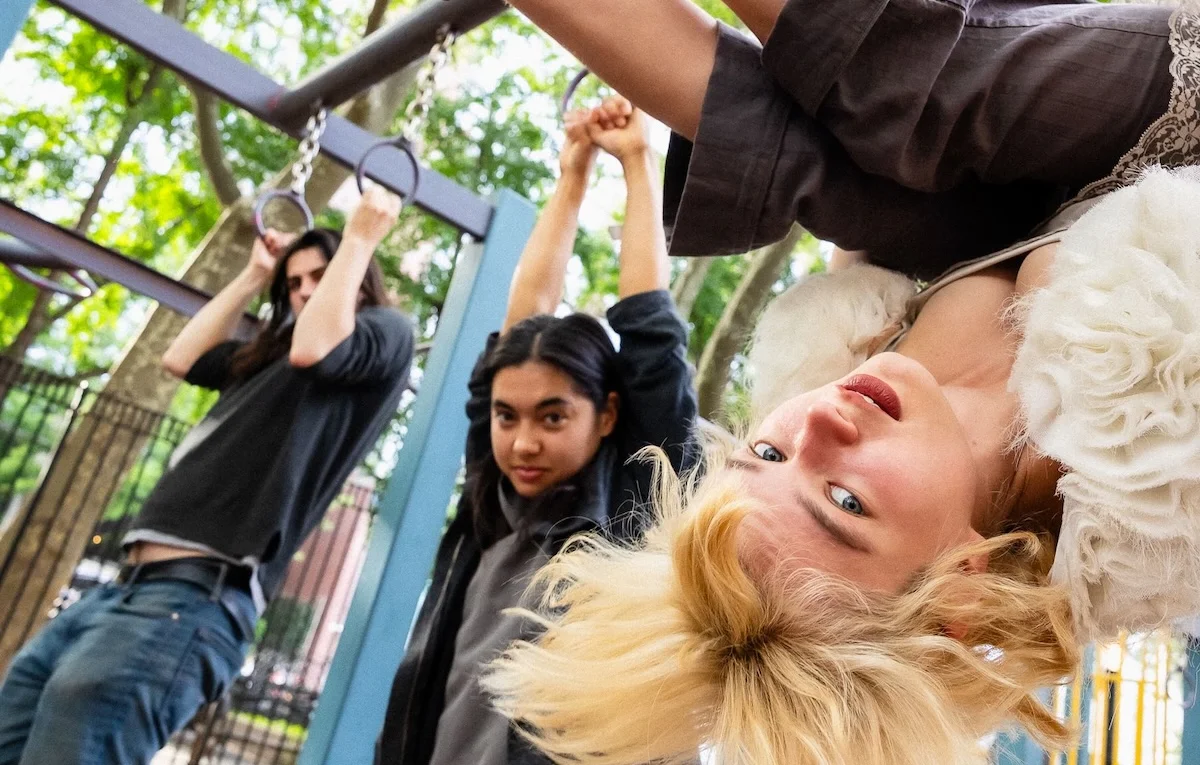
In the spring, Clari Freeman-Taylor met with a friend at Green-Wood Cemetery in Brooklyn. She spent a few pleasant hours with her and after saying goodbye she continued to wander alone through the two square kilometers of the cemetery. «I was thinking about how I would like to be buried, nothing particularly macabre. I don't want a grave, I would rather be buried directly in the earth, completely naked, under a tree, so that the tree can absorb me.”
After a while she realized she was lost and her phone battery was dead. He had to return to Manhattan to play with the group. “I walked in one direction until I could get out. I drew a detailed map of New York and finally arrived at the concert.”
Freeman-Taylor's head in the clouds took Mary in the Junkyard to some interesting places. She sings and plays the guitar, the talented Saya Barbaglia the bass and viola, David Addison the drums. They are long-time friends, they live in south London and when I meet them they are about to release one of the best debut albums of the year, that Role Model Hermit then released on July 3rd. It's a melancholy, tense, original record and they take it on the road giving fascinating concerts. You go to a venue where Mary in the Junkyard performs, I did it at the Bowery Ballroom for example, and it feels like you're entering an ancient and unrepeatable ritual celebrated in a forest.
The morning after the concert at the Bowery – a benefit evening for War Child UK with the Irish Dove Ellis as co-headliner – the three meet me in a café in the centre. They tell me that when they come to New York they rarely book a hotel, because they know that accommodation will turn up. Like in 2024, when they said on stage that they needed a place to sleep and in the audience there was Marina Abramović's long-time partner who invited them to stay with them. “If you book a place to stay, the magic can't happen.”
Mary in the Junkyard's timeless aesthetic has to do with Freeman-Taylor's childhood in Kimpton, a small village an hour north of London. Both of his parents are involved in creative activities – his father tours a comedy show with his twin, his mother sings and makes documentaries – and he knows all the woodland paths in the area inside out. «I spent hours outside alone, being with myself, talking to myself. For a while I thought I was crazy. I still talk to trees. When I see a beautiful one it's as if I'm looking at a person, I feel butterflies in my stomach.”
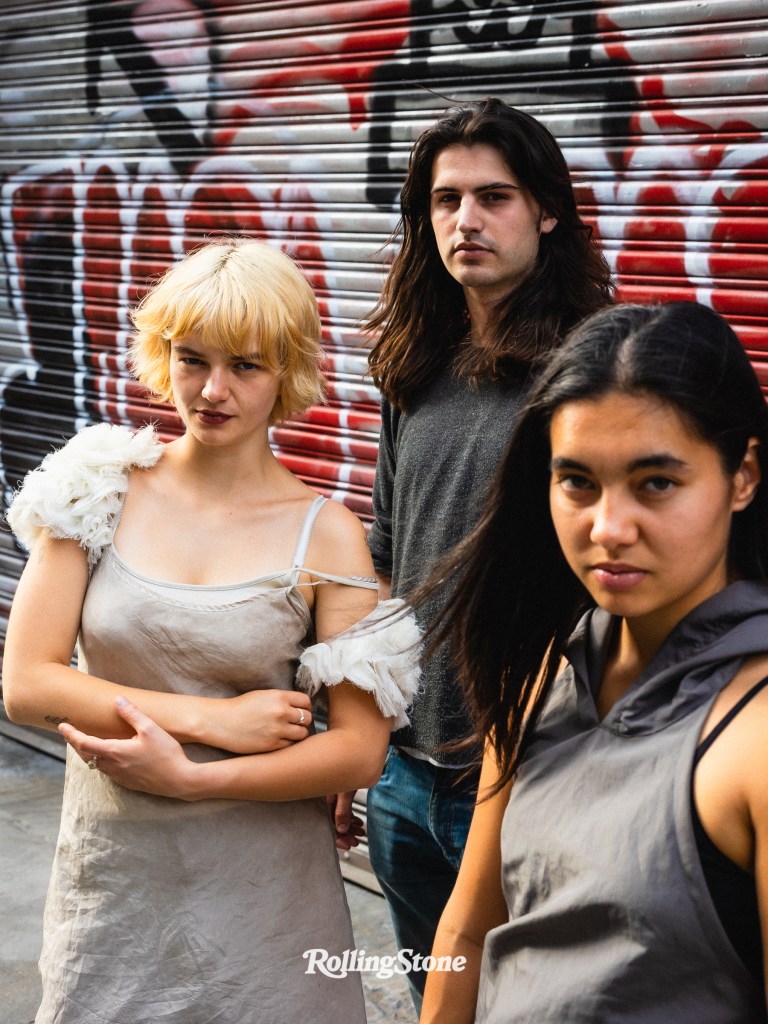
Photo: Griffin Lotz for Rolling Stone US
When he wasn't falling in love with sycamores and oaks, he played the cello. When he was 13, he met Barbaglia at a summer camp dedicated to string quartets. «They were all serious and nerdy people, Clari was the coolest of the group», recalls the bassist and violist, who grew up in London. “I was Clari's London friend and Clari was my village friend. We immediately got on well.”
At home, Freeman-Taylor listened to a lot of folk, from Laura Marling to Leonard Cohen, and began writing songs. Candelabrawhich is on the new album, originally appeared on an EP recorded with a handheld microphone in the woods. “It was the moment when the birds were awakening, they were making wonderful choruses.”
At the time, her favorite instrument was the baritone ukulele (“I tried to convince her to call her solo project Clari and Her Bari,” says Barbaglia), but within a few years she became passionate about rock and began playing the guitar. When he got a gig in a south London pub called the Cavendish Arms in 2022 he brought with him Barbaglia and Addison, a friend from Hertfordshire. Then came more gigs, many at the Windmill, a small, anonymous pub in Brixton that became famous for launching some of the best-known bands on the British scene, including Squid, Black Midi and Black Country, New Road.
«Ours almost became an unofficial residence: in practice we opened all the concerts», recalls Barbaglia. «Every time there was a space available on the billboard, we arrived. I have a lot of memories of us carrying the equipment on the subway.”
The name Mary in the Junkyard was Freeman-Taylor's idea, it seemed poetic to her, only to later realize that it perfectly described the sonic contrasts present in their music. «Our sound is just like that», says Addison, «it's a little Mary and a little junkyard. Cleanliness and beauty, but also dirt and noise.” The name has created some small misunderstandings about the singer's identity. «Once I was in the audience at a festival and someone said to me: “Are you Mary?”», he says, laughing. “I said no and slipped away.”
After releasing an EP produced by Richard Russell, the founder of XL Recordings, in 2024 and being appreciated at SXSW in the spring of 2025, they returned home to record Role Model Hermit in summer. They worked with producer Oli Bayston in his east London studio and stripped down the sound: Freeman-Taylor's almost whispered vocals and guitar parts intertwine with Barbaglia's shifting strings and Addison's steady rhythm, creating an irresistible spell. It's a remarkable debut, destined to fascinate both fans of PJ Harvey and Radiohead and those who follow the most interesting news from the British underground.
«Bayston was very good at managing our ideas, scaling them down when needed, but at the same time making us feel free to express ourselves», explains Barbaglia. «We asked ourselves: how little can we add to get the most?».
Last fall they played in the US opening for Wet Leg. Back in the UK, Freeman-Taylor and Barbaglia organized a meeting to convince Addison, who had returned to live with the family after obtaining a degree in English literature, to move back to London (he is the only member of the band to have completed his university studies and dedicated his thesis to the 17th century proto-communist writer Gerrard Winstanley, as well as having launched a music blog).
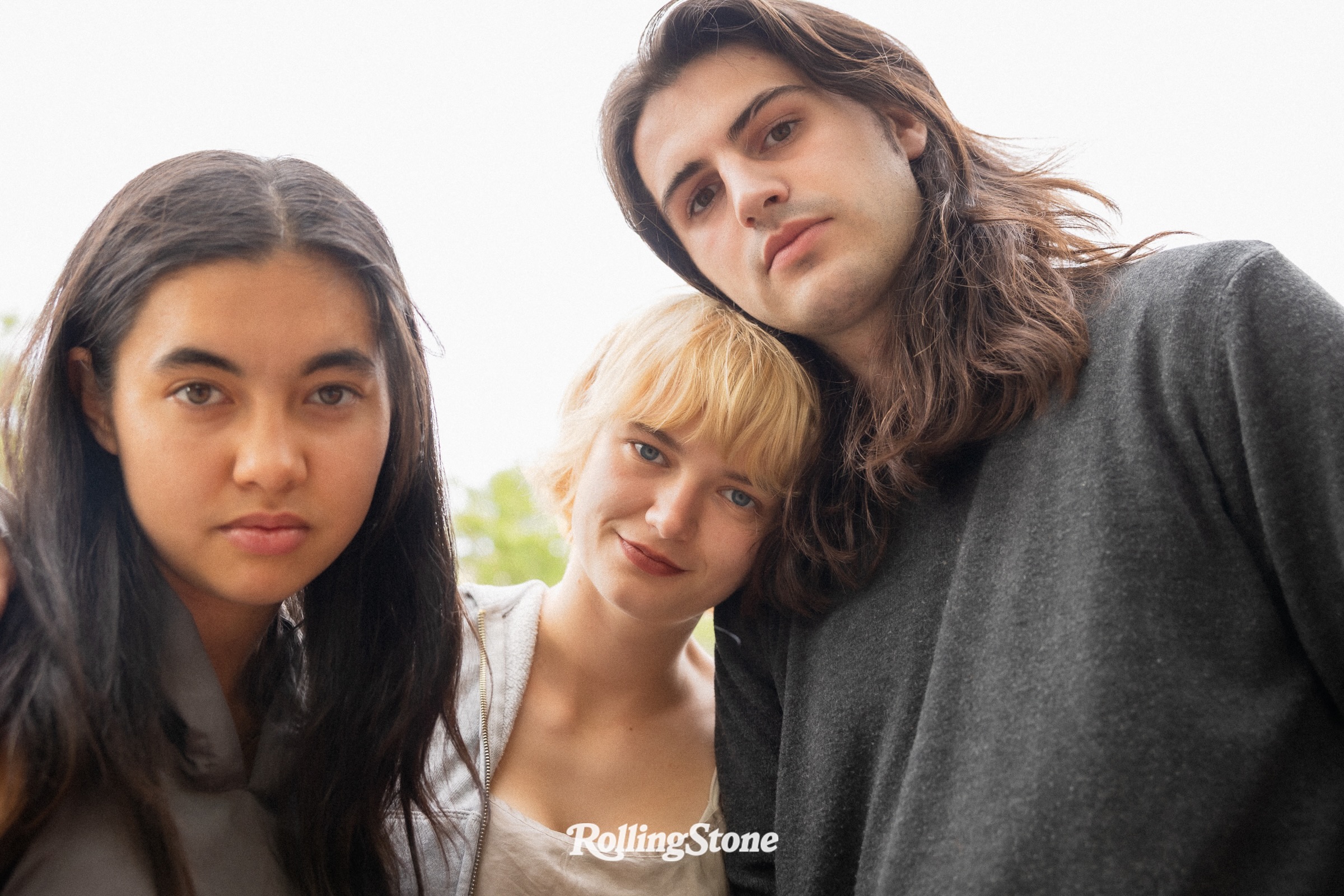
Photo: Griffin Lotz for Rolling Stone US
Now they are working on building their own studio space, basically a single room, partially soundproofed, where they wrote much of the second album, and are reflecting on how to create what they define as a “protective sphere”, capable of safeguarding their bond.
It all started with an actual object. «We bought this large glass sphere and said to ourselves: it represents the band, we must protect it», says Barbaglia. «Two weeks later the sphere was already broken. We didn't know David had thrown it away.”
“Yeah,” Freeman-Taylor chimes in, feigning shock. “He threw the ball away.”
“It wasn't me,” protests Addison, “it was our roommate.”
More recently they have experimented with concerts with the audience placed all around, to recreate that “spherical” feeling. “We realized that the sphere is not a physical object that you buy in a store,” says Barbaglia.
“It's like God,” Freeman-Taylor says. “You can't draw it.”
Barbaglia nods. “When it's there, you understand it.”
From Rolling Stone US.