
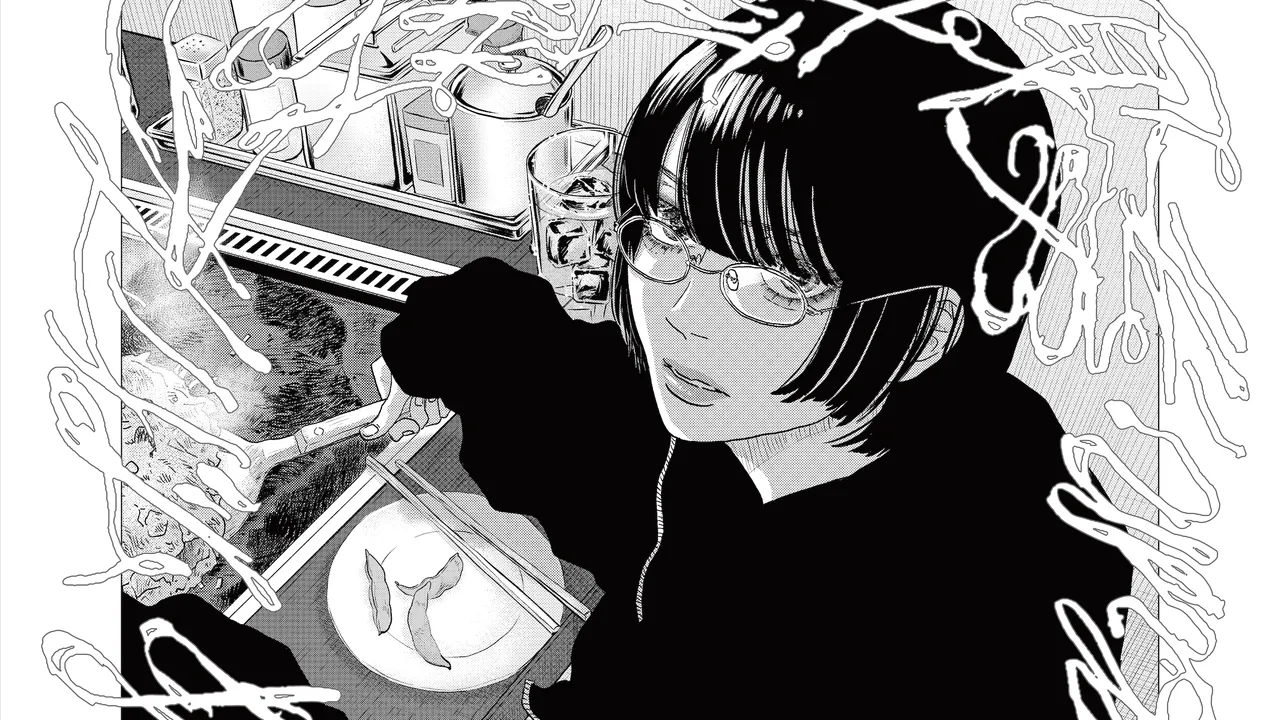
Hakushi Hasegawa believes in the unlimited. Since their earliest releases, the Japanese producer and composer has pursued the dissolution of musical boundaries. They retrofit their tracks with sounds of past and present, covering free jazz and breezy J-rock, even extending to the outer edges of hyperpop’s nebula. Honest Feeling Album, their fourth record, extracts a facsimile of order from the chaos, undergirding the variation with earnest, curious songwriting without smoothing out the gleefully jagged edges.
Hasegawa broke out as a teenage wunderkind with their 2018 EP of junglist jazz, Sōmoku hōdō. Subsequent releases stretched to contain more multifarious ideas—their 2019 debut full-length, Air Ni Ni, began to branch out without leaving the Venn diagram of chordally dense jazz and electronic pop, and 2024’s Mahōgakkō was split down the middle, with an anarchic A-side and harmonious B-side. Honest Feeling Album recontextualizes their ever-expanding palette. Rather than relegating genre explorations to different tracks or sides of the record, Hasegawa stuffs every song until they burst. They slalom through the raging noise of “Why the Hell Do I Have to Say Everything From One to Ten Each Time Each Time Each Time Each Time” (featuring half of Otoboke Beaver), the vivacious J-rock of lead single “The Owner of Sweetness,” then back to the wonky TNGHT-esque wubs of “Grace.” The music’s multitudinousness confounds expectations, embracing the disorderly and extraneous.
No score yet, be the first to add.
Whereas in the past Hasegawa has mostly operated solo, they spend most of Honest Feeling Album as the frontperson and keyboardist of HaHa and the Hairpins, a group of jazz players initially assembled as a backing band for a 2024 live session. The group plays on nearly every track, providing additional energy and dynamism to Hasegawa’s knotty compositions. Kei Matsumaru’s potent sax and Shu Akimoto and Hitomi Aikawa’s percussion are particularly essential to the LP’s freeform jazz current. Akimoto’s skittering drums drive the funk of opener “Little Briar Rose” and Matsumaru’s skronk anchors “The Owner of Sweetness” with a supremely sticky horn hook.
In a recent interview, Hasegawa described their intentional use of “unnecessary sounds” across Honest Feeling Album, specifically describing “Boss-Moire-FS,” an early interlude that crams Matsumaru’s Brötzmannian soprano sax squall, a drum’n’bass break, and faux sports commentary from DJ Tofubeats, all in under three minutes. A series of short interstitial tracks throughout the record create space for Hasegawa’s deliberate ephemera. They’ll sequence a 40-second VTuber (virtual YouTuber) vocal feature as the second track, quote their own music on the game soundtrack-like “We the Ominous Warriors,” or tag the miasmic lurch of “Nausea” with an old Mykki Blanco sample—just because they can.
Honest Feeling Album is full of knotty, head-spinning jazz, proggy pop, and the eclectic electronics, but in the record’s final moments, a clearly legible sentiment finally surfaces. Closer “Never Lack Nothing” is the record’s quietest track, just pitched vocals and weary finger snaps. Hasegawa set out to compose a Bon Odori song, a Japanese folk dance tradition to receive the spirits of the departed and wish them farewell as they continue their spectral journeys. Here Honest Feeling Album eases to a halt, leaving Hasegawa’s lonely, contemplative vocal. They wrote “Never Lack Nothing” as a tribute to the nonbinary Japanese people who have passed away, a dedication from the living to the dead.
Daniel D`Amico for SANREMO.FM