
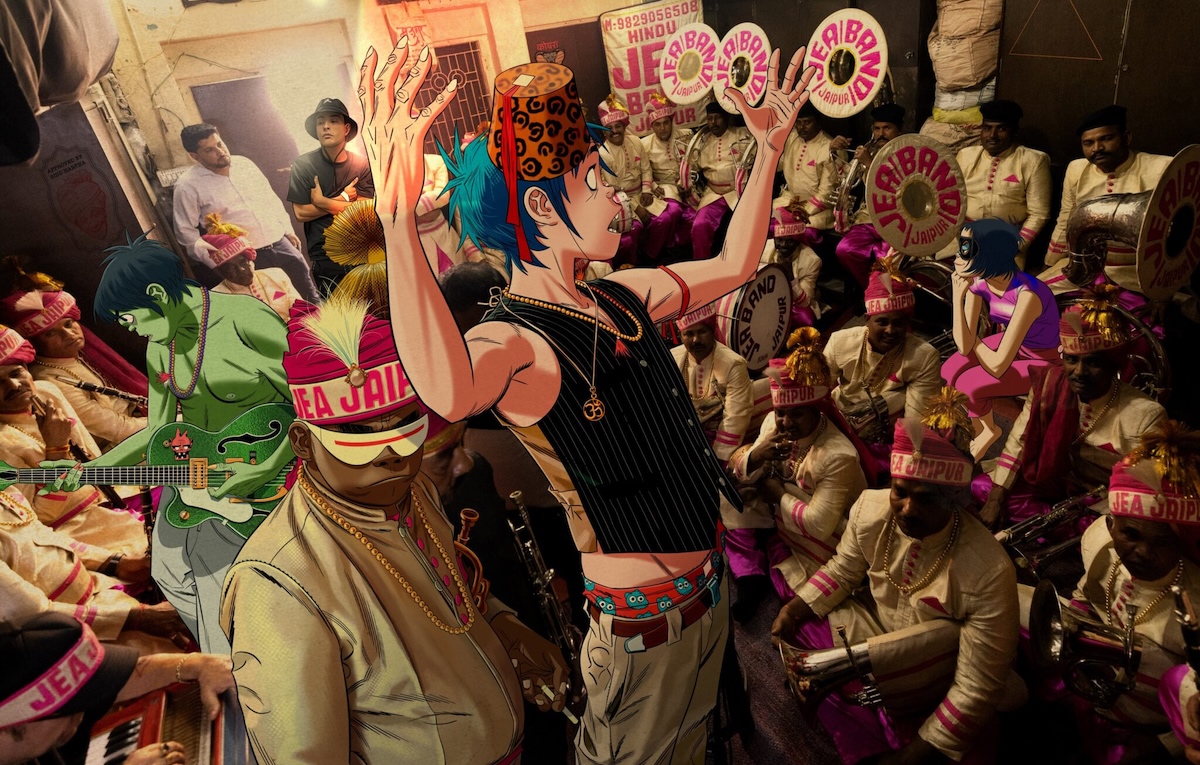
The first voice heard on the new Gorillaz album is that of Dennis Hopper. Anyone who knows the band knows that it was recorded back in the day Demon Days. «To talk about death», says Damon Albarn, sitting next to Jamie Hewlett, «we needed dead people, who know more than me».
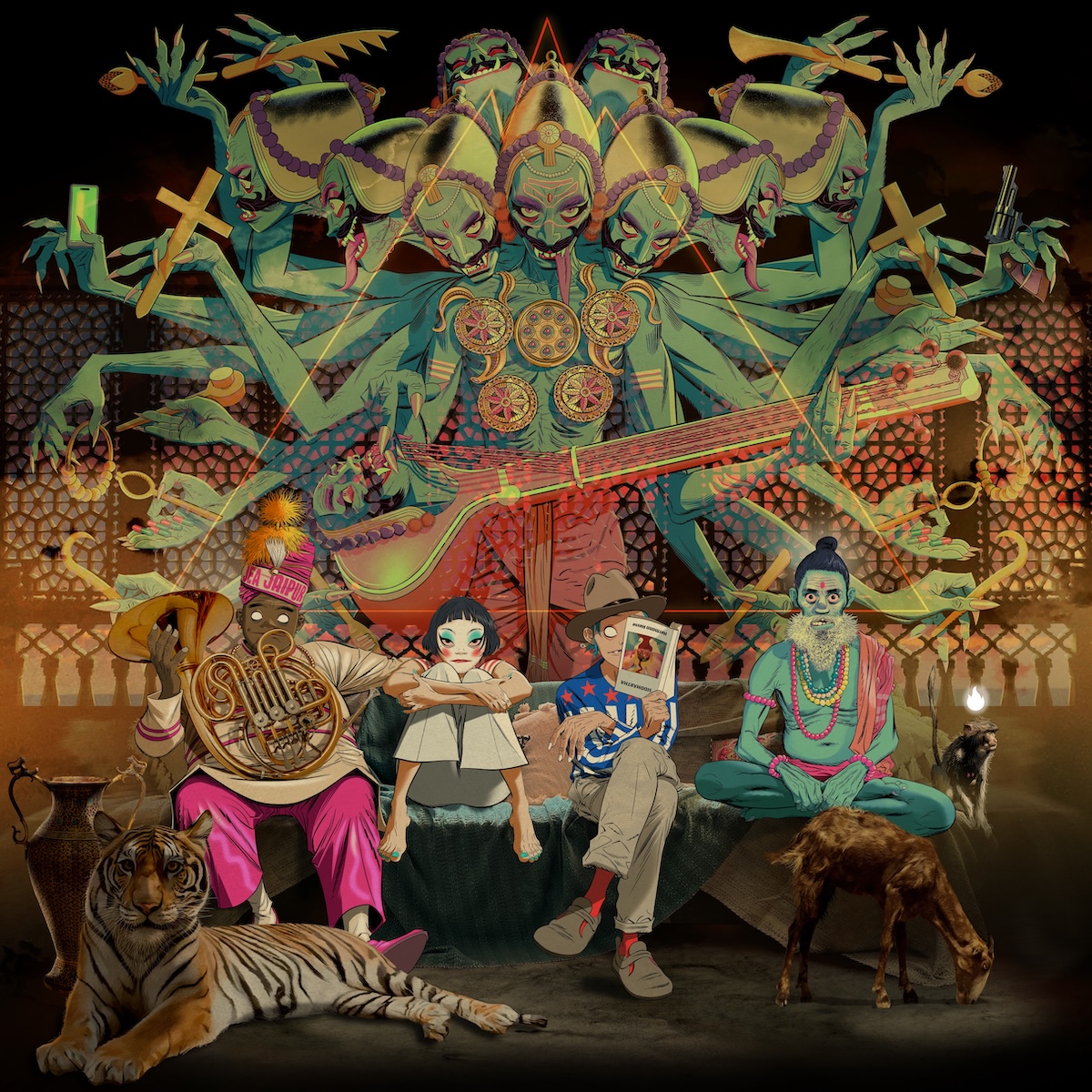
The two realized TheMountain after losing their respective fathers and in the wake of a trip to India from which they returned with lots of ideas for the characters of Russel, Murdoc, Noodle and 2-D. The project has grown to include a notable array of posthumous contributions from the archives: Tony Allen, Bobby Womack, Dave Jolicoeur of De La Soul, Mark E. Smith of the Fall and others. At their side, living legends such as the Indian Asha Bhosle, the Argentine rapper Trueno and Black Thought of the Roots. The result is Gorillaz's strongest album in over a decade. “In a way,” says Albarn, “it's the successor to Plastic Beach. It's a world apart.”
In a few days, on February 22nd and 23rd, they will bring that world to the stage with two special concerts at the Hollywood Palladium where they will TheMountain in full. The exhibition will open in Los Angeles on February 26th House of Kong already seen in London (they will arrive in Italy in the summer, on 25 June at the La Prima Estate festival and on 27 July in Trieste). Albarn is also composing the soundtrack and some songs for ArtificialLuca Guadagnino's film about the rise of artificial intelligence. “I can play music even under Elon Musk,” he says. Hum the Imperial March theme from Star Wars and starts laughing.
How did this album come out so cohesive?
Damon Albarn: It's because we spent more time together. After Plastic Beach Jamie has radically changed his life and moved to France, a disaster for our relationship. But we managed to find each other again and I guess the trip to India was the pinnacle of Jamie and Damon, Part Two. Reconciliation and renewal of marriage vows.
Jamie Hewlett: We found ourselves on the same wavelength. Damon's father died and mine died ten days later. We thought: ok, the themes of this record are starting to reveal themselves, definitely.
You, Damon, have never been to India before, have you?
Albarn: No, never. Going there was an interesting experience, as an Englishman. I mean, apart from the whole colonial thing, I grew up in a terraced house in East London and the neighbors were Indian. Indian culture, whether Hindu, Muslim or Sikh, is part of Englishness. As a child I definitely listened to Ravi Shankar more than The Beatles.
What was it like being there during that time of mourning?
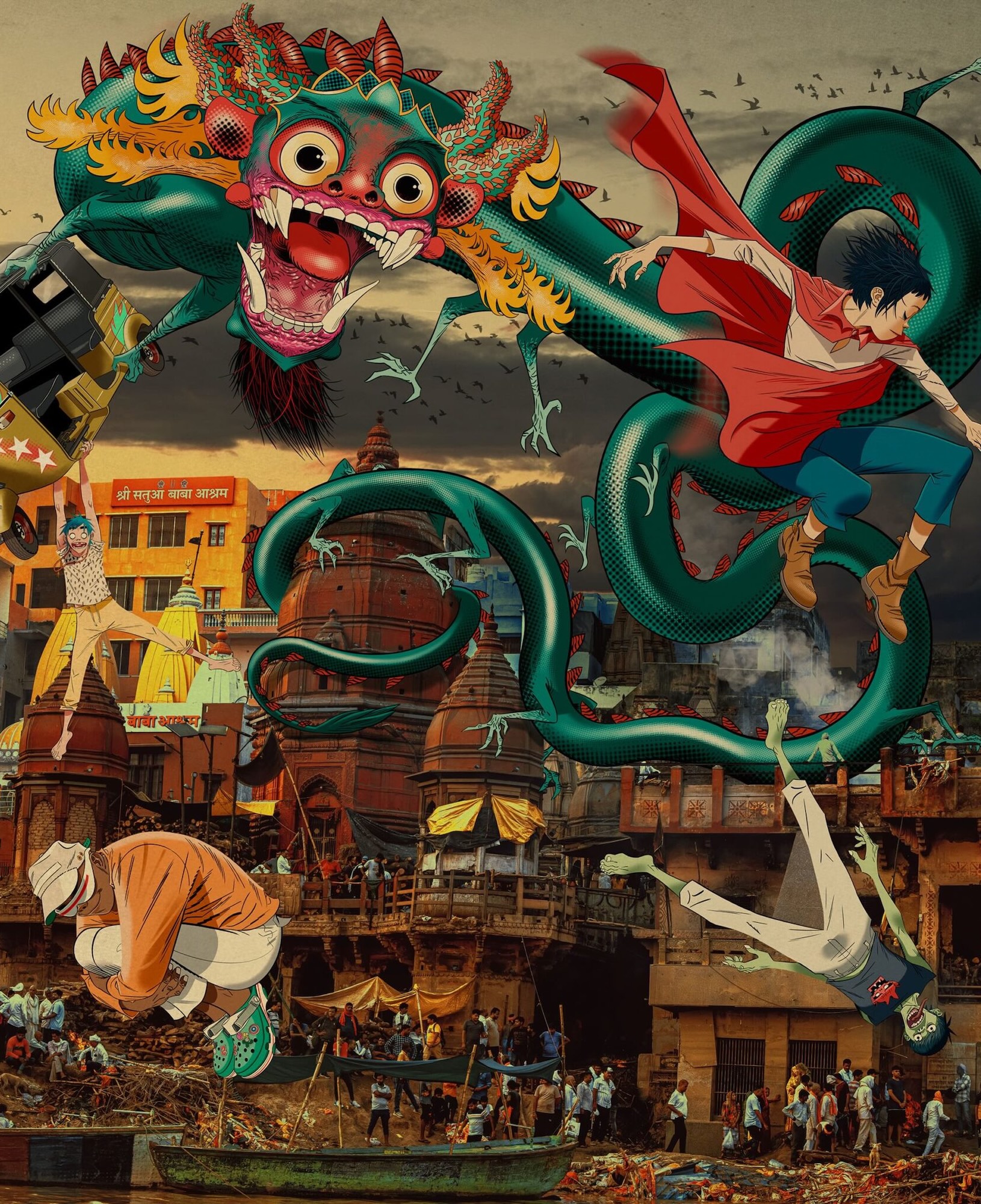
Hewlett: Just visiting the ancient city of Varanasi was an intense experience, seeing the funeral pyres. Damon swam in the Ganges.
Albarn: It's not something you forget quickly. You feel immersed in thousands of years of spiritual activity and rituals, of sunrises and sunsets. You have to let everything pass through you and maybe a part stays on you and another part follows you like a shadow.
When did you get the idea to include the voices of the deceased?
Albarn: In the Gorillaz manifesto Jamie and I wrote in 1999, when we shared an apartment, Russell's character was able to summon the voices of dead musicians.
Hewlett: Great idea. It took 25 years to use it.
Press photo
In London you played the entire first three Gorillaz albums. Did you enjoy looking back?
Albarn: I take no pleasure in looking back, ever.
Hewlett: We are focused on what's to come. The “after” excites us.
Albarn: When people start telling you how great you were, it means you're missing something. Do you understand what I mean?
Hewlett: That's how it is. You can't live off something you did 25 years ago, it means you haven't done anything new in the meantime.
But did you discover anything new about those early Gorillaz projects by performing them live?
Albarn: Which practically didn't have the lyrics! The songs on the first album were decidedly strange and yet now they make sense. This makes you realize how crazy the world is today. “Hey, there's going to be a character that pops dead people out of your head, and the record won't mean anything.”
Hewlett: Today it doesn't even seem like a crazy idea, but 25 years ago it certainly was.
Albarn: I dressed as a priest at the time of Demon Days. Fun.
Hewlett: He must have been like Father Merrin, the one from theExorcist. That look suited him well.
Albarn: I liked it very much. I would do it again every night, to be honest.
Speaking of band-cartoons, you've seen KPop Demon Hunters?
Hewlett: I'll watch it. My older son keeps telling me I have to do this. Even though he is 30 years old, he loves animation.
Albarn: I thought you had to have kids to watch it. I don't think you can watch it alone, it's too strange.
But it's fun, right? You had this crazy idea of band-cartoon many years ago and now it's one of the biggest phenomena in the world.
Albarn: (Giggle) Between that and the ABBA holoshow, there's nothing left of our ideas. They were all taken and monetized.
Hewlett: I think being an animated band helped us. The kids get curious, they want to understand what it's about. Then they hear the music and say, “Wow, I really like it.” This is how you build a new audience.
And then cartoons don't age. Noodle started out as a child and became an adult, but since then the characters have been eternal.
Hewlett: We don't know what will happen next. I'm working on something.
Albarn: They have to become cubists.
Hewlett: That would be nice, wow.
Albarn: Murdoc becomes a green rectangle (laughs).
What do you think about the use of AI in art?
Hewlett: I wouldn't use it in my work, but it is a tool and it is also a tool in the artistic field. It's a bit like when Photoshop arrived, it's how you use it that counts.
Albarn: I don't know how to use it, so I don't have these problems.
Hewlett: I've seen artists who use it well, but there are those who simply write prompts, get an image and consider themselves an artist, and I find it risky… If you fall in love with an artist's work it's for, well, for their work precisely, for their vision, for their story. A computer, on the other hand, simply collects information from all over the world. It's not the same thing, is it? You can't fall in love with it. It's not like looking at a Van Gogh or David Hockney painting and being moved to tears.
Albarn: It's too early to say whether we can fall in love with it. It's like when Mao Zedong was asked about the French Revolution and he replied: “It's too early to tell.”
Damon, is it true you don't even have a phone?
Albarn: That's how it is. It's not difficult: one day you lose it and you never buy another one.
And you don't stream music?
Albarn: Never streamed anything in my life.
Press photo
You have been important voices for intercultural understanding. Do you think the world is going in the right direction?
Hewlett: We were lucky to travel a lot, see the world and experience other cultures. We grow as human beings when we accept other people's beliefs and cultures… I would say we are a little worried, but we try to stay positive. Especially with this new job, the experience of working with so many different cultures coming together to make a record that wouldn't have been as good if it had just been made by a couple of English people with their friends…
Bringing together different points of view has always been an important part of Gorillaz, hasn't it?
Albarn: It is the essence of it. When I moved from Blur to Gorillaz there was a pretty drastic change of gear… it was all there. There had to be a community, because we hide behind cartoons. The only way to have a real sense of human interaction was with the people we work with.
After so many years, Blur can play big concerts in Europe, but Gorillaz is better known in the United States.
Albarn: When we went to Coachella with Blur in 2024 our presence at the festival was a bit out of place. It's a bit of an extension of social media, isn't it?
Hewlett: It's the only festival where phones are pointed not at the stage, but at the person holding the phone.
Will Blur ever return to play in the United States? It's been a long time since the Madison Square Garden concert in 2015, which was incredible.
Albarn: It's possible, yes. The only problem with damn Madison Square Garden, and I've played there a few times, is that there are all those banners for… what's it called?
Billy Joel?
Albarn: Billy Joel. It takes away any desire you have. I can't stand it.
From Rolling Stone US.